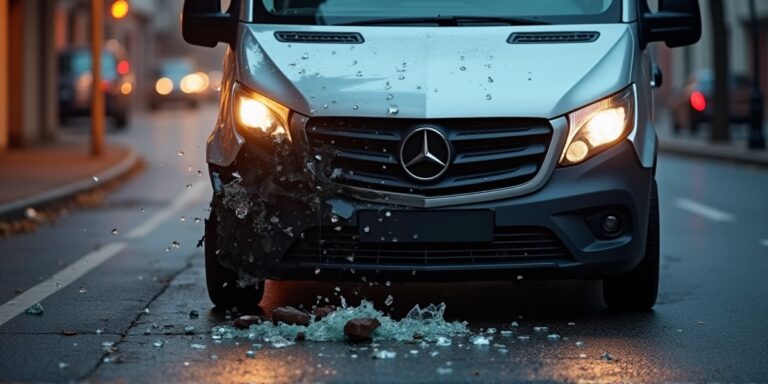
How Do Accident Reconstruction Experts Help Lawsuits?

Accident reconstruction experts are often the key to unlocking the truth in complex truck accident cases. These professionals don’t just look at the scene; they meticulously analyze all available data to determine exactly how the collision occurred, and, crucially, who was responsible. In Bartholomew’s case, an expert review of the truck’s Electronic Logging Device (ELD) data revealed the driver had falsified his hours of service, violating federal regulations and creating a dangerous situation. This single piece of evidence dramatically shifted the leverage in the negotiation.
The value of an accident reconstruction expert isn’t simply about proving the other driver was at fault. It’s about building a compelling narrative that clearly demonstrates the full extent of the trucking company’s negligence. This can include analyzing vehicle maintenance records, driver qualifications, and even the company’s safety protocols. Without this detailed investigation, insurance companies often undervalue claims, leaving injured victims to shoulder significant financial burdens.
I’ve been practicing personal injury law in San Diego for over 13 years, and I’ve seen firsthand how insurance companies attempt to minimize their payouts. I was trained by a former insurance defense attorney, giving me intimate knowledge of how they evaluate, devalue, and deny claims. This experience allows me to anticipate their tactics and build a stronger case for my clients from the outset.
What types of evidence do accident reconstruction experts use?
Accident reconstruction experts utilize a wide array of evidence sources to piece together the events leading up to a collision. This includes the police report, witness statements, photographs of the scene, vehicle damage assessments, and data from the vehicles involved – such as the truck’s “black box” (Event Data Recorder or EDR) and ELD. They also analyze road conditions, traffic patterns, and even the time of day to create a comprehensive picture of the accident.
Crucially, they aren’t limited to physical evidence. Experts can also review the driver’s training records, maintenance logs, and company policies to identify potential negligence. In some cases, they may even conduct simulations or physical testing to recreate the accident and validate their findings. The more data available, the more accurate and persuasive the reconstruction will be.
How does an expert determine fault in a truck accident?
Determining fault isn’t always straightforward. Accident reconstruction experts apply principles of physics, engineering, and biomechanics to analyze the evidence and identify the contributing factors to the crash. They look for violations of traffic laws, such as speeding or running a red light, but also consider factors like driver fatigue, improper cargo loading, and mechanical failures.
They will often create a detailed timeline of events, showing how each party’s actions contributed to the collision. This timeline, supported by scientific evidence, is then used to establish liability. In many cases, the expert’s report will be presented as evidence in court or used to negotiate a fair settlement with the insurance company.
Can an accident reconstruction expert help even if there were no witnesses?
Absolutely. While witness statements are valuable, they aren’t always necessary. Accident reconstruction experts can often reconstruct the accident based on the physical evidence alone. The data from the vehicles’ EDRs and ELDs can provide a wealth of information about speed, braking, and driver behavior.
Furthermore, experts can analyze skid marks, vehicle damage, and the final resting positions of the vehicles to determine the forces involved in the collision and the likely sequence of events. In San Diego, we often see cases where the lack of witnesses doesn’t prevent a successful claim, thanks to the power of forensic analysis.
What is the role of a “black box” in a truck accident investigation?
The “black box,” formally known as an Event Data Recorder (EDR), is a critical piece of evidence in truck accident investigations. These devices record a wealth of information about the vehicle’s operation in the moments leading up to a crash, including speed, braking, steering angle, and engine data. This data can be used to determine if the driver was speeding, distracted, or experiencing a mechanical failure.
However, accessing and interpreting this data requires specialized expertise. Insurance companies often attempt to downplay the significance of EDR data or even claim it’s unreliable. That’s why it’s crucial to hire an accident reconstruction expert who is familiar with these devices and can properly analyze the information they contain.
How much does it cost to hire an accident reconstruction expert?
The cost of hiring an accident reconstruction expert can vary depending on the complexity of the case and the scope of the investigation. Generally, you can expect to pay several thousand dollars for a thorough analysis. However, this cost is often offset by the increased value of your claim. A skilled expert can identify evidence that you might otherwise miss, leading to a significantly larger settlement or jury award.
Furthermore, many personal injury attorneys, including myself, work on a contingency fee basis, meaning you only pay if we recover compensation for your case. This eliminates the upfront financial burden of hiring an expert and allows you to focus on your recovery.
What if the trucking company refuses to cooperate with the investigation?
Trucking companies have a legal obligation to preserve evidence related to an accident. If they refuse to cooperate with the investigation, it may be a sign that they are trying to hide something. In such cases, we can pursue legal action to compel them to produce the necessary documents and data, including the EDR and ELD information.
We can also file a motion to court to obtain a subpoena, requiring the company to provide the evidence. It’s important to act quickly in these situations, as evidence can be lost or destroyed over time. A thorough investigation, even in the face of resistance, is essential to protecting your rights.
What is the statute of limitations for filing a truck accident lawsuit in California?
California law provides a **two-year** window from the date of the truck accident to file a lawsuit. Because trucking companies often begin evidence destruction (like purging ELD data) as soon as the law allows, immediate filing is critical to preserve the integrity of the claim. Waiting too long can result in the permanent loss of your right to recover compensation.
It’s crucial to consult with an attorney as soon as possible after a truck accident to understand your legal options and ensure you meet the filing deadline. Don’t delay – the sooner you take action, the stronger your case will be.
What if the accident involved a government vehicle or roadway defect?
If a truck accident involves a government-owned vehicle or a dangerous road condition maintained by a public entity, a formal administrative claim **MUST** be presented within **6 months** (180 days). Failure to meet this strict deadline under the Government Tort Claims Act can result in the permanent loss of your right to recover. This is a significantly shorter timeframe than the standard two-year statute of limitations for personal injury cases.
Navigating the complexities of government liability claims requires specialized knowledge and experience. It’s essential to work with an attorney who is familiar with the Government Tort Claims Act and can ensure your claim is properly filed and documented.
What if the driver was classified as an independent contractor instead of an employee?
California’s ‘ABC test’ determines if a delivery driver (Amazon/FedEx) is an employee or contractor. Even if labeled a ‘contractor,’ a company may be liable if they exercise control over the driver’s work, a key factor in San Diego delivery truck litigation. Misclassifying employees as contractors is a common tactic used by companies to avoid liability for accidents caused by their drivers.
Determining the driver’s employment status requires a careful analysis of the company’s control over their work, the tools they use, and the nature of their relationship. An experienced attorney can investigate these factors and build a strong case for liability, even if the driver was initially classified as an independent contractor.
How does vicarious liability apply to trucking companies?
Under the doctrine of **vicarious liability** (respondeat superior), a principal is responsible to third persons for the negligence of their agent in the transaction of business. This holds the trucking company legally liable for the wrongful acts of its drivers committed within the scope of their employment. Even if the driver was personally at fault, the trucking company can be held responsible for their actions.
Establishing vicarious liability requires proving that the driver was acting within the scope of their employment at the time of the accident. This can include factors like whether they were on duty, transporting cargo, and following company policies. An attorney can investigate these factors and build a strong case for holding the trucking company accountable.
What are the speed limit restrictions for commercial trucks in California?
In California, commercial trucks (including semi-tractors with three or more axles) are strictly prohibited from exceeding **55 miles per hour** on any highway. In San Diego freeway crashes, proving a violation of this speed limit is a primary tool for establishing statutory negligence. Exceeding the speed limit not only increases the risk of an accident but also creates a presumption of negligence.
Accident reconstruction experts can analyze the EDR data to determine the truck’s speed at the time of the collision. If the data shows the driver was exceeding the speed limit, it can be used as strong evidence of negligence in court.
What if the trucking company was negligent in hiring or training the driver?
A trucking company is directly liable if it was negligent in hiring, supervising, or retaining an unfit driver. This is critical in cases where the driver has a history of FMCSA violations or lacked the proper CDL endorsements. Negligent hiring or training can be proven by demonstrating that the company failed to conduct a thorough background check, ignored red flags in the driver’s record, or provided inadequate training.
This is critical in cases where the driver has a history of FMCSA violations or lacked the proper CDL endorsements.
What are the safety and inspection regulations for commercial vehicles in California?
Commercial vehicles are subject to rigorous safety and inspection regulations. Failure to maintain brakes, tires, or lighting systems according to California’s commercial vehicle safety framework can be used to establish direct liability against the carrier for ‘negligent maintenance’. These regulations are designed to ensure the safe operation of commercial vehicles and prevent accidents.
Accident reconstruction experts can review the vehicle’s maintenance records to identify any violations of these regulations. If the records show the vehicle was not properly maintained, it can be used as evidence of negligence in court.