
Can Insurance Companies Blame Me For A Truck Crash?

It’s a frustratingly common tactic. Insurance companies routinely attempt to minimize their liability by alleging fault on the part of the other driver. They’ll look for any perceived mistake – even a minor one – to justify a lower settlement or outright denial of your claim. However, simply alleging fault doesn’t make it so. Establishing negligence requires proof, and often, their claims fall apart under scrutiny.
The key to defending against these accusations is understanding how negligence works in California auto accidents, particularly those involving commercial trucks. California operates under a “pure comparative fault” system, meaning you can still recover damages even if you were partially at fault. Your recovery will be reduced by your percentage of fault, but it won’t automatically disqualify you from receiving compensation. The insurance company has the burden of proving your negligence, and I’ve spent over 13 years in San Diego successfully challenging these claims on behalf of my clients. Trained by a former insurance defense attorney, I have intimate knowledge of how insurance companies evaluate, devalue, and deny claims.
Can the Insurance Company Reduce My Settlement if I Was Partially at Fault?
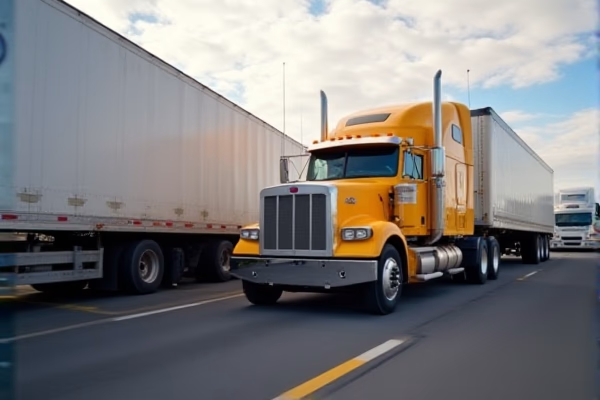
Yes, absolutely. As mentioned, California follows a pure comparative fault rule. This means your compensation isn’t entirely lost if you share some responsibility for the accident. Instead, the court (or the insurance company during negotiations) will assign a percentage of fault to each party involved. For example, if you’re found to be 20% at fault, your total damages will be reduced by 20%. You’ll still receive 80% of your compensation, but it’s crucial to fight against an inflated fault percentage assigned by the insurer.
Common arguments insurance companies use to establish fault include speeding, failure to yield, distracted driving, or even mechanical issues with your vehicle. They may present witness statements, police reports, or accident reconstruction data to support their claims. It’s vital to have an experienced attorney thoroughly investigate the accident and gather evidence to counter their arguments.
Remember, the insurance company’s goal is to pay as little as possible. They’ll often exaggerate your fault to minimize their financial obligation. Don’t accept their initial assessment without seeking legal counsel.
What Evidence Do Insurance Companies Use to Blame Me?
Insurance companies will cast a wide net, looking for anything they can use to suggest you were at fault. This can include:
- Police Reports: While not definitive, police reports can contain opinions or observations that the insurance company will seize upon.
- Witness Statements: Statements from bystanders can be subjective and unreliable, but insurers will use them if they support their case.
- Accident Reconstruction Data: Experts can analyze the scene and vehicle damage to determine the sequence of events, but these reconstructions can be biased.
- Your Statements: Anything you say to the insurance adjuster can be used against you, so it’s crucial to avoid making any statements without legal representation.
- Vehicle Data (ECM/EDR): Modern vehicles record a wealth of data, including speed, braking, and steering information.
They may also attempt to use social media posts or other personal information to portray you in a negative light. It’s essential to be cautious about what you share and to consult with an attorney before providing any information to the insurance company.
How Can I Protect Myself From False Accusations?
Protecting yourself starts immediately after the accident. Here are some key steps:
- Document Everything: Take photos of the damage, the scene, and any visible injuries.
- Gather Information: Exchange information with the truck driver and any witnesses.
- Report the Accident: File a police report, even if the damage seems minor.
- Seek Medical Attention: Prompt medical care is crucial for both your health and your claim.
- Avoid Statements: Do not provide any recorded statements to the insurance company without consulting an attorney.
Most importantly, hire an experienced attorney as soon as possible. We can handle all communication with the insurance company, investigate the accident thoroughly, and build a strong case to protect your rights.
What if the Insurance Company Claims I Was Speeding?
Proving you were speeding requires evidence, such as radar or lidar readings, or witness testimony. The insurance company may attempt to use the “statutory negligence” rule, which presumes you were negligent if you exceeded the speed limit. However, this presumption can be rebutted with evidence showing that speeding wasn’t the cause of the accident. For example, if the truck driver was clearly at fault due to a mechanical failure, your speed may be irrelevant. In California, commercial trucks (including semi-tractors with three or more axles) are strictly prohibited from exceeding **55 miles per hour** on any highway. In San Diego freeway crashes, proving a violation of this speed limit is a primary tool for establishing statutory negligence.
We can analyze the police report, witness statements, and any available data to challenge their claims. We may also hire an accident reconstruction expert to provide an independent assessment of the accident.
What Happens if the Truck Driver Claims I Suddenly Changed Lanes?
The insurance company may argue that you caused the accident by making a sudden lane change, giving the truck driver no time to react. They’ll likely focus on whether you used your turn signal, checked your blind spots, and maintained a safe following distance. However, they must prove that your lane change was unreasonable or negligent.
We can investigate whether the truck driver was distracted, speeding, or otherwise violating traffic laws. We can also examine the vehicle’s data recorder to determine the truck’s speed and braking patterns.
How Long Do I Have to File a Claim After a Truck Accident?
California law provides a **two-year** window from the date of the truck accident to file a lawsuit. Because trucking companies often begin evidence destruction (like purging ELD data) as soon as the law allows, immediate filing is critical to preserve the integrity of the claim.
Don’t delay seeking legal counsel. The sooner you hire an attorney, the better your chances of building a strong case and recovering the compensation you deserve.
What if the Accident Involved a Government Vehicle or Road Hazard?
If a truck accident involves a government-owned vehicle or a dangerous road condition maintained by a public entity, a formal administrative claim **MUST** be presented within **6 months** (180 days). Failure to meet this strict deadline under the Government Tort Claims Act can result in the permanent loss of your right to recover.
These claims are often complex and require specific procedures. An attorney can ensure your claim is properly filed and documented to maximize your chances of success.
What if the Truck Driver Was Classified as an Independent Contractor?
California’s ‘ABC test’ determines if a delivery driver (Amazon/FedEx) is an employee or contractor. Even if labeled a ‘contractor,’ a company may be liable if they exercise control over the driver’s work, a key factor in San Diego delivery truck litigation.
We can investigate the driver’s employment status and determine if the company exercised sufficient control over their work to be held liable for their negligence.
What if the Trucking Company Claims the Driver Wasn’t Acting Within the Scope of Their Employment?
Under the doctrine of **vicarious liability** (respondeat superior), a principal is responsible to third persons for the negligence of their agent in the transaction of business. This holds the trucking company legally liable for the wrongful acts of its drivers committed within the scope of their employment.
We can investigate the driver’s activities at the time of the accident to determine if they were performing work-related duties. This may involve examining their logbooks, dispatch records, and other documentation.
What if the Insurance Company Requests a Recorded Statement?
Do not provide a recorded statement to the insurance company without first consulting with an attorney. Insurance adjusters are trained to ask leading questions and elicit information that can be used against you. A recorded statement can significantly harm your claim, even if you believe you’re being truthful.
I can handle all communication with the insurance company on your behalf, protecting your rights and ensuring you don’t inadvertently jeopardize your case.