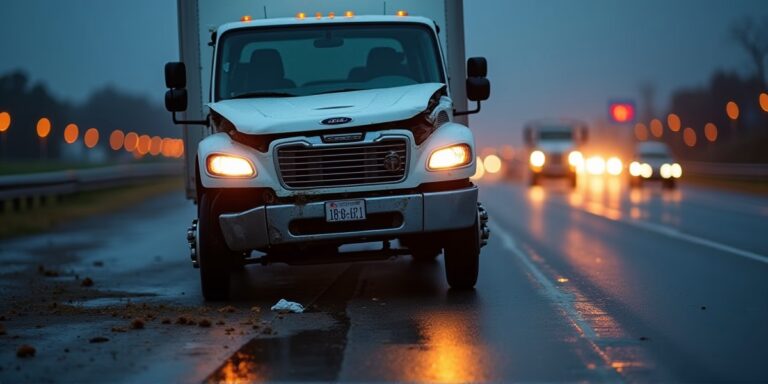
How Do Freeway Truck Accidents Differ From City Crashes?

Freeway truck accidents present unique challenges compared to collisions occurring within city limits. The higher speeds, heavier vehicles, and increased traffic volume all contribute to more severe injuries and complex investigations. Unlike a typical car accident, a truck accident often involves multiple parties – the driver, the trucking company, the cargo owner, and potentially maintenance providers. This increases the likelihood of disputes over responsibility and the need for a thorough legal analysis.
One of the biggest differences lies in the applicable laws and regulations. Commercial trucks are subject to a far more stringent set of rules than passenger vehicles, governed by both state and federal regulations. These include limitations on driver hours, mandatory maintenance schedules, and specific requirements for cargo securement. Violations of these regulations can be powerful evidence of negligence, but uncovering them requires specialized knowledge and experience. As a personal injury attorney with over 13 years of practice in San Diego, I’ve seen firsthand how insurance companies attempt to downplay these violations. I was trained by a former insurance defense attorney, giving me intimate knowledge of how insurance companies evaluate, devalue, and deny claims.
What types of evidence are most important in a freeway truck accident case?
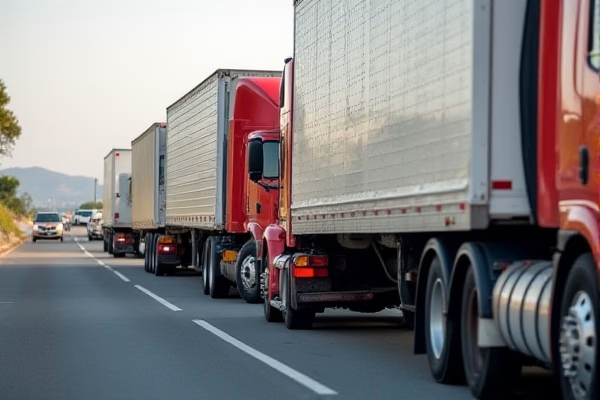
In freeway truck accidents, securing and preserving evidence is paramount. This goes beyond the standard police report and witness statements. We immediately investigate the truck’s Electronic Logging Device (ELD) data to verify the driver’s hours of service and ensure they weren’t operating while fatigued. We also request maintenance records to identify any pre-existing mechanical issues. Dashcam footage, if available, is invaluable, as are any photos or videos taken by bystanders. Finally, we often hire independent accident reconstruction experts to analyze the crash dynamics and determine the cause of the collision.
Because of the higher speeds involved, proving the truck driver’s negligence is often more complex. We look for evidence of speeding, distracted driving, or improper lane changes. In California, commercial trucks are strictly prohibited from exceeding 55 miles per hour on any highway. CVC § 22406. Even a seemingly minor speed violation can significantly increase the force of impact and the severity of your injuries.
How does the “respondeat superior” doctrine apply to trucking companies?
The legal principle of “respondeat superior” is crucial in many freeway truck accident cases. This doctrine holds the trucking company legally responsible for the negligent acts of its drivers committed within the scope of their employment. This means that even if the driver was at fault, the company can be held liable for your damages. However, proving this requires establishing a clear employer-employee relationship and demonstrating that the driver was acting in furtherance of the company’s business when the accident occurred.
Insurance companies often try to argue that the driver was an independent contractor, not an employee, to avoid liability. California’s ‘ABC test’ determines if a delivery driver (Amazon/FedEx) is an employee or contractor. Even if labeled a ‘contractor,’ a company may be liable if they exercise control over the driver’s work, a key factor in San Diego delivery truck litigation. Labor Code § 2775. We carefully examine the driver’s contract, payment structure, and level of control exercised by the company to determine their true employment status.
What is the statute of limitations for filing a freeway truck accident lawsuit in California?
Time is of the essence in any personal injury case, but particularly in truck accidents. California law provides a two-year window from the date of the truck accident to file a lawsuit. CCP § 335.1. Because trucking companies often begin evidence destruction (like purging ELD data) as soon as the law allows, immediate filing is critical to preserve the integrity of the claim.
Furthermore, if the accident involved a government-owned vehicle or a dangerous road condition maintained by a public entity, a formal administrative claim MUST be presented within 6 months (180 days). Gov. Code § 911.2. Failure to meet this strict deadline under the Government Tort Claims Act can result in the permanent loss of your right to recover.
What if the truck driver was working for a government entity at the time of the accident?
Accidents involving government vehicles (like Caltrans trucks) introduce a unique layer of complexity. Unlike claims against private trucking companies, you typically must file a formal administrative claim with the government agency before you can pursue a lawsuit. This claim must be detailed and supported by evidence, and the government agency has a limited time to investigate and respond.
The government agency may deny your claim, in which case you can then file a lawsuit. However, the statute of limitations for government claims is significantly shorter than for private claims, requiring swift action. It’s crucial to consult with an attorney experienced in handling claims against public entities to ensure you meet all deadlines and procedural requirements.
What should I do if the insurance company asks me to give a recorded statement?
Insurance companies routinely request recorded statements from accident victims. While you are not legally obligated to provide one, doing so can be detrimental to your claim. Insurance adjusters are trained to ask leading questions designed to minimize your damages and identify weaknesses in your case. They may attempt to elicit statements that contradict your recollection of events or downplay the severity of your injuries.
It is almost always best to decline a recorded statement and instead allow your attorney to handle all communication with the insurance company. We can effectively advocate for your rights and protect your interests without exposing you to potential pitfalls.