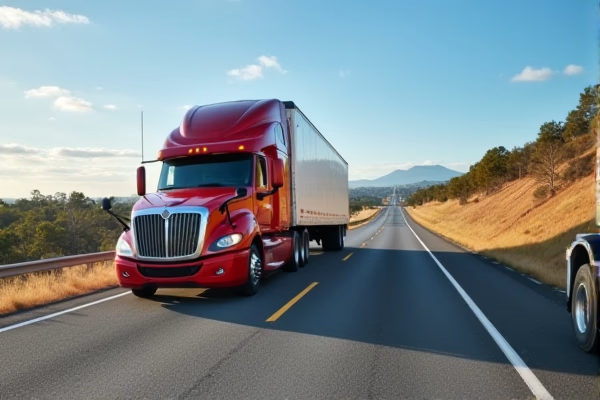
Just last week, I spoke with Abigail, a retired carpenter who was broadsided by a semi-truck on I-5 near Carlsbad. He suffered a fractured pelvis, a traumatic brain injury, and ongoing nerve damage. His medical bills already exceed $128,492, and he faces a lifetime of physical therapy. The trucking company’s insurance company offered him a paltry $15,000, claiming he was partially at fault. This is a tragically common scenario, and Abigail is now facing the very real possibility of a lengthy and complex legal battle to recover fair compensation.
The question of whether a truck accident case will go to court is complex and depends on numerous factors. While most cases *settle* before trial, it’s crucial to understand that insurance companies are businesses designed to minimize payouts. They often start with lowball offers, hoping injured parties will accept them out of desperation or a lack of understanding of their rights. A strong legal strategy, built on a thorough investigation and compelling evidence, is the best way to ensure you aren’t taken advantage of.
One of the biggest hurdles to settlement is establishing liability. Trucking accidents often involve multiple parties – the driver, the trucking company, the cargo loader, and even the manufacturer of defective parts. Determining who is at fault, and to what degree, can be a painstaking process. Furthermore, insurance companies will aggressively investigate the accident, looking for any reason to deny or reduce your claim. This is where having an attorney experienced in truck accident litigation is invaluable.
I’ve been practicing personal injury law in San Diego for over 13 years, and I’ve seen firsthand how insurance companies operate. I was trained by a former insurance defense attorney, giving me intimate knowledge of how they evaluate, devalue, and deny claims. This insider perspective allows me to anticipate their tactics and build a stronger case on behalf of my clients. I understand the nuances of California’s complex trucking regulations and how to leverage them to your advantage.
How Can a Skilled Attorney Increase My Chances of a Favorable Settlement?
A skilled attorney will conduct a comprehensive investigation into the accident, gathering evidence such as police reports, witness statements, and the truck’s Electronic Logging Device (ELD) data. This data can reveal critical information about the driver’s hours of service, speed, and potential violations of federal regulations. We also work with accident reconstruction experts to analyze the crash dynamics and establish fault.
Beyond the investigation, an attorney will meticulously document your damages, including medical expenses, lost wages, pain and suffering, and future care needs. Presenting a well-supported claim with clear evidence of your losses significantly increases your negotiating power. We also handle all communication with the insurance company, protecting you from potentially damaging statements and ensuring your rights are preserved.
What Types of Evidence Are Most Important in a Truck Accident Case?
Several types of evidence are crucial in a truck accident case. Police reports provide an initial account of the accident, but they are often incomplete or biased. Witness statements can corroborate your version of events and provide valuable insights. Medical records are essential for documenting your injuries and treatment. The truck’s ELD data can reveal critical information about the driver’s compliance with federal regulations, and dashcam footage (if available) can provide a clear visual record of the accident.
Furthermore, we often subpoena the truck driver’s maintenance records to identify any potential mechanical issues that contributed to the crash. In some cases, we may also need to consult with experts in trucking safety to assess whether the trucking company adhered to industry standards.
What is the Statute of Limitations for Filing a Truck Accident Lawsuit in California?
In California, you generally have **two years** from the date of the truck accident to file a lawsuit. Because trucking companies often begin evidence destruction (like purging ELD data) as soon as the law allows, immediate filing is critical to preserve the integrity of the claim. CCP § 335.1 outlines these specific timelines.
It’s important to note that certain exceptions may apply, such as cases involving government entities or minors. However, it’s always best to consult with an attorney as soon as possible to ensure you don’t miss the deadline.
Legal Services & Injury Compensation
Catastrophic Injuries
Loss of Limb
Establishing lifelong vocational and financial burdens.
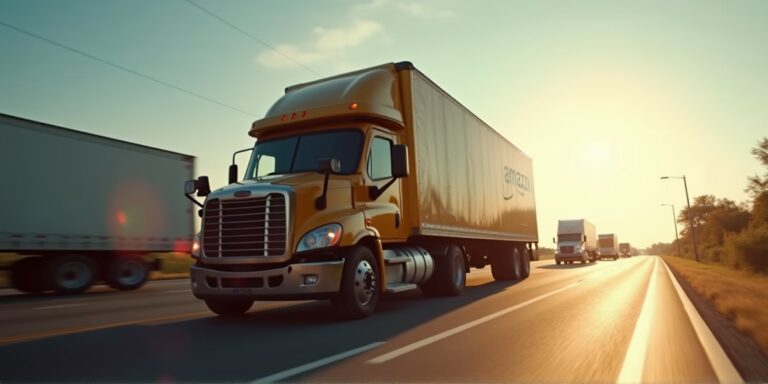
What if the Truck Driver Was Working for a Delivery Company Like Amazon or FedEx?
Determining whether a delivery driver is an employee or an independent contractor is often a complex legal issue. California’s ‘ABC test’ determines if a delivery driver (Amazon/FedEx) is an employee or contractor. Even if labeled a ‘contractor,’ a company may be liable if they exercise control over the driver’s work, a key factor in San Diego delivery truck litigation. Labor Code § 2775 provides the framework for this analysis.
If the driver is deemed an employee, the delivery company may be directly liable for their negligence. However, even if the driver is classified as a contractor, the company may still be liable if they were negligent in their hiring or supervision.
What Should I Do if the Insurance Company Asks for a Recorded Statement?
Insurance companies often request recorded statements early in the claims process. Do not give a recorded statement without first consulting with an attorney. Insurance adjusters are trained to ask leading questions designed to minimize your claim. They may try to trick you into making statements that can be used against you later. An attorney can advise you on whether to provide a statement and, if so, how to answer questions strategically.
Furthermore, an attorney can handle all communication with the insurance company, protecting you from potentially damaging interactions and ensuring your rights are preserved. It’s always best to let a legal professional navigate these complex negotiations on your behalf.
Authority Link Reference Table
Authority Link Reference Table
|
Statutory Authority
|
Description
|
|
CCP § 335.1
|
Sets the 2-year limitations period for most California personal injury claims. In San Diego trucking cases, preserving evidence early is critical because carriers and insurers often move quickly to control records and narrative.
|
|
Gov. Code § 911.2
|
Requires timely presentation of claims against public entities (often 6 months). This matters when a crash involves roadway design, construction zones, transit agencies, or city/county responsibility.
|
|
CCP § 2017.010
|
Defines the scope of discovery. In trucking litigation, discovery targets driver logs/ELD data, qualification files, inspection/maintenance records, dispatch communications, and safety program documents.
|
|
CCP § 377.60
|
Identifies who has standing to bring a wrongful death claim. This is essential for fatal commercial vehicle crashes where multiple family members may have rights.
|
|
CCP § 377.30
|
Survival action authority. In fatal trucking cases, this can apply to claims the decedent could have brought (often tied to pre-death harms and litigation strategy alongside wrongful death).
|
|
Civ. Code § 1714
|
California’s general negligence framework. Trucking defendants often use comparative-fault narratives (lane position, following distance, speed, “cut-off” claims) to reduce claimed damages.
|
|
Evid. Code § 669
|
Negligence per se when a safety law is violated. This is frequently argued in trucking cases when FMCSA rules or CVC safety provisions are breached.
|
|
Civ. Code § 2338
|
Vicarious liability principles (respondeat superior). Critical when proving a motor carrier, delivery company, or fleet operator is responsible for a driver’s on-duty conduct.
|
|
CVC § 22406
|
Maximum speed limits for certain commercial vehicles and vehicles towing. Supports liability arguments and reconstruction when speed/conditions are disputed.
|
|
CVC § 34500
|
California’s commercial vehicle safety/inspection framework. Often relevant to maintenance failures, equipment defects, and inspection noncompliance.
|
|
Civ. Code § 3294
|
Punitive damages standard (oppression, fraud, or malice). Can matter in extreme trucking conduct cases (e.g., reckless safety policy violations, egregious impairment, or intentional evidence games).
|
|
Howell v. Hamilton Meats
|
Damages valuation authority addressing medical specials (amounts actually paid/owed). Frequently impacts settlement math in catastrophic injury cases.
|
|
Li v. Yellow Cab Co.
|
Foundational California comparative negligence authority. Trucking defendants often argue shared fault to reduce value; this anchors the comparative-fault framework used in negotiations and trial.
|
|
Civ. Code § 1431.2
|
Several liability allocation for non-economic damages. Important when multiple parties share responsibility (carrier, shipper/loader, broker, maintenance vendor, public entities).
|
|
Ins. Code § 11580.2
|
UM/UIM statutory framework. Relevant when a truck, delivery vehicle, or other responsible party is underinsured, unidentified, or coverage disputes arise.
|
|
Federal Motor Carrier Safety Regulations (FMCSA)
|
|
49 CFR Part 395
|
Hours-of-service rules (fatigue). Directly tied to ELD/logbook questions, forced driving, rest break violations, and crash causation analysis.
|
|
49 CFR Part 396
|
Inspection, repair, and maintenance duties. Central for brake failures, tire failures, equipment defects, inspection records, and maintenance contractor liability.
|
|
49 CFR Part 391
|
Driver qualification rules (DQ files). Supports negligent hiring/retention claims and discovery of licensing, medical certification, training, and prior safety history.
|
|
49 CFR Part 382
|
Controlled substances and alcohol testing rules. Relevant to post-crash testing questions, DUI/impairment claims, and carrier compliance obligations.
|
|
49 CFR Part 392
|
Operational driving rules (safe driving, distracted driving policies, etc.). Used to frame duty, safety standards, and negligence arguments tied to driver conduct.
|
|
49 CFR Part 393
|
Parts and accessories necessary for safe operation. Supports defect/equipment theories involving brakes, lights, tires, underride guards, and other safety components.
|
|
49 CFR Part 383
|
Commercial driver’s license (CDL) standards. Relevant to CDL impact questions, qualification issues, endorsements, and compliance expectations for commercial drivers.
|