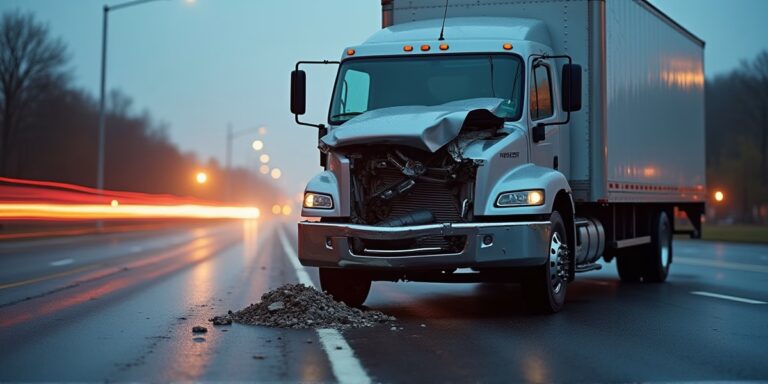
What Damages Are Available In Wrongful Death Truck Accident Cases?

When a loved one dies in a truck accident caused by someone else’s negligence, California law provides a path to seek compensation for the losses suffered. These cases are complex, often involving multiple parties – the truck driver, the trucking company, potentially the manufacturer of a defective part, and others. It’s crucial to understand the full scope of damages you may be entitled to recover. As a personal injury attorney practicing in San Diego for over 13 years, I’ve seen firsthand how insurance companies attempt to minimize these payouts. Trained by former insurance defense attorneys, I understand their tactics and how to build a strong case to protect your family’s financial future.
The types of damages available in a wrongful death case extend far beyond just medical bills and funeral expenses. While those are certainly important components, the law recognizes the profound impact a loss has on the entire family. Pursuing full compensation requires a thorough investigation and a detailed understanding of the financial and emotional consequences of the accident.
What specific economic losses can be claimed in a wrongful death case?
Economic damages are those that can be quantified with relative certainty. This includes the obvious costs associated with the death, but also extends to future financial losses. A significant component is the loss of the deceased’s future earnings. This requires a detailed analysis of their employment history, earning potential, and projected career trajectory. We often work with forensic economists to establish a clear picture of what the deceased would have likely earned over their lifetime.
Beyond lost wages, other economic damages can include the loss of benefits such as health insurance, retirement contributions, and pension plans. The cost of replacing household services the deceased provided, like childcare or home maintenance, is also recoverable. Finally, the expenses incurred as a direct result of the death, such as funeral and burial costs, probate expenses, and even the cost of grief counseling, are all legitimate economic damages.
How are non-economic damages calculated in a wrongful death claim?
Non-economic damages are more difficult to quantify, as they relate to the emotional and psychological impact of the loss. These include loss of consortium – the loss of companionship, affection, and sexual relations with the deceased. It also encompasses the emotional distress, grief, and suffering experienced by the surviving family members. California law does not place a strict cap on non-economic damages in wrongful death cases, but proving their value requires a compelling presentation of the family’s loss.
We often rely on testimony from family members and friends to illustrate the depth of the relationship and the impact of the death. Evidence such as photos, videos, and personal correspondence can also be powerful tools in demonstrating the emotional toll. The goal is to paint a complete picture of the life that was lost and the void it has left behind.
What is the role of punitive damages in a truck accident wrongful death case?
Punitive damages are not awarded in every case. They are reserved for situations where the truck driver or trucking company acted with malice, oppression, or fraud. This might include instances of knowingly violating safety regulations, concealing evidence, or operating under the influence of drugs or alcohol. The purpose of punitive damages is not to compensate the family, but rather to punish the wrongdoer and deter similar conduct in the future.
Establishing a claim for punitive damages requires a high burden of proof. We must demonstrate that the defendant’s conduct was particularly egregious and that they acted with a conscious disregard for the safety of others. If successful, punitive damages can significantly increase the overall value of the case.
What if the deceased had pre-existing conditions? Does that affect the claim?
Pre-existing conditions do not automatically disqualify a wrongful death claim. However, they can complicate the process of proving damages. The defense will likely argue that the deceased’s life expectancy was already limited due to their pre-existing condition, and that the truck accident did not cause as much of a loss as the family claims.
It’s crucial to have a qualified medical expert testify about the deceased’s life expectancy and the extent to which the truck accident contributed to their death. We will work to establish a clear link between the accident and the loss of life, regardless of any pre-existing conditions.
How does the statute of limitations impact a wrongful death claim in California?
California law provides a **two-year** window from the date of the truck accident to file a lawsuit. Because trucking companies often begin evidence destruction (like purging ELD data) as soon as the law allows, immediate filing is critical to preserve the integrity of the claim. CCP § 335.1 outlines these specific deadlines. Missing this deadline will likely result in the permanent loss of your right to recover compensation.
The two-year statute of limitations begins to run on the date of death, not the date of the accident. It’s important to act quickly to gather evidence, investigate the circumstances of the crash, and consult with an attorney to ensure your claim is filed within the required timeframe.
What should I do if the insurance company contacts me directly after a wrongful death?
It’s generally best to avoid speaking with the insurance company directly without first consulting with an attorney. Insurance adjusters are trained to minimize payouts, and they may attempt to obtain statements that could be used against you later in the case. They may also try to downplay the value of your claim or pressure you into accepting a settlement that is far less than what you are entitled to.
Instead, politely decline their request for a statement and refer them to your attorney. We will handle all communication with the insurance company on your behalf, protecting your rights and ensuring you receive a fair settlement.
What if the truck driver was working for a delivery company like Amazon or FedEx?
Determining the proper defendant in a delivery truck accident can be complex. While the driver is directly responsible for their actions, the delivery company (Amazon, FedEx, UPS, etc.) may also be liable under the doctrine of **vicarious liability** (respondeat superior). This holds the trucking company legally liable for the wrongful acts of its drivers committed within the scope of their employment. Civ. Code § 2338 governs this principle.
Furthermore, the question of whether the driver was an employee or an independent contractor is critical. California’s ‘ABC test’ determines if a delivery driver (Amazon/FedEx) is an employee or contractor. Even if labeled a ‘contractor,’ a company may be liable if they exercise control over the driver’s work, a key factor in San Diego delivery truck litigation.
How important is preserving evidence after a truck accident?
Preserving evidence is absolutely critical in a truck accident case. This includes the police report, witness statements, photos of the scene, and any data from the truck’s Electronic Logging Device (ELD). Trucking companies have a legal obligation to maintain certain records, but they may not preserve them indefinitely.
We will immediately send a spoliation letter to the trucking company demanding that they preserve all relevant evidence. This letter puts them on notice of our intent to pursue a claim and warns them against destroying any evidence that could be used in the case.
What if the accident involved a government-owned vehicle or a dangerous road condition?
If a truck accident involves a government-owned vehicle or a dangerous road condition maintained by a public entity, a formal administrative claim **MUST** be presented within **6 months** (180 days). Failure to meet this strict deadline under the Government Tort Claims Act can result in the permanent loss of your right to recover. Gov. Code § 911.2 details these requirements.
These claims are often complex and require a thorough understanding of government liability laws. It’s essential to consult with an attorney as soon as possible to ensure your claim is properly filed and documented.