What Federal Laws Regulate Truck Drivers In San Diego?

Federal regulations play a massive role in nearly every aspect of a trucking accident case. While California has its own vehicle codes and safety standards, the interstate nature of trucking means many rules originate at the federal level. Understanding these regulations is critical to building a strong case and maximizing your recovery. As a personal injury attorney practicing in San Diego for over 13 years, I’ve seen firsthand how insurance companies attempt to exploit loopholes and minimize payouts. I was trained by a former insurance defense attorney, giving me intimate knowledge of how insurance companies evaluate, devalue, and deny claims.
One of the most important areas of federal regulation is the Hours of Service (HOS) rules. These rules, established by the Federal Motor Carrier Safety Administration (FMCSA), dictate how long a truck driver can operate a vehicle before being required to rest. Violations of HOS regulations are a common cause of truck accidents, as fatigued drivers are more likely to make errors. Evidence of HOS violations often comes from the driver’s Electronic Logging Device (ELD) data, which records their driving time. Proving a driver was in violation can be a game-changer in your case.
Another key area is the Federal Motor Carrier Safety Regulations (FMCSRs). These regulations cover a wide range of topics, including driver qualifications, vehicle maintenance, and cargo securement. For example, the FMCSRs require truck drivers to have a valid Commercial Driver’s License (CDL) and to undergo regular medical examinations. They also mandate that trucking companies properly maintain their vehicles and inspect them before each trip. Failure to comply with these regulations can create a strong basis for liability.
What happens if a truck driver violates Hours of Service regulations?
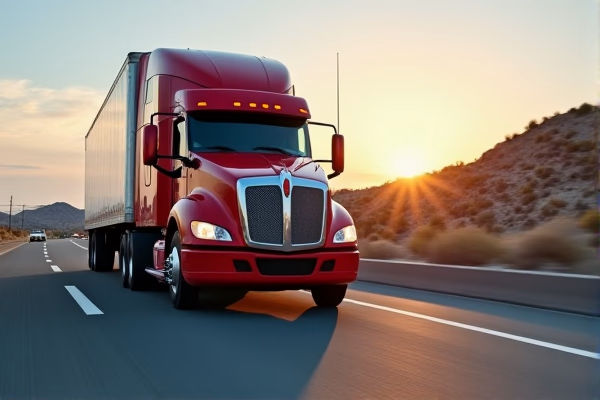
Violating federal Hours of Service (HOS) regulations is a serious offense, and it often directly contributes to truck accidents. The FMCSA sets strict limits on how long a driver can operate a vehicle consecutively, and how much rest they must take. These rules are designed to prevent driver fatigue, which is a major cause of crashes. Under 49 CFR § 395, drivers are limited in the number of hours they can drive and the amount of time they can spend on duty.
If a driver violates these rules, it can be considered negligence. Evidence of a violation can come from the driver’s ELD data, work logs, or even witness testimony. Insurance companies will often fight to suppress this evidence, but a thorough investigation can uncover critical details. In San Diego truck accident litigation, we often subpoena ELD data and driver logs to establish HOS violations.
The consequences of an HOS violation can be significant, including fines, suspension of the driver’s CDL, and even criminal charges. More importantly, it provides a strong legal argument for holding the driver and the trucking company liable for your injuries.
Can I sue a trucking company for negligent hiring?
Yes, you can sue a trucking company for negligent hiring if they failed to properly vet a driver before putting them on the road. Trucking companies have a duty to exercise reasonable care in hiring drivers, and that includes conducting thorough background checks, verifying their qualifications, and ensuring they have a safe driving record. If a company hires a driver with a history of accidents, violations, or substance abuse, they can be held liable for any resulting damages.
Establishing negligent hiring requires proving that the company knew or should have known about the driver’s unfitness. This can be done by uncovering prior accidents, disciplinary actions, or criminal convictions. CACI No. 426 outlines the elements of a negligent hiring claim, emphasizing the importance of due diligence in the hiring process.
In San Diego, we frequently investigate a driver’s complete FMCSA record, including their safety rating, violations, and crash history. This information can be crucial in proving that the trucking company was negligent in their hiring practices.
What is the deadline to file a claim after a truck accident involving a government vehicle?
If your truck accident involved a government-owned vehicle or a dangerous road condition maintained by a public entity, the deadline to file a claim is significantly shorter than in a typical accident case. California law requires you to present a formal administrative claim within **6 months** (180 days) of the accident. This is a strict deadline, and failure to meet it can result in the permanent loss of your right to recover.
The claim must be filed with the appropriate government agency and include detailed information about the accident, your injuries, and your damages. It’s crucial to act quickly and gather all necessary documentation. Under Gov. Code § 911.2, the government entity has a specific timeframe to respond to your claim, and they may deny it without further recourse if you don’t follow the proper procedures.
Navigating the Government Tort Claims Act can be complex, and it’s highly recommended to consult with an attorney as soon as possible to ensure your claim is filed correctly and on time.
What should I know about policy limits tenders from insurance companies?
Insurance companies often make a policy limits tender early in the claims process. This is an offer to settle your case for the maximum amount of their policy. While it may seem like a generous offer, it’s important to be cautious and understand the implications. Accepting a policy limits tender means you’re giving up your right to pursue any further recovery from that insurance company.
Before accepting a tender, it’s crucial to assess the full extent of your damages, including medical expenses, lost wages, pain and suffering, and future care costs. You also need to consider whether there are other potential sources of recovery, such as an excess insurance policy or the driver’s personal assets.
In San Diego, we often investigate whether the trucking company has additional insurance coverage, such as an umbrella policy, that could provide further compensation. We also evaluate the potential for pursuing a claim against the driver personally if their policy limits are insufficient.
How can dashcam footage and electronic data help my truck accident claim?
Dashcam footage and electronic data are invaluable pieces of evidence in truck accident claims. Dashcam footage can provide a clear visual record of the accident, showing exactly what happened and who was at fault. Electronic data, such as the truck’s Event Data Recorder (EDR) and the driver’s ELD, can reveal critical information about speed, braking, and HOS compliance.
Preserving this evidence is crucial, as it can be easily lost or altered. Insurance companies may attempt to downplay or suppress this evidence, so it’s important to act quickly and secure it through legal means.
In San Diego truck accident cases, we routinely subpoena dashcam footage, EDR data, and ELD records to build a strong case. This evidence can be the difference between a fair settlement and a lowball offer.