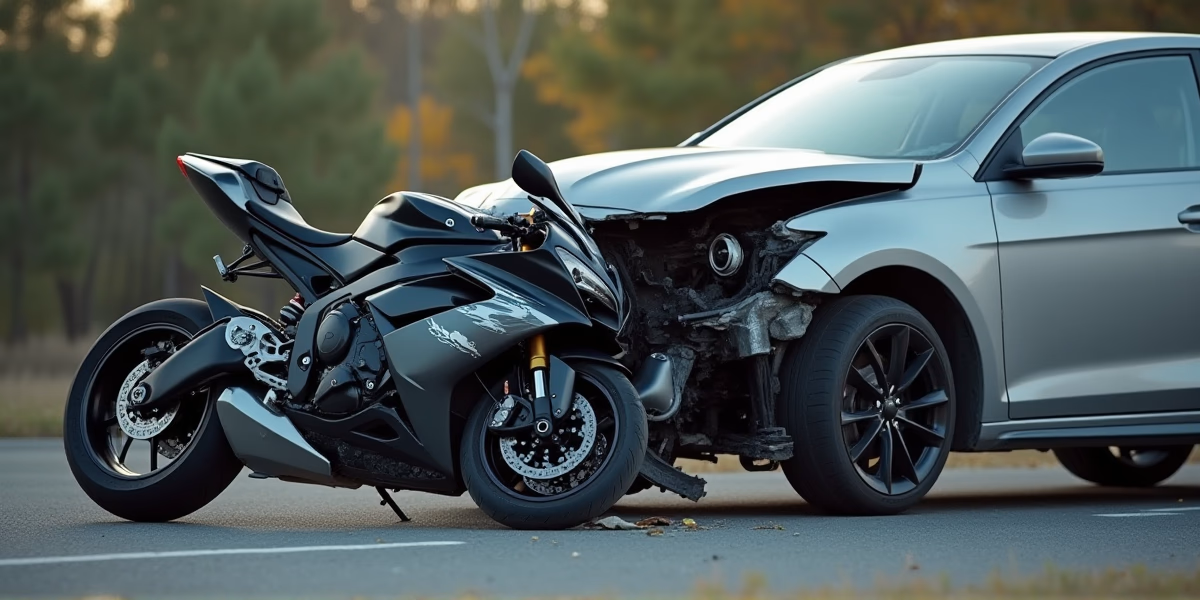
What Happens If My Motorcycle Accident Claim Is Denied?

A motorcycle accident claim denial is a frustrating, and unfortunately common, experience. Insurance companies are businesses, and their goal isn’t to pay out claims; it’s to protect their bottom line. Denials often stem from a lack of thorough investigation, misinterpretation of facts, or simply aggressive tactics to minimize their financial responsibility. But a denial is not the end of the road. You have rights, and you have options.
The first step is to understand *why* your claim was denied. The insurance company is legally obligated to provide a reason for the denial. Carefully review the denial letter. Common reasons include disputes over liability, insufficient medical documentation, or questions about the extent of your injuries. Don’t accept the denial at face value. Often, the insurance company’s reasoning is flawed or based on incomplete information.
I’ve been practicing personal injury law in San Diego for over 13 years, and I’ve seen firsthand how insurance companies operate. Trained by a former insurance defense attorney, I have intimate knowledge of how they evaluate, devalue, and deny claims. This insight allows me to effectively challenge their decisions and fight for the compensation my clients deserve. I understand the tactics they use, and I know how to counter them.
What are the most common reasons for a motorcycle accident claim denial?
Insurance companies employ a variety of strategies to deny legitimate claims. Some of the most frequent reasons include:
- Liability Disputes: The insurer may argue the other driver wasn’t at fault, or that your own actions contributed to the accident.
- Insufficient Evidence: They might claim there’s not enough proof to support your version of events, such as a lack of witness statements or a police report.
- Pre-Existing Conditions: The insurer may attempt to attribute your injuries to a prior medical issue, rather than the accident.
- Policy Limits Issues: They could claim the at-fault driver’s policy limits are insufficient to cover your damages.
- Delayed Reporting: A significant delay in reporting the accident or filing a claim can raise red flags.
What evidence can I gather to appeal a denied motorcycle claim?
Strengthening your claim requires gathering compelling evidence. This includes:
- Police Report: Obtain a copy of the official police report documenting the accident.
- Medical Records: Collect all medical records related to your injuries, including diagnoses, treatment plans, and bills.
- Witness Statements: If there were witnesses to the accident, obtain their contact information and ask them to provide written statements.
- Photographs and Videos: Gather photos of the accident scene, vehicle damage, and your injuries. Dashcam footage is invaluable.
- Lost Wage Documentation: Provide proof of lost income, such as pay stubs, tax returns, and employer statements.
What is the process for appealing a denied motorcycle accident claim in California?
Appealing a denial typically involves a formal written appeal to the insurance company. This appeal should clearly outline the reasons why you believe the denial was incorrect, and it should be supported by the evidence you’ve gathered. If the insurance company still denies your claim after the appeal, your next step is to consider filing a lawsuit.
How long do I have to file a lawsuit after a motorcycle accident in California?
California law provides a two-year window from the date of the motorcycle accident to file a lawsuit for personal injury. Because evidence at a crash scene—such as skid marks or GoPro footage—can disappear quickly, immediate filing is critical to preserve the integrity of the claim. It’s crucial to act promptly to avoid missing the deadline.
What should I do if the insurance company is delaying my claim or not responding to my requests?
Insurance companies sometimes employ delay tactics to discourage claimants from pursuing their cases. If you’re experiencing unreasonable delays or a lack of communication, it’s important to document everything—dates of phone calls, emails, and letters. A demand letter from an attorney can often expedite the process and force the insurer to take your claim seriously.
What if the accident involved a government vehicle or a dangerous road condition?
If a motorcycle accident involves a government-owned vehicle or a dangerous road condition like loose gravel, potholes, or poorly marked construction zones, a formal administrative claim MUST be presented within 6 months (180 days). Failure to meet this strict deadline under the Government Tort Claims Act can result in the permanent loss of your right to recover.
What if the other driver was uninsured or underinsured?
California law requires insurers to offer Uninsured Motorist (UM) and Underinsured Motorist (UIM) coverage. For motorcyclists hit by a driver with minimum or no insurance, this coverage allows you to recover damages directly from your own policy up to your selected limits. It’s vital to review your own policy to determine the extent of your UM/UIM coverage.
What if the other driver was operating a borrowed vehicle?
A vehicle owner is liable if they permit an unfit or incompetent driver to operate their car, leading to a collision with a motorcyclist. This is a vital tool for recovery when the at-fault driver was operating a vehicle borrowed from a friend or family member.
What if the other driver was intoxicated at the time of the accident?
It is unlawful for any person who is under the influence of alcohol to drive a vehicle. Proving intoxication or ‘malice’ allows for the pursuit of exemplary (punitive) damages, designed to punish the defendant and increase the total recovery beyond standard medical and wage losses.
What if I was a delivery driver or rideshare operator at the time of the accident?
California law preserves the right for a rider to pursue a separate civil claim against a negligent third party (such as a delivery driver or rideshare operator) whose actions contributed to the motorcycle accident, even if the rider is currently receiving workers’ compensation benefits.