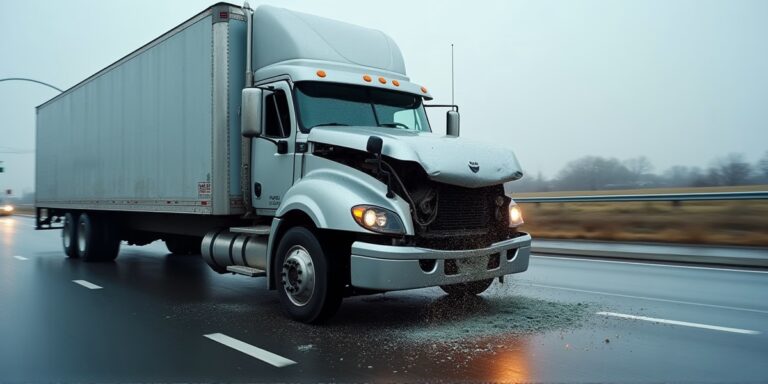
What If The Accident Happened During My Pre Trip Inspection?

This scenario, while thankfully rare, highlights a critical issue in trucking litigation: accidents occurring *during* the pre-trip inspection process. Many drivers assume that because they were actively performing a safety check, the company is automatically shielded from liability. This is simply not true. In fact, the pre-trip inspection itself can be a key piece of evidence demonstrating negligence on the part of the trucking company.
The Federal Motor Carrier Safety Administration (FMCSA) regulations require thorough pre-trip inspections. These inspections aren’t merely a formality; they are a vital safeguard against preventable accidents. A company’s failure to ensure drivers properly conduct these inspections, or to address identified defects, can create significant legal exposure. We’ve seen cases where companies intentionally cut corners on maintenance to save money, leading to predictably disastrous results. The pre-trip inspection report itself is a critical document, and any discrepancies or missing information can be highly damaging to their defense.
I’ve spent over 13 years representing clients injured in truck accidents throughout San Diego. I was trained by former insurance defense attorneys, giving me intimate knowledge of how insurance companies evaluate, devalue, and deny claims. This experience allows me to anticipate their tactics and build a stronger case for my clients. I understand that dealing with a serious injury and the complexities of a trucking claim can be overwhelming, and I’m committed to providing clear, compassionate guidance every step of the way.
Can I Still Recover Damages if I Was Inspecting the Truck?
Absolutely. The fact that you were conducting a pre-trip inspection does not automatically bar you from recovery. The key question is whether the company was negligent in maintaining the vehicle or failed to provide a safe working environment. If the brakes were known to be faulty, or if the company ignored previous inspection reports indicating a problem, they can be held liable for your injuries.
Furthermore, even if the defect wasn’t previously known, the company has a duty to ensure drivers are properly trained to identify and report safety issues. If you were not adequately trained, or if the company pressured you to skip steps in the inspection process, this can also be grounds for a claim. We often find evidence of systemic failures in training programs and maintenance protocols.
What Evidence is Important in a Pre-Trip Inspection Accident?
Preserving evidence is crucial in these cases. This includes the pre-trip inspection report itself, any maintenance records related to the truck, and any communication with the company regarding the defect. Photographs of the damage, the accident scene, and your injuries are also vital. If possible, obtain the truck’s Electronic Logging Device (ELD) data, as this can reveal information about the truck’s usage and any previous maintenance alerts.
What if the Company Claims I Was Negligent for Not Identifying the Defect?
Trucking companies often attempt to shift blame to the driver, arguing that you should have identified the defect during the pre-trip inspection. However, drivers are not mechanics. They are expected to identify obvious safety issues, but they are not responsible for uncovering hidden defects. The company has a duty to ensure the truck is properly maintained and safe to operate. Their attempts to blame you will be scrutinized, and we will aggressively challenge any such claims.
How Does the Statute of Limitations Apply to These Cases?
In California, you generally have **two-year** window from the date of the truck accident to file a lawsuit. Because trucking companies often begin evidence destruction (like purging ELD data) as soon as the law allows, immediate filing is critical to preserve the integrity of the claim. CCP § 335.1
What if the Accident Involved a Government Vehicle or Road Hazard?
If a truck accident involves a government-owned vehicle or a dangerous road condition maintained by a public entity, a formal administrative claim **MUST** be presented within **6 months** (180 days). Failure to meet this strict deadline under the Government Tort Claims Act can result in the permanent loss of your right to recover. Gov. Code § 911.2
What if the Driver Was Classified as an Independent Contractor?
California’s ‘ABC test’ determines if a delivery driver (Amazon/FedEx) is an employee or contractor. Even if labeled a ‘contractor,’ a company may be liable if they exercise control over the driver’s work, a key factor in San Diego delivery truck litigation. Labor Code § 2775
Can the Trucking Company Be Held Liable for the Driver’s Negligence?
Under the doctrine of **vicarious liability** (respondeat superior), a principal is responsible to third persons for the negligence of their agent in the transaction of business. This holds the trucking company legally liable for the wrongful acts of its drivers committed within the scope of their employment. Civ. Code § 2338
What if the Truck Was Speeding?
In California, commercial trucks (including semi-tractors with three or more axles) are strictly prohibited from exceeding **55 miles per hour** on any highway. In San Diego freeway crashes, proving a violation of this speed limit is a primary tool for establishing statutory negligence. CVC § 22406