
Morse Injury Law representing San Diego County commercial trucking clients covering: What If The Other Driver Was Aggressive Toward Me After The Accident?

What If The Other Driver Was Aggressive Toward Me After The Accident?

Bill was driving home from work when a box truck ran a red light, slamming into his sedan. Miraculously, he walked away with a broken arm and some serious bruising. But the ordeal didn’t end with the crash. The truck driver immediately became belligerent, yelling at Bill, blaming him for the accident, and even attempting to physically intimidate him. Bill is now facing medical bills totaling $128,791 and is understandably shaken, not just from the impact but from the driver’s aggressive behavior.

Confidential Confidential Case Review • No Fee Unless We Win

Attorney Richard Morse a San Diego Injury Attorney

It’s a common misconception that an accident is over once the police arrive and information is exchanged. In reality, the moments *after* the collision can be incredibly important, and a driver’s aggressive conduct can significantly impact your claim. While it doesn’t change who was at fault, aggressive behavior can be evidence of consciousness of guilt, and it can also support a claim for additional damages beyond just the medical bills and property damage. In California, proving a driver’s aggressive actions can strengthen your case and potentially lead to a more substantial recovery.

The key is documenting everything. If a driver is hostile, argumentative, or attempts to intimidate you, focus on remaining calm and collecting as much information as possible. This includes noting the driver’s behavior in detail, any witnesses who observed the aggression, and, if possible, obtaining video footage from dashcams or nearby security cameras. This documentation can be crucial when presenting your case to the insurance company and, if necessary, in court.

I’ve been practicing personal injury law in San Diego for over 13 years, and I’ve seen firsthand how insurance companies attempt to minimize payouts. I was trained by a former insurance defense attorney, giving me intimate knowledge of how they evaluate, devalue, and deny claims. They often look for ways to shift blame or downplay the severity of the accident. That’s why it’s essential to understand your rights and protect your interests from the outset.

Can the Driver’s Aggression Be Used as Evidence in My Case?
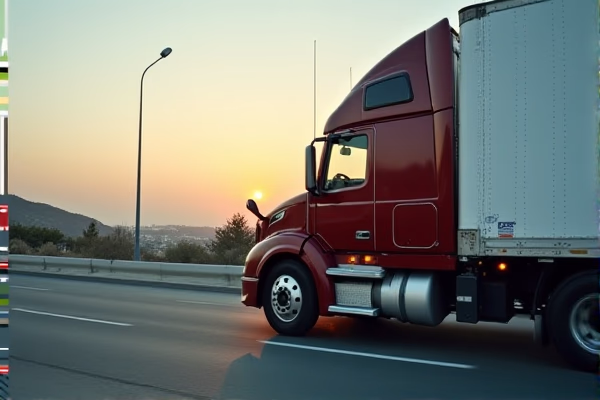
Morse Injury Law representing San Diego County commercial trucking clients covering: What If The Other Driver Was Aggressive Toward Me After The Accident?

Absolutely. A driver’s aggressive behavior after an accident can be powerful evidence of their fault. It demonstrates a lack of remorse and a potential attempt to conceal their negligence. Insurance companies will often look at the police report and witness statements, but they may not actively seek out evidence of post-accident conduct. That’s where your documentation becomes vital.

Specifically, aggressive behavior can be used to support a claim for “consciousness of guilt.” This legal principle suggests that someone who acts in a way that indicates they know they did something wrong is more likely to have been at fault. It can also be used to challenge the driver’s credibility if they later attempt to deny responsibility.

What Types of Aggressive Behavior Should I Document?

Any hostile or intimidating behavior should be documented. This includes verbal threats, yelling, attempts to physically intimidate you, or any actions that suggest the driver is trying to avoid taking responsibility. Even seemingly minor actions, like refusing to exchange information or providing false details, can be relevant. It’s important to be as specific as possible in your documentation, noting the date, time, location, and the exact words or actions of the driver.

For example, if the driver refused to provide their insurance information and then became verbally abusive when you asked, document the refusal and the specific language used. If they attempted to block you from taking photos of the damage, note that as well. The more detail you can provide, the stronger your case will be.

What if I Didn’t Report the Aggressive Behavior to the Police?

While it’s always best to report any aggressive behavior to the police at the scene, it’s not always required for it to be admissible as evidence. You can still document the behavior and present it to the insurance company. However, a police report adds credibility to your claim and provides an official record of the incident. If you didn’t report it initially, you may be able to file a supplemental report later, but it’s best to do so as soon as possible.

Could the Driver’s Aggression Support a Claim for Emotional Distress?

Yes, in some cases. If the driver’s aggressive behavior caused you significant emotional distress, you may be able to recover damages for emotional suffering in addition to your medical bills and property damage. This requires demonstrating that the behavior was severe and that it caused you to experience anxiety, depression, or other psychological symptoms. A medical professional’s diagnosis can be crucial in supporting this type of claim.

What Should I Do if the Insurance Company Dismisses My Claim?

Insurance companies often try to minimize payouts, and they may dismiss your claim outright. If this happens, don’t give up. You have the right to appeal their decision and pursue legal action. An experienced attorney can review your case, gather additional evidence, and negotiate with the insurance company on your behalf. In many cases, a lawsuit is necessary to protect your rights and obtain the compensation you deserve. It’s important to remember that the statute of limitations in California—CCP § 335.1—provides a **two-year** window from the date of the truck accident to file a lawsuit. Because trucking companies often begin evidence destruction (like purging ELD data) as soon as the law allows, immediate filing is critical to preserve the integrity of the claim.


Authority Link Reference Table

Authority Link Reference Table
Statutory Authority Description
CCP § 335.1 Sets the 2-year limitations period for most California personal injury claims. In San Diego trucking cases, preserving evidence early is critical because carriers and insurers often move quickly to control records and narrative.
Gov. Code § 911.2 Requires timely presentation of claims against public entities (often 6 months). This matters when a crash involves roadway design, construction zones, transit agencies, or city/county responsibility.
CCP § 2017.010 Defines the scope of discovery. In trucking litigation, discovery targets driver logs/ELD data, qualification files, inspection/maintenance records, dispatch communications, and safety program documents.
CCP § 377.60 Identifies who has standing to bring a wrongful death claim. This is essential for fatal commercial vehicle crashes where multiple family members may have rights.
CCP § 377.30 Survival action authority. In fatal trucking cases, this can apply to claims the decedent could have brought (often tied to pre-death harms and litigation strategy alongside wrongful death).
Civ. Code § 1714 California’s general negligence framework. Trucking defendants often use comparative-fault narratives (lane position, following distance, speed, “cut-off” claims) to reduce claimed damages.
Evid. Code § 669 Negligence per se when a safety law is violated. This is frequently argued in trucking cases when FMCSA rules or CVC safety provisions are breached.
Civ. Code § 2338 Vicarious liability principles (respondeat superior). Critical when proving a motor carrier, delivery company, or fleet operator is responsible for a driver’s on-duty conduct.
CVC § 22406 Maximum speed limits for certain commercial vehicles and vehicles towing. Supports liability arguments and reconstruction when speed/conditions are disputed.
CVC § 34500 California’s commercial vehicle safety/inspection framework. Often relevant to maintenance failures, equipment defects, and inspection noncompliance.
Civ. Code § 3294 Punitive damages standard (oppression, fraud, or malice). Can matter in extreme trucking conduct cases (e.g., reckless safety policy violations, egregious impairment, or intentional evidence games).
Howell v. Hamilton Meats Damages valuation authority addressing medical specials (amounts actually paid/owed). Frequently impacts settlement math in catastrophic injury cases.
Li v. Yellow Cab Co. Foundational California comparative negligence authority. Trucking defendants often argue shared fault to reduce value; this anchors the comparative-fault framework used in negotiations and trial.
Civ. Code § 1431.2 Several liability allocation for non-economic damages. Important when multiple parties share responsibility (carrier, shipper/loader, broker, maintenance vendor, public entities).
Ins. Code § 11580.2 UM/UIM statutory framework. Relevant when a truck, delivery vehicle, or other responsible party is underinsured, unidentified, or coverage disputes arise.
Federal Motor Carrier Safety Regulations (FMCSA)
49 CFR Part 395 Hours-of-service rules (fatigue). Directly tied to ELD/logbook questions, forced driving, rest break violations, and crash causation analysis.
49 CFR Part 396 Inspection, repair, and maintenance duties. Central for brake failures, tire failures, equipment defects, inspection records, and maintenance contractor liability.
49 CFR Part 391 Driver qualification rules (DQ files). Supports negligent hiring/retention claims and discovery of licensing, medical certification, training, and prior safety history.
49 CFR Part 382 Controlled substances and alcohol testing rules. Relevant to post-crash testing questions, DUI/impairment claims, and carrier compliance obligations.
49 CFR Part 392 Operational driving rules (safe driving, distracted driving policies, etc.). Used to frame duty, safety standards, and negligence arguments tied to driver conduct.
49 CFR Part 393 Parts and accessories necessary for safe operation. Supports defect/equipment theories involving brakes, lights, tires, underride guards, and other safety components.
49 CFR Part 383 Commercial driver’s license (CDL) standards. Relevant to CDL impact questions, qualification issues, endorsements, and compliance expectations for commercial drivers.

Similar Posts