
How Do Truck Accident Injuries Impact Families?

The aftermath of a truck accident extends far beyond the immediate physical injuries. Families often grapple with a complex web of challenges, including staggering medical expenses, lost income, and the profound emotional trauma of witnessing a loved one suffer. As a personal injury attorney in San Diego with over 13 years of experience, I’ve seen firsthand the devastating impact these accidents have on individuals and their families. I’ve also been trained by former insurance defense attorneys, giving me intimate knowledge of how insurance companies evaluate, devalue, and deny claims, and I am committed to fighting for the compensation my clients deserve.
One of the first concerns families face is the sheer cost of medical care. Traumatic injuries often require extensive hospitalization, surgery, rehabilitation, and ongoing treatment. These bills can quickly accumulate, creating a significant financial burden. Beyond the immediate medical expenses, there’s the loss of income if the injured person is unable to work. This can disrupt the family’s financial stability and create long-term economic hardship.
What types of damages can a family recover after a truck accident?
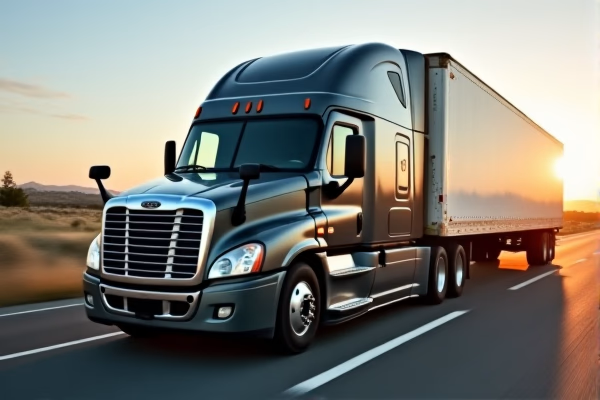
Families impacted by truck accidents can pursue a variety of damages to help alleviate the financial and emotional burdens they face. These include medical expenses (past and future), lost wages, property damage, and pain and suffering. In cases involving severe injuries or fatalities, families may also be entitled to compensation for loss of consortium, which covers the loss of companionship, support, and intimacy. Furthermore, punitive damages may be available if the trucking company’s negligence was particularly egregious, such as reckless driving or intentional disregard for safety regulations.
It’s important to remember that insurance companies are often motivated to minimize payouts. They may attempt to undervalue your claim or deny it altogether. That’s why it’s crucial to have an experienced attorney on your side who can navigate the complex legal process and advocate for your rights. We understand the tactics insurance companies use and are prepared to fight for the full compensation you deserve.
How does the statute of limitations affect a family’s ability to file a claim?
California law provides a **two-year** window from the date of the truck accident to file a lawsuit. Because trucking companies often begin evidence destruction (like purging ELD data) as soon as the law allows, immediate filing is critical to preserve the integrity of the claim. This timeframe begins on the date of the accident, and it’s essential to act quickly to gather evidence, investigate the circumstances, and file a timely claim. Missing this deadline can result in the permanent loss of your right to recover compensation.
The statute of limitations can be complex, especially in cases involving government entities or multiple parties. It’s crucial to consult with an attorney as soon as possible to understand your rights and ensure you meet all applicable deadlines. We can help you navigate these complexities and protect your legal options.
What if the truck driver was an independent contractor, not an employee?
Determining the employment status of a truck driver can be a complex issue. California’s ‘ABC test’ determines if a delivery driver (Amazon/FedEx) is an employee or contractor. Even if labeled a ‘contractor,’ a company may be liable if they exercise control over the driver’s work, a key factor in San Diego delivery truck litigation. Even if the driver was classified as an independent contractor, the trucking company may still be liable for their negligence under certain circumstances, such as if they failed to properly vet the driver or exercise reasonable control over their operations.
We will thoroughly investigate the driver’s employment status and explore all potential avenues for recovery. This may involve examining contracts, insurance policies, and other relevant documentation to determine the responsible parties.
What role does the trucking company’s safety record play in a claim?
A trucking company’s safety record is a critical piece of evidence in any truck accident claim. Federal regulations dictate exactly how long a driver can be behind the wheel. Violations of these federal safety standards, often proven through Electronic Logging Device (ELD) data, are used to demonstrate driver fatigue. Companies with a history of safety violations, negligent maintenance practices, or inadequate driver training are more likely to be held liable for accidents caused by their drivers. We will thoroughly investigate the company’s safety record, including inspection reports, driver logs, and maintenance records, to build a strong case on your behalf.
Evidence of systemic safety issues can significantly strengthen your claim and increase the potential for a favorable settlement. We have the resources and expertise to uncover this evidence and present it effectively to the insurance company.
How can families protect evidence after a truck accident?
Preserving evidence is crucial in any truck accident claim. Commercial vehicles are subject to rigorous safety and inspection regulations. Failure to maintain brakes, tires, or lighting systems according to California’s commercial vehicle safety framework can be used to establish direct liability against the carrier for ‘negligent maintenance’. This includes photographs of the accident scene, medical records, police reports, and witness statements. It’s also important to document any lost wages or other expenses related to the accident. We will send a spoliation letter to the trucking company, demanding that they preserve all relevant evidence, including ELD data, maintenance records, and driver logs.
We can also help you secure dashcam footage or other digital evidence that may be relevant to your claim. The sooner you take steps to preserve evidence, the stronger your case will be.
What if the injured person is unable to communicate due to their injuries?
If the injured person is unable to communicate due to their injuries, it’s crucial to have a legal representative appointed to act on their behalf. This may involve obtaining a conservatorship or guardianship through the court. We can assist you with this process and ensure that your loved one’s rights are protected. We will work closely with medical professionals to understand the extent of their injuries and communicate their wishes to the insurance company.
Even if your loved one is unable to communicate, you still have the right to pursue a claim for compensation. We will handle all aspects of the legal process and advocate for your best interests.
What should families know about dealing with insurance adjusters?
Insurance adjusters are trained to minimize payouts and protect the insurance company’s bottom line. They may attempt to contact you shortly after the accident and ask for a recorded statement. It’s generally best to avoid giving a recorded statement without first consulting with an attorney. Adjusters may also try to downplay your injuries or claim that the accident was your fault. It’s important to remember that you are not obligated to accept their initial offer. We can handle all communications with the insurance company on your behalf and ensure that you receive a fair settlement.
We will thoroughly investigate the accident, gather evidence, and negotiate with the insurance company to maximize your compensation. We understand the tactics insurance companies use and are prepared to fight for your rights.
What if the accident involved a government vehicle or roadway hazard?
If a truck accident involves a government-owned vehicle or a dangerous road condition maintained by a public entity, a formal administrative claim **MUST** be presented within **6 months** (180 days). Failure to meet this strict deadline under the Government Tort Claims Act can result in the permanent loss of your right to recover. These claims have specific requirements and procedures that must be followed carefully. We can assist you with preparing and filing the claim, ensuring that it meets all applicable deadlines and requirements.
Navigating government liability claims can be complex, and it’s crucial to have an experienced attorney on your side. We have a proven track record of success in handling these types of cases.
What is the process for filing an UM/UIM claim against the insured’s own policy?
If the at-fault truck driver is underinsured or uninsured, you may be able to file an Uninsured/Underinsured Motorist (UM/UIM) claim against your own insurance policy. This coverage provides compensation for your damages if the at-fault driver does not have sufficient insurance to cover your losses. UM/UIM arbitration procedures (insured’s own policy) can be complex, and it’s important to understand your rights and options. We can assist you with filing the claim and representing you in arbitration.
We will thoroughly review your insurance policy and explore all potential avenues for recovery. We have extensive experience in handling UM/UIM claims and are prepared to fight for the full compensation you deserve.
As a personal injury attorney in San Diego, I understand the challenges families face after a truck accident. I am committed to providing compassionate and effective legal representation to help you navigate this difficult time and secure the resources you need to rebuild your life.