What If The Truck Driver Leaves The Scene?

When a truck driver leaves the scene of an accident, it immediately elevates the seriousness of the case from a typical negligence claim to a potential criminal matter. While the immediate focus is on locating the driver and ensuring their arrest, it also significantly complicates the process of recovering compensation for your injuries. The driver’s flight constitutes a hit-and-run, which carries both civil and criminal penalties in California. This means you’re not only dealing with insurance companies, but potentially also law enforcement and the District Attorney’s office.
The first step is to report the accident to the police immediately, if you haven’t already. Provide as much detail as possible about the truck, the driver (if you have any information), and the direction the truck was traveling. Even seemingly insignificant details can be crucial in identifying the driver and locating the vehicle. Document everything you remember, including the time of day, weather conditions, and any witnesses who may have seen the accident. The police report will be a vital piece of evidence in your claim, and it’s important to ensure it accurately reflects the events as they occurred.
I’ve been practicing personal injury law in San Diego for over 13 years, and I’ve seen firsthand how insurance companies attempt to minimize their payouts in hit-and-run cases. Trained by a former insurance defense attorney, I have intimate knowledge of how they evaluate, devalue, and deny claims. They will often try to argue that the driver’s identity is unknown, making it difficult to prove negligence. However, even without knowing the driver’s name, we can still pursue a claim against the trucking company, the truck owner, and potentially other responsible parties.
What evidence is needed to pursue a claim against the trucking company if the driver is unknown?
Even if the driver remains unidentified, there are several avenues for pursuing a claim. The trucking company is legally responsible for the actions of its employees while they are on duty. We can investigate the company’s hiring practices, training procedures, and maintenance records to determine if negligence contributed to the accident. This includes reviewing the driver’s qualifications, background checks, and any prior safety violations. Furthermore, we can subpoena the trucking company’s dispatch logs, ELD data, and other relevant documents to establish the driver’s route, hours of service, and potential fatigue levels at the time of the crash.
Dashcam footage from other vehicles, surveillance cameras in the area, and witness statements can also provide valuable evidence. In San Diego, many businesses and residences have security cameras that may have captured the accident or the truck’s movements before or after the collision. We will conduct a thorough investigation to gather all available evidence and build a strong case against the responsible parties. It’s crucial to act quickly, as evidence can be lost or destroyed over time.
How does the statute of limitations apply in a hit-and-run truck accident case?
California law provides a **two-year** window from the date of the truck accident to file a lawsuit. Because trucking companies often begin evidence destruction (like purging ELD data) as soon as the law allows, immediate filing is critical to preserve the integrity of the claim. However, the statute of limitations can be complex, especially in hit-and-run cases where the driver’s identity is unknown. The clock typically starts ticking from the date of the accident, but there may be exceptions depending on the circumstances. It’s essential to consult with an attorney as soon as possible to ensure you don’t miss the deadline to file your claim.
We will immediately investigate the accident and gather all available evidence to protect your legal rights. This includes obtaining the police report, interviewing witnesses, and preserving any physical evidence from the scene. We will also notify the trucking company of our intent to file a claim and begin the process of negotiating a fair settlement.
What if the truck was owned by a leasing company and not the primary carrier?
Trucking companies often utilize complex ownership structures, including leasing arrangements. Determining the responsible party can be challenging when multiple entities are involved. The leasing company, the primary carrier, and the driver may all share liability for your injuries. We will conduct a thorough investigation to identify all potential defendants and establish their respective levels of responsibility. This includes reviewing the leasing agreement, insurance policies, and other relevant documents to determine who is ultimately liable for the accident.
In these situations, it’s crucial to have an attorney with experience in trucking litigation who understands the intricacies of these ownership structures. We will navigate the legal complexities and ensure that all responsible parties are held accountable for their actions.
Can I recover damages for pain and suffering in a hit-and-run truck accident case?
Yes, you are entitled to recover damages for pain and suffering, as well as other economic and non-economic losses, in a hit-and-run truck accident case. Pain and suffering encompass the physical and emotional distress you have experienced as a result of the accident, including medical treatment, lost wages, and diminished quality of life. Calculating these damages can be complex, as they are subjective in nature. We will work with medical experts and other professionals to document the extent of your injuries and the impact they have had on your life.
We will also gather evidence to support your claim for pain and suffering, including medical records, witness statements, and your own testimony. Our goal is to obtain a fair settlement that fully compensates you for all of your losses, including both economic and non-economic damages.
What if the truck driver is later identified after the statute of limitations has expired?
This is a complex legal issue that requires careful analysis. Generally, the statute of limitations begins to run from the date of the accident, regardless of whether the driver’s identity is known at that time. However, there may be exceptions to this rule depending on the circumstances. For example, if the driver intentionally concealed their identity, the statute of limitations may be tolled (paused) until their identity is discovered. We will thoroughly investigate the circumstances of the case and determine if any exceptions apply.
If the statute of limitations has expired, it may still be possible to pursue a claim against the trucking company or other responsible parties. We will explore all available legal options and advise you on the best course of action. It’s crucial to consult with an attorney as soon as possible to discuss your options.
What should I do if I receive a call from the insurance adjuster after a hit-and-run accident?
Do not speak to the insurance adjuster without first consulting with an attorney. Insurance adjusters are trained to minimize their payouts and may attempt to trick you into making statements that could harm your claim. They will often ask you to provide a recorded statement, which they can use against you later. Politely decline to provide any information and refer them to your attorney.
We will handle all communication with the insurance company on your behalf and ensure that your rights are protected. We will negotiate a fair settlement based on the full extent of your damages and will not settle your claim until you are fully compensated for your losses.
What if the government entity was responsible for maintaining the roadway where the accident occurred?
If a truck accident involves a government-owned vehicle or a dangerous road condition maintained by a public entity, a formal administrative claim **MUST** be presented within **6 months** (180 days). Failure to meet this strict deadline under the Government Tort Claims Act can result in the permanent loss of your right to recover. This claim must be detailed and include all supporting documentation, such as the police report, medical records, and witness statements.
We have extensive experience handling claims against government entities in San Diego and will ensure that your claim is properly filed and documented. We will also investigate the government entity’s maintenance records and other relevant documents to determine if negligence contributed to the accident.
How does comparative fault affect my truck accident claim?
California’s ‘pure’ comparative fault system applies to trucking claims. Even if a truck driver argues you shared responsibility, you can still recover damages; however, your total compensation will be reduced by your percentage of fault. For example, if you are found to be 20% at fault for the accident, your recovery will be reduced by 20%.
Insurance companies will often attempt to argue that you were partially at fault for the accident in order to minimize their payouts. We will thoroughly investigate the accident and gather evidence to refute any claims of comparative fault. We will also present a strong case to the jury to demonstrate that the truck driver was solely responsible for the accident.
What if the truck driver was working as an independent contractor?
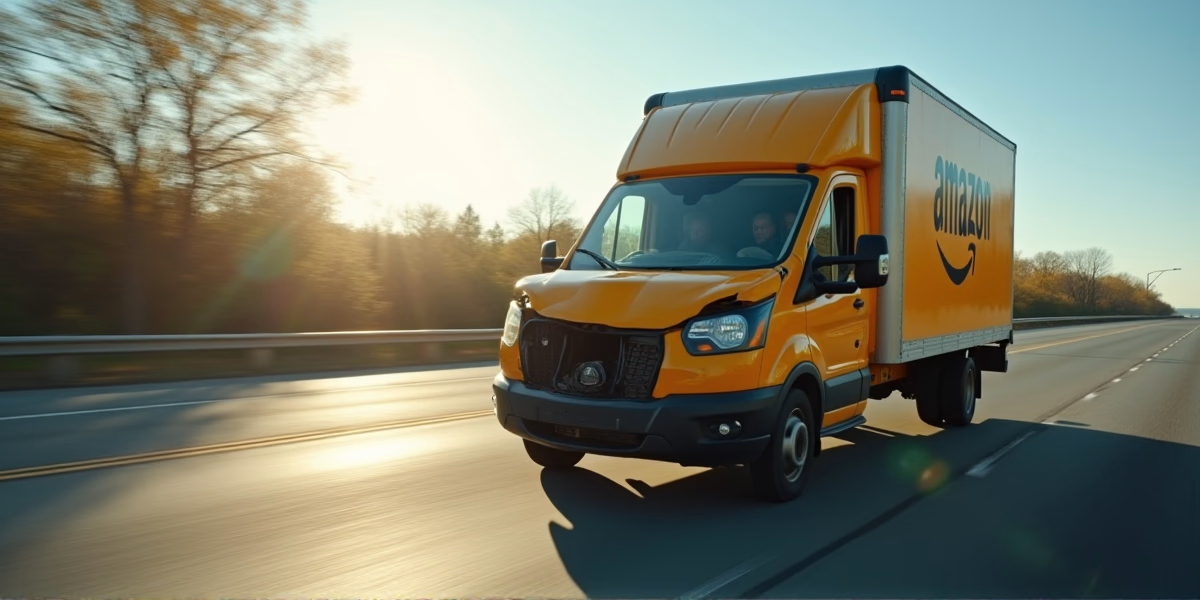
California’s ‘ABC test’ determines if a delivery driver (Amazon/FedEx) is an employee or contractor. Even if labeled a ‘contractor,’ a company may be liable if they exercise control over the driver’s work, a key factor in San Diego delivery truck litigation. Factors considered include who provides the equipment, who sets the schedule, and who controls the driver’s route.
We will investigate the driver’s employment status and determine if the company exercised sufficient control over their work to be considered an employer. If the driver was improperly classified as an independent contractor, the company may be liable for their negligence.