What Information Should I Collect At The Scene Of A Truck Accident?

Truck accidents are unlike car crashes. They involve complex regulations, multiple parties (the driver, the trucking company, potentially cargo loaders, and maintenance providers), and insurance companies with vast resources dedicated to minimizing payouts. Knowing what steps to take *immediately* following a collision with a commercial truck can be the difference between a fair recovery and a frustrating denial of your claim. It’s not about placing blame at the scene; it’s about preserving evidence that will support your case later on.
The first priority, of course, is medical attention. Even if you feel “okay” after the impact, adrenaline can mask serious injuries. Internal bleeding, traumatic brain injuries, and whiplash symptoms often don’t manifest for hours or even days. Once you’ve addressed your immediate health needs, focus on documenting the accident scene as thoroughly as possible. This isn’t about being a detective; it’s about protecting yourself and your future.
I’ve been practicing personal injury law in San Diego for over 13 years, and I’ve seen firsthand how crucial those initial steps are. I was trained by a former insurance defense attorney, giving me intimate knowledge of how insurance companies evaluate, devalue, and deny claims. They’re looking for any reason to dispute your version of events, and a lack of documentation can be a fatal blow to your case.
What specific information should I gather from the other driver?

Obtaining the other driver’s information is paramount, but don’t rely solely on their word. You need to verify everything. Start with the basics: their full name, contact information, driver’s license number, and the trucking company they work for. Critically, request a copy of their logbook, if available. These logs detail their hours of service, which is heavily regulated by federal law. Any discrepancies or violations can be powerful evidence of negligence. Also, get the truck’s registration and insurance information, including the policy number and contact details for the insurance adjuster.
However, be cautious about accepting any statements or apologies from the driver. Anything they say can be used against you later. Politely decline to discuss the accident details with them directly and focus on gathering objective information. If the driver is hesitant to provide information, or appears evasive, document that behavior.
How important is it to document the accident scene itself?
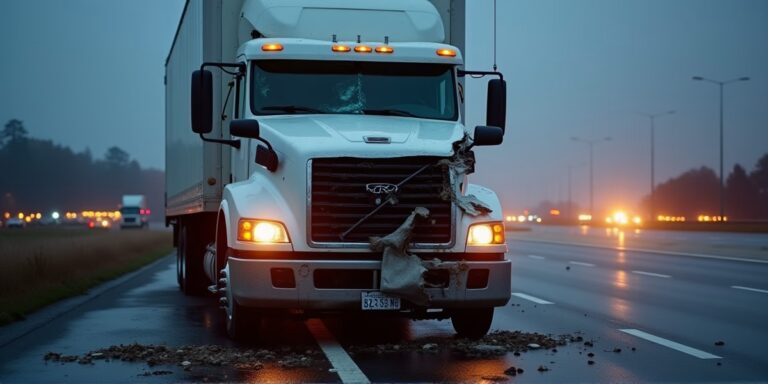
Extremely. Photographs and videos are your most valuable assets. Capture images of the damage to all vehicles involved, the position of the vehicles after the collision, any skid marks or debris on the road, and the surrounding area, including traffic signals, road conditions, and visibility. Take wide-angle shots to provide context, and close-ups to highlight specific details. If possible, use your smartphone to record a video walkthrough of the scene, narrating the date, time, and location. Pay attention to any visible injuries you sustained.
Don’t forget to document the road conditions. Was it wet, dry, or icy? Were there any potholes or obstructions? Also, note the time of day and weather conditions. These factors can all contribute to the cause of the accident. If there are any witnesses, get their names and contact information. Their testimony can be invaluable in corroborating your version of events.
What about police reports and official documentation?
Always call 911 to report the accident, even if it seems minor. A police report provides an official record of the incident, which can be helpful in your claim. Obtain a copy of the report as soon as it’s available. However, remember that police reports are not always accurate or complete. They often contain errors or omissions, so it’s important to supplement the report with your own documentation.
If the accident involved a government-owned vehicle or a dangerous road condition maintained by a public entity, a formal administrative claim **MUST** be presented within **6 months** (180 days). Failure to meet this strict deadline under the Government Tort Claims Act can result in the permanent loss of your right to recover.
What if I’m injured and unable to gather all this information myself?
That’s understandable. In that situation, it’s crucial to have a trusted friend or family member assist you. They can take photos, collect information, and act as your advocate. If you’re unable to communicate effectively, they can also speak to the police and insurance adjusters on your behalf. However, be sure they understand the importance of documenting everything accurately and avoiding any statements that could compromise your claim.
What role does the trucking company play in an accident investigation?
The trucking company will almost certainly conduct its own investigation, often led by their insurance carrier. They’ll likely send representatives to the scene, interview the driver, and gather evidence. Be very careful about speaking to them without legal counsel. They are not on your side, and their goal is to minimize their liability. Anything you say can be used against you. It’s best to let your attorney handle all communication with the trucking company and their representatives.
How can I protect my rights if the insurance company contacts me?
The insurance company will likely contact you shortly after the accident to gather information. Be polite, but firm. Do not provide any recorded statements without consulting with an attorney. Insurance companies are skilled at asking leading questions designed to minimize their payout. They may try to downplay your injuries or suggest you were partially at fault. It’s best to refer all inquiries to your attorney.
What should I do about medical bills and lost wages?
Keep meticulous records of all your medical expenses, including bills, receipts, and treatment records. Also, document any lost wages or income you’ve incurred as a result of the accident. This includes time off work, reduced earning capacity, and any other financial losses. Your attorney can help you gather this information and submit it to the insurance company as part of your claim.
What if the driver was operating a company vehicle and was considered an independent contractor?
Determining whether a driver is an employee or an independent contractor can be complex. California’s ‘ABC test’ determines if a delivery driver (Amazon/FedEx) is an employee or contractor. Even if labeled a ‘contractor,’ a company may be liable if they exercise control over the driver’s work, a key factor in San Diego delivery truck litigation.
What if I suspect the driver was under the influence of drugs or alcohol?
If you suspect the driver was impaired, immediately notify the police and request a drug and alcohol test. Any evidence of impairment can be crucial in your claim. Also, document any observations you made about the driver’s behavior, such as slurred speech, erratic movements, or the smell of alcohol.
What if the truck accident involved a defective part or mechanical failure?
If you suspect a defective part or mechanical failure contributed to the accident, it’s important to preserve the truck for inspection. Your attorney can arrange for an independent expert to examine the vehicle and identify any defects. This can be powerful evidence in your claim.
What if I am facing delay and stalling tactics by the insurance company?
Insurance companies often employ delay and stalling tactics to wear down claimants and discourage them from pursuing their claims. They may request excessive documentation, deny your claim without explanation, or simply ignore your calls and emails. If you’re experiencing these tactics, it’s important to remain persistent and consult with an attorney. We can help you navigate the claims process and ensure your rights are protected.
What is the statute of limitations for filing a truck accident claim in California?
California law provides a **two-year** window from the date of the truck accident to file a lawsuit. Because trucking companies often begin evidence destruction (like purging ELD data) as soon as the law allows, immediate filing is critical to preserve the integrity of the claim.
What if the truck accident involved a dashcam or other digital evidence?
Dashcam footage, electronic logging device (ELD) data, and other digital evidence can be invaluable in your claim. Your attorney can help you obtain this evidence and analyze it to support your case. It’s important to act quickly, as this evidence may be overwritten or destroyed.