What Is A Reportable Crash According To Fmcsa In California?

As a personal injury attorney practicing in San Diego for over 13 years, I’ve seen firsthand how insurance companies attempt to undervalue and deny legitimate claims. I was trained by a former insurance defense attorney, giving me intimate knowledge of how they evaluate, devalue, and deny claims. Understanding the FMCSA’s reporting requirements is a critical first step in protecting your rights after a truck accident.
What constitutes a reportable crash under FMCSA regulations?
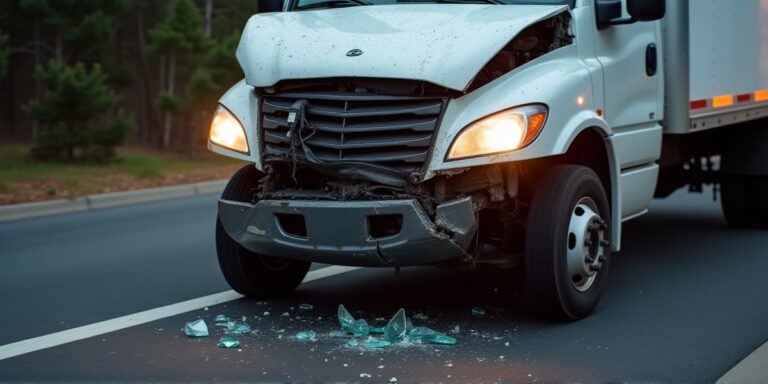
The Federal Motor Carrier Safety Administration (FMCSA) mandates that commercial motor vehicle (CMV) drivers and carriers report any crash involving their vehicles to the National Highway Traffic Safety Administration (NHTSA) within five business days. However, not every incident qualifies as a reportable crash. The threshold for reporting is surprisingly low. A crash is considered reportable if it results in any of the following:
- Fatalities: Any death resulting from the accident.
- Bodily Injury: Injury requiring medical attention away from the scene of the accident, or resulting in loss of consciousness.
- Property Damage: Damage exceeding $75,000 to any one vehicle.
It’s important to note that even if the police don’t file a report, or if your initial injuries seem minor, the CMV driver or carrier still has a legal obligation to report the incident if it meets these criteria. This is because the FMCSA’s reporting requirements are separate from, and often broader than, state law reporting obligations.
Why is FMCSA crash reporting important for my claim?
The FMCSA’s crash reporting database, known as the Motor Carrier Management Information System (MCMIS), is a valuable resource for attorneys investigating truck accidents. These reports often contain critical information about the driver, the carrier, the vehicle, and the circumstances of the crash. This information can be used to establish negligence, identify potential safety violations, and build a strong case against the responsible parties. For example, a history of unreported crashes can demonstrate a pattern of reckless behavior by the carrier.
Furthermore, the failure of a CMV driver or carrier to report a crash as required by the FMCSA can be evidence of negligence *per se*, meaning it automatically establishes a breach of duty of care. This can significantly strengthen your claim and increase your chances of a successful recovery. In San Diego, we frequently use these reports to uncover violations that the insurance company would otherwise conceal.
What should I do if I believe a crash was not properly reported?
If you suspect that a truck accident was not properly reported to the FMCSA, it’s crucial to consult with an experienced attorney immediately. We can conduct a thorough investigation to determine if a report was filed, and if not, take appropriate legal action to obtain the necessary information. This may involve filing a request with the NHTSA, or pursuing litigation to compel the carrier to disclose the report. We can also investigate the driver’s logbooks and Electronic Logging Device (ELD) data to verify the accuracy of their reporting.
What happens if the trucking company fails to report the accident?
A trucking company’s failure to report a crash to the FMCSA can result in significant penalties, including fines, suspension of their operating authority, and even criminal charges. More importantly for your claim, it can be strong evidence of negligence. The carrier’s deliberate attempt to conceal the accident demonstrates a disregard for safety and a willingness to prioritize profits over public safety. This can be used to persuade a jury to award you substantial damages.
Can I rely on the police report as the sole source of information?
While a police report is a useful document, it should not be relied upon as the sole source of information in a truck accident case. Police officers are often not trained to investigate complex commercial vehicle accidents, and their reports may contain inaccuracies or omissions. The FMCSA crash report, along with other evidence such as the driver’s logbooks, ELD data, and witness statements, provides a more comprehensive and accurate picture of the events leading up to the crash. In San Diego, we always conduct an independent investigation to verify the information contained in the police report.
What is the statute of limitations for filing a claim after a reportable truck crash?
In California, you have a **two-year** window from the date of the truck accident to file a lawsuit. Because trucking companies often begin evidence destruction (like purging ELD data) as soon as the law allows, immediate filing is critical to preserve the integrity of the claim. CCP § 335.1
What if the accident involved a government vehicle or roadway?
If a truck accident involves a government-owned vehicle or a dangerous road condition maintained by a public entity, a formal administrative claim **MUST** be presented within **6 months** (180 days). Failure to meet this strict deadline under the Government Tort Claims Act can result in the permanent loss of your right to recover. Gov. Code § 911.2
What if the driver was classified as an independent contractor?
California’s ‘ABC test’ determines if a delivery driver (Amazon/FedEx) is an employee or contractor. Even if labeled a ‘contractor,’ a company may be liable if they exercise control over the driver’s work, a key factor in San Diego delivery truck litigation. Labor Code § 2775
How can the trucking company be held liable for the driver’s negligence?
Under the doctrine of **vicarious liability** (respondeat superior), a principal is responsible to third persons for the negligence of their agent in the transaction of business. This holds the trucking company legally liable for the wrongful acts of its drivers committed within the scope of their employment. Civ. Code § 2338
What are the speed limits for commercial trucks in California?
In California, commercial trucks (including semi-tractors with three or more axles) are strictly prohibited from exceeding **55 miles per hour** on any highway. In San Diego freeway crashes, proving a violation of this speed limit is a primary tool for establishing statutory negligence. CVC § 22406