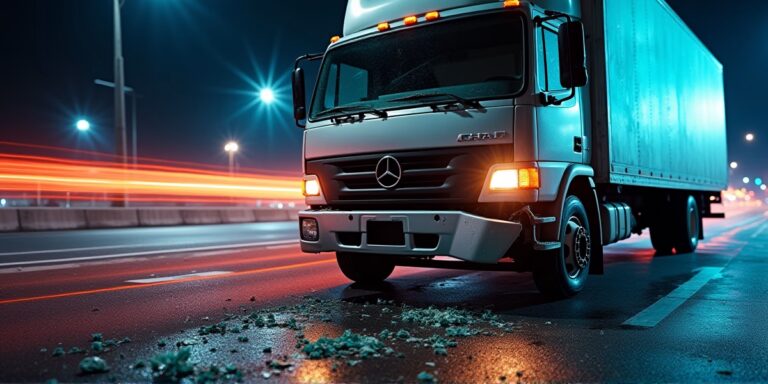
What Should I Do If A Construction Truck Hits My Car?

Construction trucks, due to their size and weight, present a significantly higher risk of serious injury or fatality in an accident. These vehicles often operate in complex work zones, with multiple distractions and changing traffic patterns. Unlike a typical passenger vehicle collision, accidents involving construction trucks frequently involve multiple parties – the driver, the construction company, subcontractors, and potentially even government entities responsible for road maintenance. This complexity can make navigating the claims process incredibly challenging, and it’s why seeking legal counsel early on is so crucial.
One of the first things I advise my clients to do is to document everything. This includes taking photos of the accident scene, the damage to your vehicle, and any visible injuries. Obtain the truck driver’s information, including their commercial driver’s license (CDL) number, insurance details, and the name of the construction company. If possible, gather contact information from any witnesses. Crucially, you need to report the accident to the police, even if the damage appears minor. A police report provides an objective record of the incident and can be invaluable when dealing with insurance companies.
I’ve been practicing personal injury law in San Diego for over 13 years, and I’ve seen firsthand how insurance companies attempt to minimize payouts in construction truck accidents. I was trained by a former insurance defense attorney, giving me intimate knowledge of how these companies evaluate, devalue, and deny claims. They often focus on blaming the victim, questioning the severity of their injuries, or disputing the extent of their damages. Don’t fall into the trap of accepting a quick settlement offer without first understanding your full legal rights.
What types of evidence are most important in a construction truck accident claim?
Establishing liability in a construction truck accident requires a thorough investigation and the collection of compelling evidence. Beyond the standard police report and witness statements, several types of evidence are particularly important. First, the truck’s Event Data Recorder (EDR), often referred to as a “black box,” can provide critical information about the vehicle’s speed, braking patterns, and driver behavior leading up to the crash. Second, maintenance records can reveal if the truck was properly inspected and maintained, or if any mechanical failures contributed to the accident. Finally, dashcam footage, if available, can offer a clear and unbiased account of the collision.
Securing this evidence quickly is vital. Insurance companies are notorious for destroying or altering evidence that could be detrimental to their case. We often send spoliation letters to the trucking company demanding preservation of all relevant data and records. The sooner you act, the better your chances of obtaining the information you need to build a strong claim.
How does California law handle liability when a construction company is at fault?
Determining liability in a construction truck accident can be complex, as multiple parties may be responsible. Under the doctrine of **vicarious liability** (respondeat superior), a principal is responsible to third persons for the negligence of their agent in the transaction of business. This holds the trucking company legally liable for the wrongful acts of its drivers committed within the scope of their employment. However, the construction company itself may also be directly liable if it was negligent in its hiring, training, or supervision of the driver. For example, if the driver had a history of safety violations or lacked the proper CDL endorsements, the construction company could be held accountable.
Furthermore, if the accident was caused by a dangerous road condition maintained by a public entity, a claim may need to be filed against the government. This requires strict adherence to specific deadlines and procedures, as outlined in the Government Tort Claims Act.
What if the truck driver was an independent contractor, not an employee?
The question of whether a truck driver is an employee or an independent contractor is a crucial one, as it directly impacts who is liable for the accident. California’s ‘ABC test’ determines if a delivery driver (Amazon/FedEx) is an employee or contractor. Even if labeled a ‘contractor,’ a company may be liable if they exercise control over the driver’s work, a key factor in San Diego delivery truck litigation. If the construction company exercised significant control over the driver’s schedule, routes, or methods of operation, they may still be held responsible for their negligence. This is a highly fact-specific inquiry, and it often requires expert testimony to establish the true nature of the relationship.
What is the statute of limitations for filing a lawsuit after a construction truck accident in California?
California law provides a **two-year** window from the date of the truck accident to file a lawsuit. Because trucking companies often begin evidence destruction (like purging ELD data) as soon as the law allows, immediate filing is critical to preserve the integrity of the claim. However, there are exceptions to this rule, such as cases involving minors or individuals with diminished capacity. It’s essential to consult with an attorney as soon as possible to ensure you don’t miss the deadline to protect your rights.
What should I expect during the insurance claims process, and how can an attorney help?
The insurance claims process after a construction truck accident can be lengthy and frustrating. Insurance adjusters are skilled negotiators who are trained to minimize payouts. They may attempt to downplay your injuries, challenge your medical bills, or dispute the extent of your damages. An attorney can level the playing field by handling all communications with the insurance company, gathering evidence, negotiating on your behalf, and preparing your case for trial if necessary.
We understand the financial and emotional toll that a construction truck accident can take. Our goal is to secure the maximum compensation you deserve for your medical expenses, lost wages, pain and suffering, and other damages. If you’ve been injured in a collision with a construction truck in San Diego, don’t hesitate to contact our office for a free consultation.
What happens if the truck company tenders their policy limits?
When an insurance company tenders their policy limits, they are offering to settle your claim for the maximum amount available under the policy. While this may seem like a favorable outcome, it’s crucial to carefully consider whether the offer adequately compensates you for your injuries and damages. Accepting a policy limits tender releases the insurance company from any further liability, even if your damages exceed the policy amount. We thoroughly evaluate the full extent of your losses, including future medical expenses and lost income, to determine if the tender is fair and reasonable.
What if I was partially at fault for the accident?
California’s ‘pure’ comparative fault system applies to trucking claims. Even if a truck driver argues you shared responsibility, you can still recover damages; however, your total compensation will be reduced by your percentage of fault. For example, if you were found to be 20% at fault for the accident, your recovery would be reduced by 20%. Insurance companies often attempt to assign blame to the victim to reduce their payout. We meticulously investigate the accident to challenge any claims of comparative fault and protect your right to full compensation.
What is the process for filing a claim against a government entity if the accident occurred due to a road hazard?
If a truck accident involves a government-owned vehicle or a dangerous road condition maintained by a public entity, a formal administrative claim **MUST** be presented within **6 months** (180 days). Failure to meet this strict deadline under the Government Tort Claims Act can result in the permanent loss of your right to recover. This claim must include detailed information about the accident, your injuries, and the damages you’ve incurred. We have extensive experience navigating the complex requirements of the Government Tort Claims Act and can ensure your claim is properly filed and documented.
What should I do about medical liens after a construction truck accident?
After a construction truck accident, you may receive medical bills from various healthcare providers. These providers may place a lien on your settlement proceeds to ensure they are compensated for their services. It’s important to understand your rights and options regarding medical liens. We negotiate with healthcare providers to reduce the amount of the lien, and we can explore options for resolving the lien through Medicare or other insurance programs.
What is the importance of preserving evidence, such as dashcam footage or electronic logging device (ELD) data?
Evidence preservation is critical in construction truck accident claims. The truck’s Event Data Recorder (EDR), often referred to as a “black box,” can provide critical information about the vehicle’s speed, braking patterns, and driver behavior leading up to the crash. Federal **Hours of Service (HOS)** regulations dictate exactly how long a driver can be behind the wheel. Violations of these federal safety standards, often proven through Electronic Logging Device (ELD) data, are used to demonstrate driver fatigue. We often send spoliation letters to the trucking company demanding preservation of all relevant data and records.