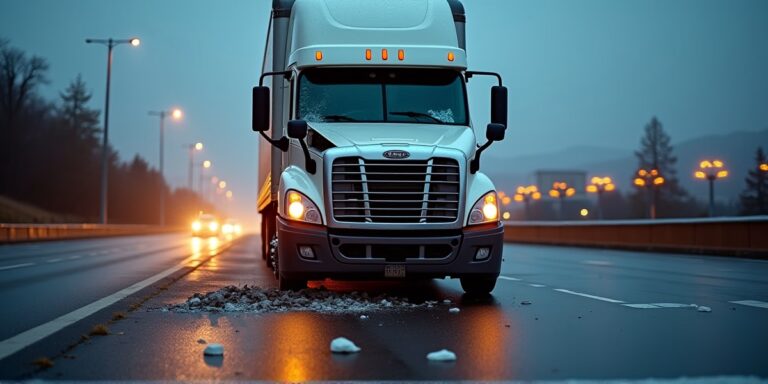
Are Rental Truck Drivers Held To Commercial Driving Standards?

This scenario, unfortunately, is far more common than people realize. Many individuals assume that simply because they’ve rented a truck, they’re automatically protected by the same regulations governing commercial vehicles. This is a dangerous misconception. While the rules aren’t always black and white, California law increasingly holds rental truck companies – and the individuals driving them – to a high standard of care, particularly when the truck’s size and weight necessitate a commercial driver’s license (CDL). The question of whether a rental truck driver is held to commercial driving standards hinges on several key factors, including the size of the vehicle, the driver’s experience, and the intended use of the truck.
The core issue revolves around negligence. To win a claim, we must prove that someone was at fault, and that fault directly caused your injuries. In the case of a rental truck, that fault could lie with the rental company for failing to properly maintain the vehicle, inadequately screening drivers, or providing insufficient safety instructions. It could also lie with another driver’s recklessness. However, if the rental company can successfully argue that Bartholomew wasn’t operating the truck as a commercial vehicle, they may attempt to limit their liability, claiming he was solely responsible for his own safety.
I’ve been practicing personal injury law in San Diego for over 13 years, and I’ve seen firsthand how insurance companies exploit these ambiguities. Trained by a former insurance defense attorney, I have intimate knowledge of how they evaluate, devalue, and deny claims. They’ll often focus on the fact that the renter wasn’t using the truck for commercial purposes – delivering goods for profit, for example – to downplay the need for rigorous safety protocols. However, even a personal move can trigger commercial driving standards if the truck exceeds a certain weight or requires a CDL.
What size rental truck requires a commercial driver’s license in California?
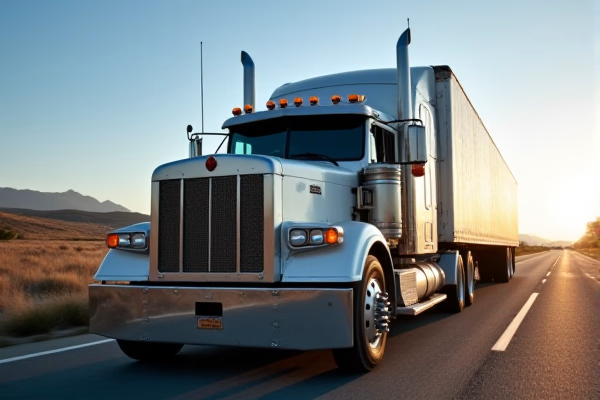
Generally, any truck with a Gross Vehicle Weight Rating (GVWR) of 26,001 pounds or more requires a valid commercial driver’s license (CDL) to operate legally in California. Many U-Haul and Penske trucks fall into this category. Even if you don’t *legally* need a CDL, operating a truck of that size without the proper training and experience significantly increases the risk of an accident. Insurance companies will use this against you, arguing you assumed a greater level of risk by driving a vehicle you weren’t qualified to handle.
Furthermore, even trucks *under* the CDL weight threshold can be subject to commercial driving regulations if they are used to transport hazardous materials or carry a significant number of passengers. It’s crucial to understand the specific requirements based on the truck’s specifications and your intended use. Failing to adhere to these regulations can create a presumption of negligence, even if the accident wasn’t directly caused by a violation.
Can a rental truck company be held liable for negligent entrustment?
Absolutely. Negligent entrustment occurs when a rental company provides a vehicle to someone they know, or should know, is unfit to operate it safely. This could include someone without a valid driver’s license, someone with a history of reckless driving, or someone who hasn’t received adequate training on operating a large truck. Proving negligent entrustment requires demonstrating that the rental company was aware of the driver’s deficiencies and still allowed them to rent the vehicle. This often involves reviewing the company’s driver screening procedures and rental agreements.
What evidence is important to gather after a rental truck accident?
Document everything. Immediately following the accident, exchange information with the other driver(s) involved, including insurance details. Obtain a copy of the police report, which will contain valuable information about the accident’s cause and any potential witnesses. Take detailed photos of the damage to all vehicles involved, as well as the accident scene. Most importantly, seek medical attention immediately, even if you don’t feel seriously injured. Many injuries, like traumatic brain injuries, don’t manifest symptoms immediately. Preserve all medical records and bills related to your treatment.
What if the rental truck had a mechanical defect that contributed to the accident?
If you suspect a mechanical defect played a role in the accident, it’s critical to preserve the truck as evidence. Notify the rental company immediately and request that they refrain from repairing or altering the vehicle. We can then hire a qualified mechanic to inspect the truck and identify any potential defects. This evidence can be crucial in establishing the rental company’s liability for negligent maintenance. Regular maintenance records are also vital in these cases, and we will seek to obtain those through discovery.
How does comparative fault affect my rental truck accident claim in California?
California operates under a ‘pure’ comparative fault system, meaning you can recover damages even if you were partially at fault for the accident. However, your total compensation will be reduced by your percentage of fault. For example, if you were 20% at fault and your damages total $100,000, you would only be able to recover $80,000. Insurance companies will often attempt to inflate your percentage of fault to minimize their payout. It’s essential to have an experienced attorney who can thoroughly investigate the accident and present a strong defense against these claims. Civ. Code § 1714 outlines the principles of comparative negligence in California.
What is the deadline for filing a lawsuit after a rental truck accident in California?
In California, you generally have **two years** from the date of the accident to file a lawsuit. This is known as the statute of limitations. However, because trucking companies often begin evidence destruction (like purging ELD data) as soon as the law allows, immediate filing is critical to preserve the integrity of the claim. Don’t delay seeking legal counsel, as missing this deadline can result in the permanent loss of your right to recover. CCP § 335.1 governs the statute of limitations for personal injury claims.
What should I do if the insurance company asks me to give a recorded statement?
Politely decline. Insurance companies record statements to gather information that can be used against you later. They are skilled at asking leading questions and twisting your words to minimize their liability. It’s best to let an attorney handle all communication with the insurance company on your behalf. We can ensure that your rights are protected and that you don’t inadvertently provide information that could harm your claim. Never** sign any documents or provide any information without first consulting with an attorney.
What if I was injured by a delivery driver (Amazon, FedEx, UPS) while they were on the job?
Determining liability in these cases can be complex. While these drivers often appear to be independent contractors, California’s ‘ABC test’ determines if a delivery driver is an employee or contractor. Even if labeled a ‘contractor,’ a company may be liable if they exercise control over the driver’s work, a key factor in San Diego delivery truck litigation. Labor Code § 2775 provides the framework for this analysis.
What if the truck accident involved a government-owned vehicle or a dangerous road condition?
If a truck accident involves a government-owned vehicle or a dangerous road condition maintained by a public entity, a formal administrative claim **MUST** be presented within **6 months** (180 days). Failure to meet this strict deadline under the Government Tort Claims Act can result in the permanent loss of your right to recover. Gov. Code § 911.2 details the requirements for filing a government claim.
What if I have workers’ compensation benefits for my injuries, can I still sue the other party?
If a commercial driver is injured on the job in San Diego, they are entitled to workers’ compensation. However, workers’ compensation is generally the **exclusive remedy** against the employer. Separate personal injury claims are typically limited to **negligent third parties** who are not the employer. Labor Code § 3600 outlines the scope of workers’ compensation benefits.