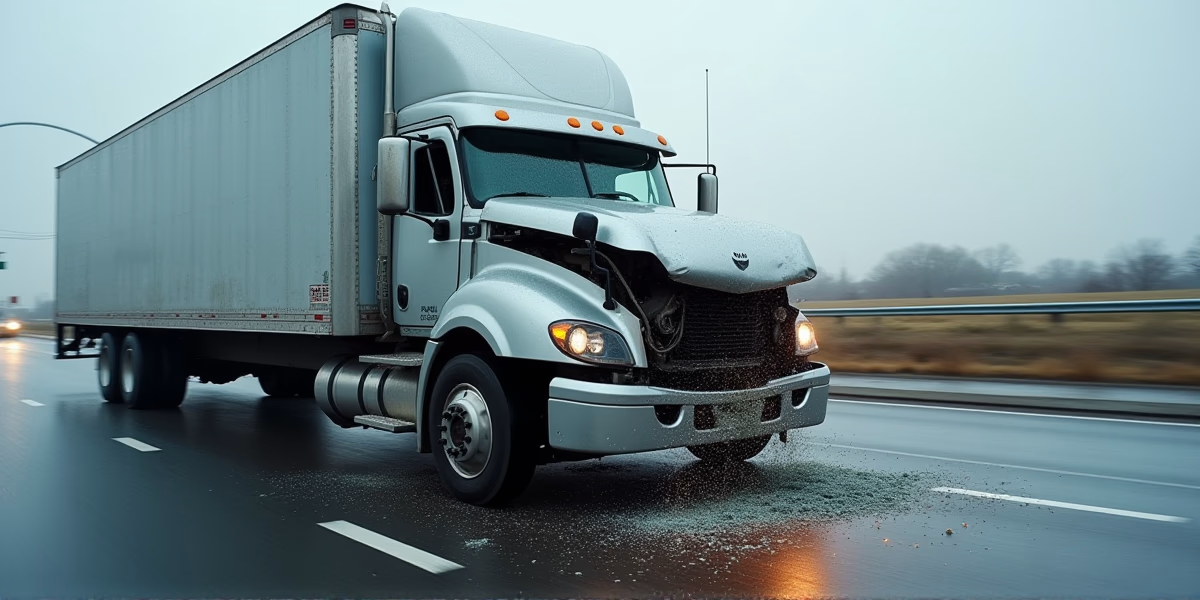
Can A Truck Accident Claim Take Years To Resolve?

The short answer to Leo’s question – and the question many San Diego truck accident victims ask – is yes, a claim *can* take years to resolve. It’s not the norm, but it’s a very real possibility. The complexity of these cases, the aggressive tactics employed by trucking companies and their insurers, and the sheer volume of evidence involved often lead to protracted negotiations and, ultimately, litigation. Understanding why these cases take time is the first step in preparing for the battle ahead.
One of the biggest factors is the investigation itself. Trucking accidents aren’t like typical car crashes. There are federal regulations to consider, driver logs to analyze, maintenance records to scrutinize, and the potential for mechanical failure. The trucking company will conduct its own investigation, often with the goal of minimizing its liability. We, as his attorneys, must independently verify their findings and uncover any evidence they might be trying to conceal. This process can be incredibly time-consuming, requiring expert witnesses, accident reconstruction specialists, and a deep understanding of commercial vehicle operations.
I’ve been practicing personal injury law in San Diego for over 13 years, and I’ve seen firsthand how insurance companies evaluate, devalue, and deny legitimate claims. Trained by a former insurance defense attorney, I have intimate knowledge of their strategies. They’ll often start with a lowball offer, hoping you’ll settle for far less than your case is worth. They’ll look for any reason to dispute your injuries, your lost wages, or the extent of your damages. They’ll delay responses, request endless documentation, and generally try to wear you down. It’s a calculated approach, and it’s why having an experienced attorney on your side is so crucial.
How Long Does a Truck Accident Settlement Typically Take?

There’s no one-size-fits-all answer, but here’s a general timeline. If the liability is clear – meaning the truck driver was undeniably at fault – and your injuries are relatively minor, you might be able to settle your case within six to twelve months. However, this is rare. More often, cases take 18 months to two years, especially if there are disputes over fault or the severity of your injuries. If the case goes to trial, it can easily take three years or longer to reach a resolution.
Several factors can extend the timeline. Complex medical issues requiring ongoing treatment, disputes over the cause of the accident, and the need for multiple expert witnesses all add time to the process. Also, the responsiveness of the insurance company plays a significant role. Some insurers are more cooperative than others, while others will drag their feet at every turn. Finally, court scheduling can be a major bottleneck, especially in San Diego County, where the courts are often backlogged.
What Tactics Do Insurance Companies Use to Delay Truck Accident Claims?
Insurance companies have a number of tactics at their disposal to delay claims and reduce payouts. One common strategy is to request extensive documentation – medical records, employment history, police reports, etc. While providing this information is necessary, they may ask for it repeatedly or nitpick minor inconsistencies to create doubt. They may also schedule numerous independent medical examinations (IMEs) with doctors of their choosing, who are often biased in their favor.
Another tactic is to simply delay responding to your attorney’s requests. They may claim they’re “investigating” the accident, but in reality, they’re stalling for time. They may also offer a lowball settlement early on, hoping you’ll accept it before you fully understand the extent of your damages. It’s important to remember that you are not obligated to accept any settlement offer, and you should never sign anything without consulting with an attorney.
What Happens if the Statute of Limitations is Approaching?
California law provides a **two-year** window from the date of the truck accident to file a lawsuit. Because trucking companies often begin evidence destruction (like purging ELD data) as soon as the law allows, immediate filing is critical to preserve the integrity of the claim. If you wait too long, you could lose your right to recover compensation altogether. It’s essential to consult with an attorney as soon as possible to ensure you meet all applicable deadlines.
What Role Does Evidence Preservation Play in a Long-Term Claim?
Evidence is the cornerstone of any successful truck accident claim. This includes the police report, witness statements, medical records, photographs of the accident scene, and the truck’s black box data (ELD). Trucking companies have a legal obligation to preserve this evidence, but they may not always comply. They may “lose” important documents or alter data to minimize their liability. That’s why it’s crucial to act quickly to gather as much evidence as possible, including sending a spoliation letter to the trucking company demanding they preserve all relevant records.
Dashcam footage, if available, can be invaluable. Similarly, data from the truck’s ECM/EDR (Engine Control Module/Event Data Recorder) can provide critical insights into the driver’s speed, braking patterns, and other factors leading up to the accident. We often work with accident reconstruction specialists to analyze this data and build a strong case on your behalf.
What if the Truck Driver Was an Independent Contractor?
California’s ‘ABC test’ determines if a delivery driver (Amazon/FedEx) is an employee or contractor. Even if labeled a ‘contractor,’ a company may be liable if they exercise control over the driver’s work, a key factor in San Diego delivery truck litigation. Determining the driver’s employment status can be complex, often requiring a thorough investigation of the company’s hiring practices, training procedures, and level of control over the driver’s operations.