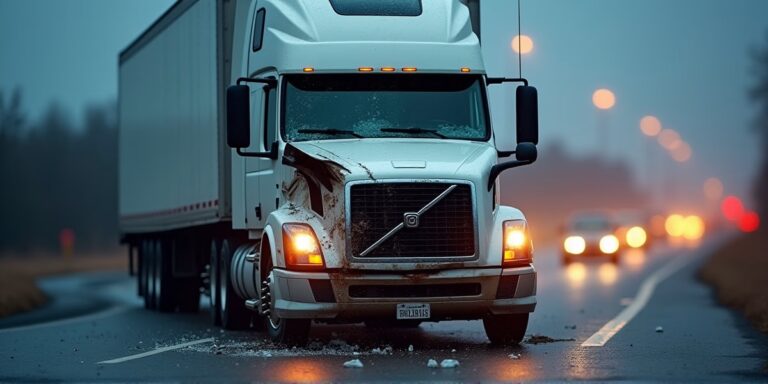
Gabriel was driving home from work when a semi-truck ran a red light, broadsiding his vehicle. He suffered a fractured femur, a traumatic brain injury, and significant nerve damage. His medical bills quickly exceeded $128,739, and he faced months of physical therapy and lost wages. The trucking company’s insurance company offered a paltry $15,000 settlement, claiming Gabriel was partially at fault.
The question of whether multiple parties can increase settlement value in a truck accident case is one I address frequently with my clients here in San Diego. The short answer is almost always yes, but it’s a nuanced issue. Insurance companies are skilled at minimizing payouts, and a single claimant often lacks the leverage to negotiate effectively. Introducing additional responsible parties, however, can dramatically shift the power dynamic and unlock significantly higher compensation.
The core principle at play is the concept of shared responsibility. When multiple entities contribute to an accident, each one becomes potentially liable for the full extent of the damages. This doesn’t mean each party will pay the entire amount, but it does create a situation where they are more likely to contribute to a fair settlement to avoid costly litigation and the risk of a larger judgment. I’ve seen cases where the involvement of just one additional defendant increased the overall settlement offer by 50% or more.
I’ve been practicing personal injury law in San Diego for over 13 years, and I was fortunate early in my career to train with a former insurance defense attorney. This experience gave me intimate knowledge of how insurance companies evaluate, devalue, and deny claims. They look for any opportunity to reduce their exposure, and a single claimant is often an easier target than multiple plaintiffs with coordinated legal representation.
Can the Truck Driver’s Employer Be Held Liable?
Often, the truck driver is an employee of a trucking company. Under the doctrine of **vicarious liability** (respondeat superior), a principal is responsible to third persons for the negligence of their agent in the transaction of business. This holds the trucking company legally liable for the wrongful acts of its drivers committed within the scope of their employment. Even if the driver was directly at fault, the company’s potential liability can significantly increase the available compensation. We investigate the driver’s employment status, training records, and adherence to company safety policies to establish this connection.
Furthermore, a trucking company can be directly liable for **negligent hiring, supervision, or retention** of an unfit driver. This is critical in cases where the driver has a history of FMCSA violations or lacked the proper CDL endorsements. CACI No. 426 outlines the specific elements required to prove negligent hiring, and we meticulously gather evidence to support this claim.
What if a Mechanic Neglected to Properly Maintain the Truck?
Commercial vehicles are subject to rigorous safety and inspection regulations. Failure to maintain brakes, tires, or lighting systems according to California’s commercial vehicle safety framework can be used to establish direct liability against the carrier for ‘negligent maintenance’. CVC § 34500 details these requirements, and we often subpoena maintenance records to identify any pre-accident deficiencies. If a mechanic knowingly overlooked a safety issue, they too could be held responsible.
Could the Truck Manufacturer Be Responsible?
In some cases, the accident may be caused by a defect in the truck itself. This could involve faulty brakes, steering components, or tire design. If a manufacturing defect contributed to the crash, a product liability claim can be pursued against the truck manufacturer. These claims often require expert testimony to establish the defect and its causal link to the accident.
Legal Services & Injury Compensation
Catastrophic Injuries
Loss of Limb
Establishing lifelong vocational and financial burdens.
What if the Road Condition Contributed to the Accident?
If a truck accident involves a government-owned vehicle or a dangerous road condition maintained by a public entity, a formal administrative claim **MUST** be presented within **6 months** (180 days). Failure to meet this strict deadline under the Government Tort Claims Act can result in the permanent loss of your right to recover. Gov. Code § 911.2 governs these claims, and we ensure strict compliance with all procedural requirements.
How Does Comparative Negligence Affect My Claim?
California’s ‘pure’ comparative fault system applies to trucking claims. Even if a truck driver argues you shared responsibility, you can still recover damages; however, your total compensation will be reduced by your percentage of fault. Civ. Code § 1714 outlines the principles of comparative negligence, and we proactively address potential fault arguments to minimize their impact on your recovery.
Authority Link Reference Table
Authority Link Reference Table
|
Statutory Authority
|
Description
|
|
CCP § 335.1
|
Sets the 2-year limitations period for most California personal injury claims. In San Diego trucking cases, preserving evidence early is critical because carriers and insurers often move quickly to control records and narrative.
|
|
Gov. Code § 911.2
|
Requires timely presentation of claims against public entities (often 6 months). This matters when a crash involves roadway design, construction zones, transit agencies, or city/county responsibility.
|
|
CCP § 2017.010
|
Defines the scope of discovery. In trucking litigation, discovery targets driver logs/ELD data, qualification files, inspection/maintenance records, dispatch communications, and safety program documents.
|
|
CCP § 377.60
|
Identifies who has standing to bring a wrongful death claim. This is essential for fatal commercial vehicle crashes where multiple family members may have rights.
|
|
CCP § 377.30
|
Survival action authority. In fatal trucking cases, this can apply to claims the decedent could have brought (often tied to pre-death harms and litigation strategy alongside wrongful death).
|
|
Civ. Code § 1714
|
California’s general negligence framework. Trucking defendants often use comparative-fault narratives (lane position, following distance, speed, “cut-off” claims) to reduce claimed damages.
|
|
Evid. Code § 669
|
Negligence per se when a safety law is violated. This is frequently argued in trucking cases when FMCSA rules or CVC safety provisions are breached.
|
|
Civ. Code § 2338
|
Vicarious liability principles (respondeat superior). Critical when proving a motor carrier, delivery company, or fleet operator is responsible for a driver’s on-duty conduct.
|
|
CVC § 22406
|
Maximum speed limits for certain commercial vehicles and vehicles towing. Supports liability arguments and reconstruction when speed/conditions are disputed.
|
|
CVC § 34500
|
California’s commercial vehicle safety/inspection framework. Often relevant to maintenance failures, equipment defects, and inspection noncompliance.
|
|
Civ. Code § 3294
|
Punitive damages standard (oppression, fraud, or malice). Can matter in extreme trucking conduct cases (e.g., reckless safety policy violations, egregious impairment, or intentional evidence games).
|
|
Howell v. Hamilton Meats
|
Damages valuation authority addressing medical specials (amounts actually paid/owed). Frequently impacts settlement math in catastrophic injury cases.
|
|
Li v. Yellow Cab Co.
|
Foundational California comparative negligence authority. Trucking defendants often argue shared fault to reduce value; this anchors the comparative-fault framework used in negotiations and trial.
|
|
Civ. Code § 1431.2
|
Several liability allocation for non-economic damages. Important when multiple parties share responsibility (carrier, shipper/loader, broker, maintenance vendor, public entities).
|
|
Ins. Code § 11580.2
|
UM/UIM statutory framework. Relevant when a truck, delivery vehicle, or other responsible party is underinsured, unidentified, or coverage disputes arise.
|
|
Federal Motor Carrier Safety Regulations (FMCSA)
|
|
49 CFR Part 395
|
Hours-of-service rules (fatigue). Directly tied to ELD/logbook questions, forced driving, rest break violations, and crash causation analysis.
|
|
49 CFR Part 396
|
Inspection, repair, and maintenance duties. Central for brake failures, tire failures, equipment defects, inspection records, and maintenance contractor liability.
|
|
49 CFR Part 391
|
Driver qualification rules (DQ files). Supports negligent hiring/retention claims and discovery of licensing, medical certification, training, and prior safety history.
|
|
49 CFR Part 382
|
Controlled substances and alcohol testing rules. Relevant to post-crash testing questions, DUI/impairment claims, and carrier compliance obligations.
|
|
49 CFR Part 392
|
Operational driving rules (safe driving, distracted driving policies, etc.). Used to frame duty, safety standards, and negligence arguments tied to driver conduct.
|
|
49 CFR Part 393
|
Parts and accessories necessary for safe operation. Supports defect/equipment theories involving brakes, lights, tires, underride guards, and other safety components.
|
|
49 CFR Part 383
|
Commercial driver’s license (CDL) standards. Relevant to CDL impact questions, qualification issues, endorsements, and compliance expectations for commercial drivers.
|