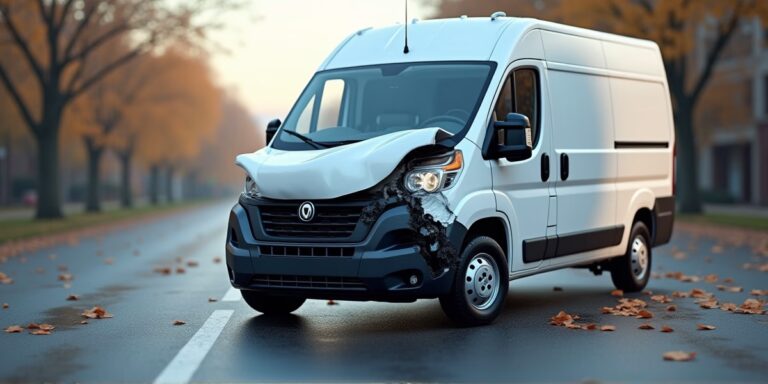
San Diego Injury Attorney helping San Diego victims covering: How Do Delivery Companies Classify Drivers?

How Do Delivery Companies Classify Drivers?

Just last week, I spoke with a distraught courier named Alistair who was broadsided by a speeding box truck while making a delivery in San Diego. Alistair suffered a fractured pelvis, a concussion, and significant nerve damage, resulting in over $128,459 in medical bills and lost income. The problem? Kaden was classified as an independent contractor, and the delivery company’s insurance company immediately denied his claim, claiming they weren’t responsible for injuries sustained by a non-employee.

Confidential Confidential Case Review • No Fee Unless We Win

Attorney Richard Morse a San Diego Injury Attorney

This scenario is unfortunately common. Delivery companies like Amazon, FedEx, UPS, and others frequently misclassify drivers as independent contractors to avoid the costs and responsibilities associated with employing them. This misclassification has serious implications for drivers injured in accidents, as it can significantly limit their ability to recover fair compensation for their damages. Understanding the difference between an employee and an independent contractor is crucial, and it’s a complex legal question often requiring expert analysis.

The core issue revolves around the level of control the company exercises over the driver. Are they simply contracted to deliver packages, or does the company dictate *how* those packages are delivered? This distinction determines liability and access to benefits. A driver classified as an employee is entitled to workers’ compensation, unemployment benefits, and protection under various labor laws. An independent contractor, however, typically bears the full financial burden of their injuries and business expenses.

I’ve spent over 13 years practicing personal injury law in San Diego, and I was previously trained by a seasoned insurance defense attorney. This unique background gives me intimate knowledge of how insurance companies evaluate, devalue, and deny claims, particularly those involving independent contractor status. They will aggressively argue for misclassification to minimize their payout, and it’s essential to have an attorney who understands their tactics.

What factors do courts consider when determining driver classification?
San Diego Injury Attorney helping San Diego victims covering: How Do Delivery Companies Classify Drivers?

California courts don’t rely on a single factor to determine whether a driver is an employee or an independent contractor. Instead, they apply a multi-factor test, weighing several considerations. The most important is the “ABC test,” established by the Dynamex Operations West, Inc. v. Superior Court case. This test presumes a worker is an employee unless the company can prove all three of the following:

  • A: The worker is free from the control and direction of the hirer in the performance of the work.
  • B: The worker performs work that is outside the usual course of the hirer’s business.
  • C: The worker is customarily engaged in an independently established trade, occupation, or profession.

If the company fails to meet all three prongs of the ABC test, the driver is likely considered an employee. Other factors courts consider include who provides the vehicle, who pays for expenses like gas and maintenance, whether the driver can accept other work, and the level of training and supervision provided by the company.

Can I still recover compensation if I was classified as an independent contractor?

Even if a delivery company classifies you as an independent contractor, it doesn’t automatically bar you from seeking compensation for your injuries. If the company exercised significant control over your work, a court may reclassify you as an employee, entitling you to workers’ compensation benefits and the right to sue for negligence. Furthermore, even if you are legitimately classified as an independent contractor, the company can still be held liable for their own negligence, such as negligent hiring or training of drivers.

In San Diego, we often see cases where companies attempt to circumvent employee protections by labeling drivers as contractors while maintaining a high degree of control over their operations. This is a clear violation of California law, and we are prepared to fight for your rights, regardless of your classification.

What evidence is needed to prove misclassification?

Gathering evidence is critical to proving misclassification. This includes any contracts or agreements with the delivery company, pay stubs, communications (emails, texts, etc.) detailing the level of control the company exercised over your work, training materials, and records of expenses you paid. Dashcam footage, if available, can also be invaluable. We will also conduct a thorough investigation to uncover any evidence of similar misclassification practices by the company.

What is the statute of limitations for filing a claim?

In California, you have a limited time to file a lawsuit after a truck accident. According to CCP § 335.1, you generally have **two years** from the date of the accident to initiate legal proceedings. Because trucking companies often begin evidence destruction (like purging ELD data) as soon as the law allows, immediate filing is critical to preserve the integrity of the claim.

What if the accident involved a government-owned vehicle or roadway?

If your accident involved a government-owned vehicle, a dangerous road condition maintained by a public entity, or a construction zone, the claim process is different. You must file a formal administrative claim with the government agency within a strict timeframe. Under Gov. Code § 911.2, this claim **MUST** be presented within **6 months** (180 days) of the accident. Failure to meet this deadline can result in the permanent loss of your right to recover.


Authority Link Reference Table

Authority Link Reference Table
Statutory Authority Description
CCP § 335.1 Sets the 2-year limitations period for most California personal injury claims. In San Diego trucking cases, preserving evidence early is critical because carriers and insurers often move quickly to control records and narrative.
Gov. Code § 911.2 Requires timely presentation of claims against public entities (often 6 months). This matters when a crash involves roadway design, construction zones, transit agencies, or city/county responsibility.
CCP § 2017.010 Defines the scope of discovery. In trucking litigation, discovery targets driver logs/ELD data, qualification files, inspection/maintenance records, dispatch communications, and safety program documents.
CCP § 377.60 Identifies who has standing to bring a wrongful death claim. This is essential for fatal commercial vehicle crashes where multiple family members may have rights.
CCP § 377.30 Survival action authority. In fatal trucking cases, this can apply to claims the decedent could have brought (often tied to pre-death harms and litigation strategy alongside wrongful death).
Civ. Code § 1714 California’s general negligence framework. Trucking defendants often use comparative-fault narratives (lane position, following distance, speed, “cut-off” claims) to reduce claimed damages.
Evid. Code § 669 Negligence per se when a safety law is violated. This is frequently argued in trucking cases when FMCSA rules or CVC safety provisions are breached.
Civ. Code § 2338 Vicarious liability principles (respondeat superior). Critical when proving a motor carrier, delivery company, or fleet operator is responsible for a driver’s on-duty conduct.
CVC § 22406 Maximum speed limits for certain commercial vehicles and vehicles towing. Supports liability arguments and reconstruction when speed/conditions are disputed.
CVC § 34500 California’s commercial vehicle safety/inspection framework. Often relevant to maintenance failures, equipment defects, and inspection noncompliance.
Civ. Code § 3294 Punitive damages standard (oppression, fraud, or malice). Can matter in extreme trucking conduct cases (e.g., reckless safety policy violations, egregious impairment, or intentional evidence games).
Howell v. Hamilton Meats Damages valuation authority addressing medical specials (amounts actually paid/owed). Frequently impacts settlement math in catastrophic injury cases.
Li v. Yellow Cab Co. Foundational California comparative negligence authority. Trucking defendants often argue shared fault to reduce value; this anchors the comparative-fault framework used in negotiations and trial.
Civ. Code § 1431.2 Several liability allocation for non-economic damages. Important when multiple parties share responsibility (carrier, shipper/loader, broker, maintenance vendor, public entities).
Ins. Code § 11580.2 UM/UIM statutory framework. Relevant when a truck, delivery vehicle, or other responsible party is underinsured, unidentified, or coverage disputes arise.
Federal Motor Carrier Safety Regulations (FMCSA)
49 CFR Part 395 Hours-of-service rules (fatigue). Directly tied to ELD/logbook questions, forced driving, rest break violations, and crash causation analysis.
49 CFR Part 396 Inspection, repair, and maintenance duties. Central for brake failures, tire failures, equipment defects, inspection records, and maintenance contractor liability.
49 CFR Part 391 Driver qualification rules (DQ files). Supports negligent hiring/retention claims and discovery of licensing, medical certification, training, and prior safety history.
49 CFR Part 382 Controlled substances and alcohol testing rules. Relevant to post-crash testing questions, DUI/impairment claims, and carrier compliance obligations.
49 CFR Part 392 Operational driving rules (safe driving, distracted driving policies, etc.). Used to frame duty, safety standards, and negligence arguments tied to driver conduct.
49 CFR Part 393 Parts and accessories necessary for safe operation. Supports defect/equipment theories involving brakes, lights, tires, underride guards, and other safety components.
49 CFR Part 383 Commercial driver’s license (CDL) standards. Relevant to CDL impact questions, qualification issues, endorsements, and compliance expectations for commercial drivers.

Similar Posts