
How Long Before I Receive A Settlement Check?

The question of when you’ll receive a settlement check after a truck accident is one I’m asked constantly. Unfortunately, there’s no simple answer. It depends on a multitude of factors, and the insurance companies are masters at delaying payment. As a personal injury attorney practicing in San Diego for over 13 years, I’ve seen firsthand how they operate. I was trained by a former insurance defense attorney, giving me intimate knowledge of how insurance companies evaluate, devalue, and deny claims. They are incentivized to minimize payouts, and time is often on their side.
One of the biggest hurdles is the investigation itself. The insurance company will need to determine liability, which involves reviewing police reports, witness statements, and potentially reconstructing the accident. They’ll also scrutinize your medical records to assess the extent of your injuries and the reasonableness of your treatment. This process can be lengthy, especially if there’s a dispute over fault or the severity of your condition. They will often request a recorded statement, which can be used against you if you aren’t careful.
What factors can delay my truck accident settlement?
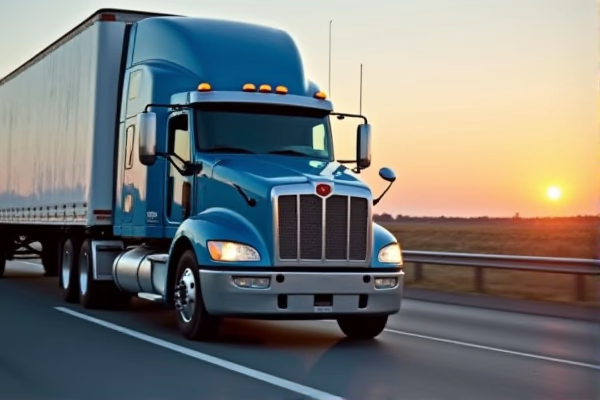
Several factors can significantly prolong the settlement process. The complexity of the case is a major one. If there are multiple parties involved, such as the trucking company, the driver, and potentially a third-party logistics provider, it can take longer to negotiate a fair settlement. Disputed liability is another common delay. If the insurance company believes their driver wasn’t at fault, they’ll likely fight your claim aggressively. The extent of your injuries also plays a role. More severe injuries require more extensive medical documentation and a longer period of recovery, which can slow down the evaluation process.
Furthermore, the insurance company’s internal procedures can cause delays. They may require multiple levels of approval before a settlement can be authorized. They may also attempt to lowball your initial offer, hoping you’ll accept a smaller amount. It’s crucial to have an experienced attorney on your side who can navigate these complexities and advocate for your rights.
Another significant factor is the potential for subrogation. If your health insurance company paid for your medical bills, they may have a right to recover those costs from the at-fault party. This can complicate the settlement negotiations and potentially reduce the amount you receive. Finally, if the truck driver was operating under the influence of alcohol or drugs, or violated federal regulations, it can add another layer of complexity to the case.
What is the typical timeline for a truck accident settlement in San Diego?
While every case is unique, here’s a general timeline. Simple cases, where liability is clear and injuries are relatively minor, might settle within a few months. However, more complex cases, involving serious injuries and disputed liability, can take a year or even longer to resolve. It’s not uncommon for cases to go to trial if a fair settlement cannot be reached through negotiation. The pre-litigation phase, which includes gathering evidence and sending a demand letter, typically takes several months. If a lawsuit is filed, the discovery process, which involves exchanging information with the other party, can take another six to nine months.
The negotiation process can continue throughout the litigation process, but if a settlement still cannot be reached, the case will proceed to trial. Trials can take several months to prepare for and can last several days or even weeks. It’s important to be patient and realistic throughout the process. A quick settlement is not always the best settlement. It’s more important to focus on obtaining a fair and just outcome that compensates you for all of your damages.
How can I expedite the settlement process?
There are several steps you can take to expedite the settlement process. First, gather all relevant documentation, including police reports, medical records, and witness statements. Second, seek legal counsel from an experienced attorney as soon as possible. An attorney can help you navigate the complexities of the case and advocate for your rights. Third, be proactive in your medical treatment and follow your doctor’s recommendations. This demonstrates that you’re taking your injuries seriously and are committed to your recovery.
Fourth, keep detailed records of all your expenses, including medical bills, lost wages, and property damage. Fifth, be responsive to your attorney’s requests for information and keep them informed of any changes in your condition. Finally, be prepared to negotiate with the insurance company. It’s important to be reasonable and realistic, but also firm in your demands.
What if the insurance company is refusing to pay a fair settlement?
If the insurance company is refusing to pay a fair settlement, you may need to file a lawsuit. This is often the only way to force the insurance company to take your claim seriously. An attorney can help you prepare and file a lawsuit, and represent you in court. It’s important to understand that filing a lawsuit does not necessarily mean that the case will go to trial. In many cases, the insurance company will be more willing to negotiate a fair settlement once a lawsuit has been filed.
However, if a settlement still cannot be reached, you may need to proceed to trial. Trials can be expensive and time-consuming, but they are sometimes necessary to obtain a just outcome. It’s important to have an experienced attorney on your side who can represent you effectively in court.
What should I do if I receive a settlement offer?
If you receive a settlement offer, it’s important to have an attorney review it before you accept it. An attorney can help you determine whether the offer is fair and reasonable, and whether it adequately compensates you for all of your damages. Don’t feel pressured to accept the first offer you receive. The insurance company is often willing to negotiate, and you may be able to obtain a better outcome by counter-offering.
It’s also important to understand the terms of the settlement agreement before you sign it. Make sure you understand what you’re giving up in exchange for the settlement. Once you sign the agreement, it’s typically binding and difficult to change.
What are medical liens and how do they affect my settlement?
Medical liens are claims against your settlement proceeds by healthcare providers who have treated you for your injuries. These liens can significantly reduce the amount of money you receive. It’s important to understand your rights regarding medical liens and to negotiate with the healthcare providers to reduce the amount of the lien. An attorney can help you navigate this process and protect your interests.
In some cases, you may be able to negotiate a reduction in the lien amount by offering a lump-sum payment. In other cases, you may be able to challenge the validity of the lien. It’s important to consult with an attorney to determine the best course of action.
What is the importance of preserving evidence after a truck accident?
Preserving evidence is crucial in any truck accident case. This includes gathering police reports, witness statements, and medical records. It also includes taking photos of the accident scene, the vehicles involved, and your injuries. If possible, obtain the truck driver’s logbook and any other relevant documentation. It’s important to act quickly, as evidence can be lost or destroyed over time.
In some cases, you may need to send a spoliation letter to the trucking company, demanding that they preserve all relevant evidence. This letter can help protect your claim if the company attempts to destroy evidence. An attorney can help you draft and send a spoliation letter.
What is the role of comparative fault in a truck accident case?
Comparative fault refers to the extent to which you were responsible for the accident. Even if the truck driver was primarily at fault, you may still be held partially responsible for the accident. This can reduce the amount of money you receive in a settlement. It’s important to understand the concept of comparative fault and to be prepared to defend yourself against any claims of negligence.
California’s ‘pure’ comparative fault system applies to trucking claims. Even if a truck driver argues you shared responsibility, you can still recover damages; however, your total compensation will be reduced by your percentage of fault.
What is UM/UIM coverage and how does it apply to truck accident cases?
UM/UIM coverage stands for uninsured/underinsured motorist coverage. This coverage protects you if you’re injured by an uninsured or underinsured driver. If the truck driver doesn’t have enough insurance to cover your damages, you may be able to file a claim under your own UM/UIM policy. It’s important to understand the terms of your policy and to file a claim as soon as possible.
UM/UIM arbitration procedures can be complex, and it’s important to have an experienced attorney on your side who can represent you effectively.