
What Compensation Is Available After A Fatigue Related Crash?

Fatigue-related truck crashes are often the result of blatant safety violations and corporate negligence. While the Federal Motor Carrier Safety Administration (FMCSA) has strict regulations regarding driver hours of service, these rules are frequently ignored or circumvented by trucking companies prioritizing profits over safety. When a driver’s fatigue causes an accident, victims are entitled to seek full and fair compensation for all of their damages. But navigating the complex legal landscape and proving negligence can be challenging without experienced legal counsel.
As a personal injury attorney with over 13 years of experience in San Diego, I’ve seen firsthand how insurance companies attempt to minimize payouts in these cases. I was trained by a former insurance defense attorney, giving me intimate knowledge of how they evaluate, devalue, and deny claims. They’ll scrutinize every detail, looking for ways to shift blame or argue the driver wasn’t actually fatigued. That’s why it’s crucial to have an advocate who understands their tactics and can build a strong case on your behalf.
What Types of Damages Can I Recover in a Fatigue-Related Truck Crash?
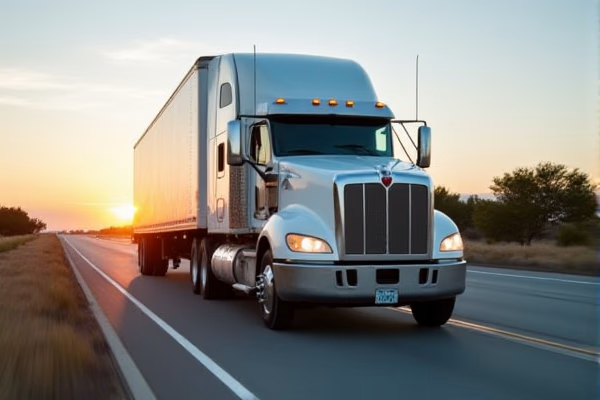
Compensation in a fatigue-related truck crash case isn’t limited to just medical bills. You are entitled to recover a wide range of damages, both economic and non-economic. Economic damages are those with a quantifiable monetary value. These include:
- Medical Expenses: Past and future medical bills, including hospital stays, surgeries, physical therapy, medication, and ongoing care.
- Lost Wages: Compensation for income lost due to your injuries, both past and future. This includes lost salary, benefits, and earning capacity.
- Property Damage: The cost to repair or replace your vehicle and any other damaged property.
- Other Out-of-Pocket Expenses: Costs such as rental car fees, travel expenses to medical appointments, and home modifications.
Non-economic damages, on the other hand, are more subjective and relate to the pain and suffering you’ve experienced. These include:
- Pain and Suffering: Compensation for the physical pain, emotional distress, and mental anguish caused by the accident.
- Loss of Enjoyment of Life: Damages for the inability to participate in activities you once enjoyed.
- Disfigurement and Scarring: Compensation for any permanent physical disfigurement or scarring.
How Do I Prove a Truck Driver Was Fatigued?
Establishing driver fatigue can be complex, but it’s not impossible. Several types of evidence can be used to demonstrate a driver was operating while fatigued. These include:
- Driver’s Logbooks: These records, while often falsified, can provide valuable insight into a driver’s hours of service.
- Electronic Logging Device (ELD) Data: ELDs automatically record a driver’s driving hours, making it more difficult to conceal violations. 49 CFR § 395 outlines the federal regulations governing ELD usage.
- Black Box Data: Many trucks are equipped with black boxes that record data such as speed, braking patterns, and engine hours.
- Witness Testimony: Statements from witnesses who observed the driver’s behavior before the accident.
In Dale’s case, we were able to obtain the driver’s falsified logbooks and compare them to the ELD data, which clearly showed he had been driving for far longer than legally permitted. This evidence was crucial in securing a substantial settlement for his injuries.
What Role Does the Trucking Company Play in a Fatigue-Related Crash?
Trucking companies have a legal duty to ensure their drivers are properly rested and compliant with federal safety regulations. They can be held liable for a driver’s negligence under the doctrine of **vicarious liability** (respondeat superior). Civ. Code § 2338 establishes this legal principle. This means the company can be directly responsible for the damages caused by their driver, even if they didn’t directly cause the accident. Furthermore, companies can be found negligent if they:
- Negligently Hire or Train Drivers: Failing to properly vet drivers or provide adequate training.
- Fail to Properly Maintain Vehicles: Neglecting to inspect and maintain their trucks, leading to mechanical failures.
- Encourage or Allow Drivers to Violate Hours of Service Regulations: Pressuring drivers to drive longer than legally permitted to meet deadlines.
What if the Driver Was an Independent Contractor?
Determining whether a driver is an employee or an independent contractor can be complex. California’s ‘ABC test’ determines if a delivery driver (Amazon/FedEx) is an employee or contractor. Even if labeled a ‘contractor,’ a company may be liable if they exercise control over the driver’s work, a key factor in San Diego delivery truck litigation. Labor Code § 2775 provides the framework for this analysis. If the company exerts significant control over the driver’s schedule, routes, or methods of operation, they may be considered an employer, even if they classify them as an independent contractor.
What Should I Do After a Fatigue-Related Truck Crash?
If you’ve been injured in a truck crash, it’s crucial to take immediate action to protect your rights. Here are a few key steps to take:
- Seek Medical Attention: Even if you don’t feel immediate pain, it’s important to get a thorough medical evaluation.
- Gather Evidence: Collect any available evidence, such as photos of the accident scene, witness contact information, and the police report.
- Contact an Attorney: An experienced attorney can help you navigate the legal process and build a strong case on your behalf.
How Long Do I Have to File a Lawsuit After a Truck Accident?
In California, you have a limited amount of time to file a lawsuit after a truck accident. CCP § 335.1 provides a **two-year** window from the date of the truck accident to file a lawsuit. Because trucking companies often begin evidence destruction (like purging ELD data) as soon as the law allows, immediate filing is critical to preserve the integrity of the claim.
What if the Government is Involved in the Truck Accident?
If a truck accident involves a government-owned vehicle or a dangerous road condition maintained by a public entity, a formal administrative claim **MUST** be presented within **6 months** (180 days). Gov. Code § 911.2 outlines this strict deadline under the Government Tort Claims Act. Failure to meet this deadline can result in the permanent loss of your right to recover.
What is a Recorded Statement and Should I Give One to the Insurance Company?
Insurance companies will often request a recorded statement shortly after an accident. While you are not legally obligated to provide one, they are designed to gather information that can be used to devalue your claim. It’s best to decline the request and consult with an attorney before speaking with the insurance company. They are skilled at asking leading questions and eliciting statements that can harm your case.
What are Medical Liens and How Do They Affect My Settlement?
Medical liens are claims placed on your settlement by healthcare providers who have treated you for your injuries. These liens must be reimbursed before you can receive your net settlement proceeds. Negotiating these liens can be complex, and an attorney can help you ensure you are only responsible for a fair amount.
What is UM/UIM Coverage and How Does it Apply to Truck Accidents?
Uninsured/Underinsured Motorist (UM/UIM) coverage protects you if you are injured by an uninsured or underinsured driver. In the context of truck accidents, this coverage can be particularly important if the driver’s insurance policy is insufficient to cover your damages. UM/UIM arbitration procedures can be complex, and it’s crucial to have an attorney who understands the process.
What Evidence Should I Preserve After a Truck Accident?
Preserving evidence is critical in any truck accident case. This includes:
- Photos and Videos: Document the accident scene, vehicle damage, and your injuries.
- Police Report: Obtain a copy of the official police report.
- Medical Records: Keep copies of all medical records related to your injuries.
- Witness Statements: Collect contact information from any witnesses.
- ELD Data: If possible, obtain a copy of the driver’s ELD data.
How Do Insurance Companies Use Dashcam Footage and Digital Evidence?
Dashcam footage, ECM/EDR (Engine Control Module/Event Data Recorder) data, and ELD (Electronic Logging Device) data are increasingly common forms of evidence in truck accident cases. Insurance companies will thoroughly analyze this data to determine fault and assess damages. It’s important to have an attorney who can interpret this data and use it to your advantage.