What Damages Are Available After Speeding Truck Crashes?

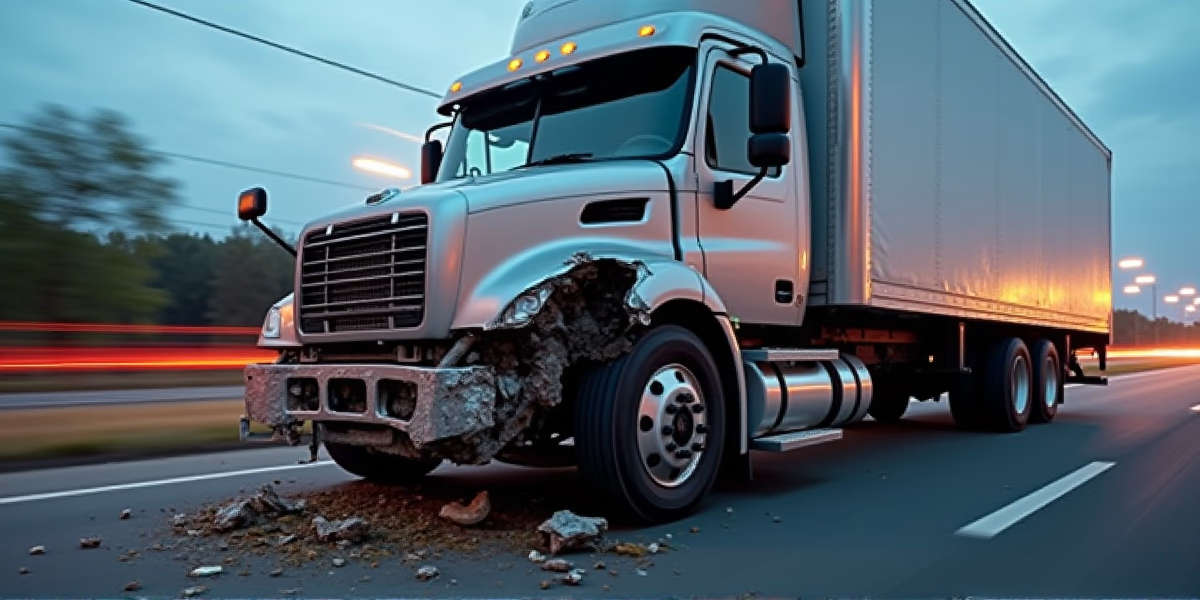
Speeding is a common factor in truck accidents, and it dramatically increases the severity of injuries. Because of the sheer size and weight of these vehicles, even a relatively low speed differential can result in devastating consequences. When a truck driver exceeds the posted speed limit, or drives too fast for conditions, they are often considered negligent per se – meaning their violation of the law automatically establishes a breach of duty. This is a critical point in establishing liability and maximizing recovery for our clients.
However, proving speeding isn’t always straightforward. We rely on a combination of evidence, including the truck’s Event Data Recorder (EDR), dashcam footage (if available), police reports, witness statements, and reconstruction experts. The EDR, often called the “black box,” records crucial data like speed, braking force, and throttle position. Skilled analysis of this data is essential to demonstrate the driver’s negligence and the extent of the damages it caused. In San Diego, we’ve seen numerous cases where the EDR data was the deciding factor in securing a favorable outcome for our clients.
I’ve been practicing personal injury law in San Diego for over 13 years, and I’ve seen firsthand how insurance companies attempt to minimize payouts in truck accident cases. Trained by a former insurance defense attorney, I have intimate knowledge of how they evaluate, devalue, and deny claims. They’ll often focus on pre-existing conditions, argue contributory negligence, or dispute the extent of your injuries. That’s why it’s crucial to have an experienced attorney on your side who understands these tactics and can fight for your rights.
What types of damages can I recover in a speeding truck crash case?
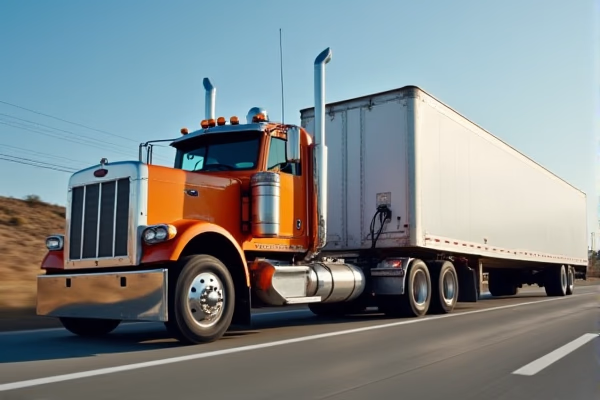
The damages available after a speeding truck crash are extensive and designed to fully compensate you for all losses resulting from the accident. These fall into several broad categories. Economic damages, which are quantifiable financial losses, include medical expenses (past and future), lost wages, property damage, and rehabilitation costs. Non-economic damages, which are more subjective, cover pain and suffering, emotional distress, loss of enjoyment of life, and disfigurement.
In severe cases, we also pursue punitive damages. These are awarded to punish the defendant for particularly egregious conduct, such as reckless driving or intentional disregard for safety. To be eligible for punitive damages, the driver’s actions must have been malicious, oppressive, or fraudulent. This requires a higher burden of proof, but the potential recovery can be substantial.
Furthermore, if a loved one has tragically died as a result of a speeding truck crash, you may be entitled to pursue a wrongful death claim. This allows you to recover damages for loss of financial support, funeral expenses, and the loss of companionship and guidance. Wrongful death cases are particularly complex and require a sensitive and experienced approach.
How is the value of my pain and suffering determined?
Calculating pain and suffering is one of the most challenging aspects of a truck accident claim. There’s no simple formula, as it’s a subjective assessment based on the severity of your injuries, the duration of your recovery, and the impact on your daily life. Insurance companies often use a multiplier method, multiplying your medical expenses by a factor of 1.5 to 5, depending on the seriousness of your injuries. However, this method often undervalues the true extent of your suffering.
We take a more comprehensive approach, considering factors such as the type of injury, the level of pain, the need for ongoing treatment, the impact on your ability to work and participate in activities, and the psychological trauma you’ve experienced. We also present evidence such as medical records, therapy bills, and testimony from family and friends to demonstrate the full impact of your injuries. In San Diego, we’ve successfully recovered significant pain and suffering awards for our clients by building a strong and compelling case.
What if I had pre-existing conditions?
Insurance companies frequently attempt to deny or reduce claims by arguing that your injuries were caused by pre-existing conditions. However, California law allows you to recover damages for the aggravation of a pre-existing condition caused by the truck accident. This means that even if you had a prior injury, you can still be compensated for the worsening of your condition as a result of the crash.
The key is to establish a clear causal link between the accident and the aggravation of your pre-existing condition. We do this by gathering medical records, expert testimony, and other evidence to demonstrate that the accident significantly worsened your symptoms and required additional treatment. It’s important to be honest and upfront about any pre-existing conditions, as attempting to conceal them can damage your credibility.
Can I recover damages for future medical expenses?
Absolutely. If you require ongoing medical treatment as a result of your injuries, you are entitled to recover damages for those future expenses. This includes costs such as physical therapy, medication, surgery, and ongoing care. However, it’s crucial to accurately project those future expenses.
We work with medical experts to develop a comprehensive life care plan, outlining the specific treatments you’ll need and the associated costs. This plan is presented to the insurance company as evidence of your future medical needs. It’s important to document all medical appointments and treatment plans to support your claim. In San Diego, we have a network of trusted medical professionals who can provide expert testimony to help establish the need for future care.
What is the statute of limitations for filing a truck accident claim in California?
In California, you have a **two-year** window from the date of the truck accident to file a lawsuit. Because trucking companies often begin evidence destruction (like purging ELD data) as soon as the law allows, immediate filing is critical to preserve the integrity of the claim. CCP § 335.1. Missing this deadline will permanently bar your right to recover compensation.
It’s important to note that the statute of limitations can be complex, especially in cases involving government entities or multiple parties. We strongly advise you to consult with an attorney as soon as possible after an accident to ensure that your claim is filed within the appropriate timeframe.
Don’t let the insurance company dictate the outcome of your case. Contact me, Richard Morse, today for a free consultation. I’ve dedicated my career to fighting for the rights of injured victims in San Diego, and I’m committed to securing the maximum compensation you deserve.