
What Happens If I Need Surgery After A Truck Accident?

When a truck accident necessitates surgery, the legal landscape becomes significantly more complex. It’s not simply about covering the immediate hospital stay and ambulance ride. We’re talking about a lifetime of potential medical expenses, lost income due to recovery and rehabilitation, and the profound impact on your quality of life. As a personal injury attorney in San Diego with over 13 years of experience, I’ve seen firsthand how insurance companies attempt to minimize these costs, often undervaluing the true extent of the damages.
The initial focus after a serious truck accident is always on stabilizing the patient. However, it’s crucial to begin gathering evidence and understanding your legal rights as soon as possible. This includes obtaining all medical records, police reports, and witness statements. Insurance adjusters will likely contact you early on, seeking a recorded statement. Be extremely cautious about providing any information without first consulting with an attorney. They are trained to minimize their liability, and anything you say can be used against you later.
I’ve been trained by former insurance defense attorneys, giving me intimate knowledge of how insurance companies evaluate, devalue, and deny claims. This insight allows me to anticipate their tactics and build a strong case on your behalf. In San Diego, we often encounter situations where trucking companies attempt to blame the driver, claim pre-existing conditions, or dispute the necessity of the surgery. It’s vital to have an advocate who understands these strategies and can effectively counter them.
What types of damages can I recover if I need surgery after a truck accident?
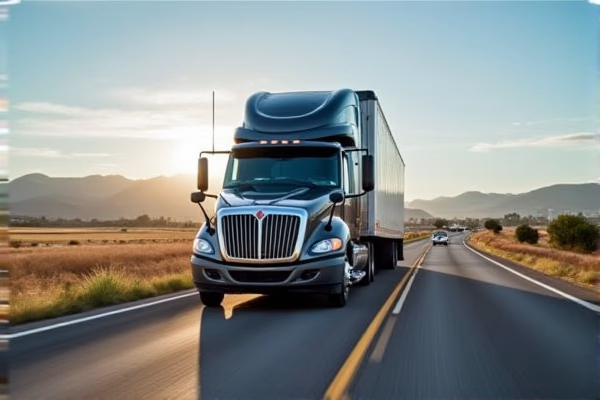
Following a truck accident requiring surgery, you may be entitled to recover a wide range of damages. These include not only the direct medical expenses associated with the surgery itself – including hospital bills, anesthesia fees, and surgeon’s costs – but also all related care. This encompasses pre-operative testing, post-operative rehabilitation, pain management, and any necessary assistive devices. Beyond the immediate costs, we also pursue compensation for future medical expenses, anticipating the ongoing care you’ll likely need for the rest of your life.
Furthermore, lost wages are a significant component of these claims. If you’re unable to work due to your injuries and recovery, you’re entitled to compensation for the income you’ve lost, as well as the future earning capacity you may have lost due to permanent impairments. We work with vocational experts to accurately assess these losses. Finally, and often overlooked, is the element of pain and suffering. This accounts for the physical and emotional trauma you’ve endured as a result of the accident and the impact it has had on your daily life.
How does the insurance company determine the value of my surgery claim?
Insurance companies employ various methods to evaluate surgery claims, and they are almost always designed to minimize their payout. They’ll typically request your complete medical records and bills, then have them reviewed by their own medical professionals. These reviewers often focus on identifying pre-existing conditions or questioning the necessity of the surgery. They may argue that a less expensive treatment option would have been sufficient, or that your injuries aren’t as severe as your doctor claims.
It’s crucial to understand that insurance companies are for-profit entities, and their goal is to protect their bottom line. They will often use independent medical examinations (IMEs) to obtain a second opinion, and these doctors are typically hired by the insurance company and have a vested interest in minimizing your claim. That’s why it’s critical to have your own medical experts who can provide an unbiased assessment of your injuries and treatment plan. We work with a network of trusted physicians who can effectively counter the insurance company’s arguments.
What if the insurance company denies my claim or offers a low settlement?
Claim denials and low settlement offers are unfortunately common in truck accident cases, especially when surgery is involved. If your claim is denied, you have the right to appeal the decision. We will thoroughly review the denial letter and gather additional evidence to support your claim. If the appeal is unsuccessful, the next step is typically to file a lawsuit. This initiates the discovery process, where we can obtain additional evidence through depositions, interrogatories, and requests for documents.
Negotiations often continue throughout the litigation process, and many cases are settled before trial. However, if a fair settlement cannot be reached, we are fully prepared to take your case to court and fight for the compensation you deserve. It’s important to remember that insurance companies are more likely to take a case seriously when they know you’re willing to go to trial.
How long do I have to file a lawsuit after a truck accident requiring surgery?
In California, the statute of limitations for personal injury claims is generally **two years** from the date of the truck accident. Because trucking companies often begin evidence destruction (like purging ELD data) as soon as the law allows, immediate filing is critical to preserve the integrity of the claim. CCP § 335.1. This deadline applies even if you’re still undergoing medical treatment or haven’t fully recovered from your injuries. Failing to file within this timeframe can result in the permanent loss of your right to sue.
It’s important to note that there may be exceptions to this rule, such as cases involving minors or individuals with diminished capacity. However, it’s always best to err on the side of caution and consult with an attorney as soon as possible to ensure your rights are protected. Don’t delay seeking legal counsel, as the statute of limitations can easily expire before you realize the full extent of your damages.
What should I do to protect my claim if I’ve already undergone surgery?
Protecting your claim after surgery requires meticulous documentation and proactive steps. First, continue to follow your doctor’s instructions diligently and attend all scheduled appointments. Keep a detailed record of all medical expenses, lost wages, and any other out-of-pocket costs related to your injuries. Preserve all communication with the insurance company, including emails, letters, and phone call logs. Most importantly, avoid discussing your case with anyone other than your attorney.
We will also conduct a thorough investigation of the accident, gathering evidence such as police reports, witness statements, and the truck driver’s logs. If the accident involved a government-owned vehicle or a dangerous road condition, it’s crucial to file a formal administrative claim within **6 months** (180 days) under the Government Tort Claims Act. Gov. Code § 911.2. Failure to meet this strict deadline can result in the permanent loss of your right to recover.
What if the truck driver was working as an independent contractor?
Determining whether a truck driver is an employee or an independent contractor can be complex, but it’s a critical factor in establishing liability. California’s ‘ABC test’ determines if a delivery driver (Amazon/FedEx) is an employee or contractor. Even if labeled a ‘contractor,’ a company may be liable if they exercise control over the driver’s work, a key factor in San Diego delivery truck litigation. Labor Code § 2775. Factors considered include the level of control the company exerts over the driver’s schedule, routes, and equipment, as well as whether the driver is free to work for other companies.
If the driver was misclassified as an independent contractor, the trucking company may be held liable for their negligence under the doctrine of respondeat superior. This means that the company is responsible for the wrongful acts of its drivers committed within the scope of their employment. We will thoroughly investigate the driver’s employment status to ensure that all responsible parties are held accountable.
What if the trucking company claims the accident was my fault?
Trucking companies often attempt to shift blame to the other driver, even in clear-cut cases of negligence. They may argue that you were speeding, distracted, or failed to yield the right-of-way. California’s ‘pure’ comparative fault system applies to trucking claims. Even if a truck driver argues you shared responsibility, you can still recover damages; however, your total compensation will be reduced by your percentage of fault. Civ. Code § 1714.
We will thoroughly investigate the accident and gather evidence to refute their claims. This may include obtaining dashcam footage, witness statements, and accident reconstruction reports. It’s important to remember that the burden of proof lies with the trucking company to demonstrate your negligence. We will aggressively challenge their arguments and fight to protect your rights.
What if the truck driver was violating federal regulations at the time of the accident?
Federal **Hours of Service (HOS)** regulations dictate exactly how long a driver can be behind the wheel. Violations of these federal safety standards, often proven through Electronic Logging Device (ELD) data, are used to demonstrate driver fatigue. 49 CFR § 395. These regulations are designed to prevent accidents caused by drowsy driving, and violations can be strong evidence of negligence.
We will obtain the driver’s logs and ELD data to determine if they were in compliance with federal regulations. If they were violating HOS rules, we will use this evidence to strengthen your claim and hold the trucking company accountable for their negligence. It’s important to note that trucking companies have a duty to ensure their drivers are properly trained and compliant with all safety regulations.