What Is Negligent Hiring In Trucking Accident Cases?

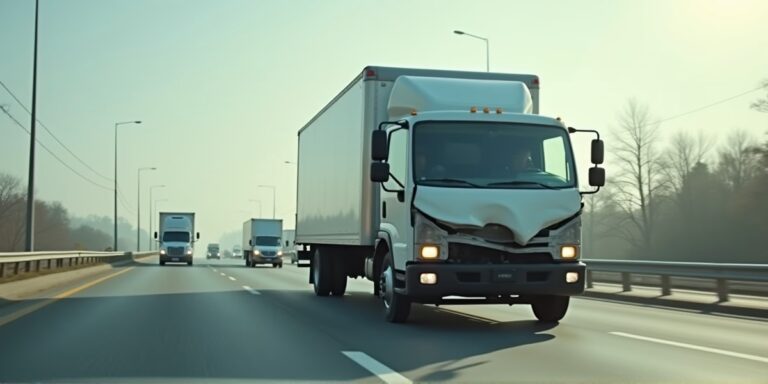
Negligent hiring in trucking accident cases centers on the duty trucking companies have to ensure they employ safe and qualified drivers. This isn’t simply about checking a driver’s license; it’s a comprehensive process that involves verifying driving records, conducting thorough background checks, and confirming proper training and endorsements. When a company cuts corners or fails to adequately vet potential employees, they expose the public to unnecessary risk, and they can be held legally responsible for the consequences.
The legal theory of negligent hiring falls under the broader umbrella of vicarious liability, meaning the trucking company can be directly liable for the actions of its driver. This is particularly relevant in cases where the driver has a known history of unsafe behavior. A company has a responsibility to know who they are putting behind the wheel of a multi-ton vehicle, and a failure to do so can create a dangerous situation for everyone on the road.
As a personal injury attorney practicing in San Diego for over 13 years, I’ve seen firsthand how insurance companies attempt to minimize their exposure in these types of cases. Trained by a former insurance defense attorney, I understand the tactics they use to devalue claims and deny rightful compensation. My experience allows me to anticipate their strategies and build a strong case on behalf of my clients.
What steps can I take to prove negligent hiring in a trucking accident case?
Establishing negligent hiring requires demonstrating that the trucking company failed to exercise reasonable care in the hiring process. This often involves gathering evidence to show the company knew, or should have known, about the driver’s unsuitability. Key evidence includes the driver’s employment application, driving record, background check reports, and any internal company policies regarding driver screening. We often utilize the discovery process to obtain these critical documents.
Furthermore, evidence of prior accidents, traffic violations, or disciplinary actions can be crucial. If the driver had a history of reckless driving, substance abuse, or other red flags, it strengthens the argument that the company was negligent in their hiring decision. Expert testimony from a trucking safety professional can also be invaluable in explaining industry standards and demonstrating the company’s failure to meet those standards.
What types of background checks are trucking companies required to perform?
Trucking companies are required to conduct a comprehensive background check that goes beyond a simple criminal history check. This includes verifying the driver’s Commercial Driver’s License (CDL), reviewing their Motor Vehicle Record (MVR) for violations, and checking their employment history to confirm their experience and qualifications. They must also conduct a pre-employment drug test and adhere to the Federal Motor Carrier Safety Administration (FMCSA) regulations regarding driver qualifications.
A thorough background check should also include checking the driver’s history with the FMCSA’s Pre-Employment Screening Program (PSP), which provides information on safety violations, inspections, and crashes. Failure to utilize these resources and conduct a complete background check is a strong indicator of negligence.
How does the “ABC test” apply to delivery drivers and potential employer liability?
In California, the “ABC test” determines whether a delivery driver is an employee or an independent contractor. Under Labor Code § 2775, a worker is presumed to be an employee unless the company can prove they meet specific criteria. If a delivery driver is classified as an employee, the company is responsible for their actions under the doctrine of vicarious liability.
Even if a driver is labeled as a contractor, the company may still be liable if they exercise control over the driver’s work, such as dictating their schedule, providing specific instructions, or requiring them to use company equipment. This is a common issue in San Diego delivery truck litigation, where companies often attempt to avoid liability by classifying drivers as independent contractors.
What if the trucking company claims they were unaware of the driver’s past issues?
The trucking company’s lack of knowledge is not necessarily a defense. The legal standard is whether the company *should have known* about the driver’s unsuitability through reasonable due diligence. If a reasonable background check would have revealed the driver’s history of unsafe behavior, the company can still be held liable for negligent hiring.
This is where the discovery process becomes critical. We can subpoena records from the company, the driver’s previous employers, and the FMCSA to uncover any evidence of prior violations or disciplinary actions. Even if the company claims they conducted a background check, we can investigate whether that check was thorough enough and met industry standards.
What is vicarious liability and how does it relate to trucking company responsibility?
Under the doctrine of **vicarious liability** (respondeat superior), a principal is responsible to third persons for the negligence of their agent in the transaction of business. Civ. Code § 2338 establishes this principle, holding the trucking company legally liable for the wrongful acts of its drivers committed within the scope of their employment. This means that if a truck driver causes an accident while performing their job duties, the company can be held responsible for the resulting damages.
This liability extends to both negligent acts and omissions, such as failing to properly maintain the vehicle or failing to provide adequate training. The company’s responsibility is not limited to the driver’s actions; they are also responsible for ensuring their drivers are safe and qualified to operate a commercial vehicle.