
What Makes Truck Accidents Common In Logistics Areas?

Logistics areas, by their very nature, present a unique confluence of factors that dramatically increase the risk of truck accidents. These aren’t simply random occurrences; they’re often the predictable result of high traffic volume, complex maneuvering requirements, and the relentless pressure to meet delivery schedules. Understanding these common causes is the first step in protecting your rights if you’ve been injured in a truck accident near a warehouse, port, or transportation hub.
One of the most significant contributors is the sheer number of commercial vehicles operating in these zones. Distribution centers, rail yards, and ports are magnets for trucks, creating a constant flow of large, heavy vehicles navigating often congested roadways. This density elevates the potential for collisions, especially when combined with the frequent ingress and egress of smaller vehicles, pedestrians, and cyclists.
I’ve practiced personal injury law in San Diego for over 13 years, and I’ve seen firsthand how insurance companies attempt to minimize their exposure in these cases. They often focus on driver error while downplaying the systemic issues within the logistics operation itself. That’s why it’s crucial to have an attorney who understands both the legal complexities of truck accident litigation and the inner workings of the trucking industry. I was trained by a former insurance defense attorney, giving me intimate knowledge of how insurance companies evaluate, devalue, and deny claims.
What types of maneuvers commonly lead to accidents in logistics areas?
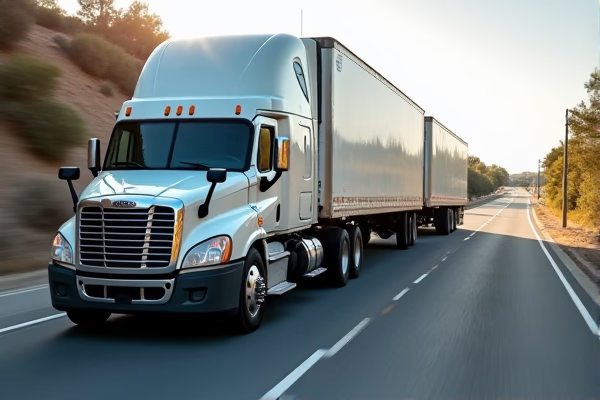
Truck accidents in logistics areas frequently stem from specific types of maneuvers that are inherently dangerous. Backing accidents are particularly prevalent, as visibility is often limited and drivers must rely heavily on mirrors and spotters. Similarly, turns, especially tight ones within distribution center yards, can be hazardous, increasing the risk of rollovers or collisions with other vehicles or fixed objects.
Another common scenario involves trucks entering or exiting highways from logistics access points. The speed differential between trucks accelerating onto the freeway and vehicles already traveling at highway speeds creates a dangerous situation, often leading to sideswipes or rear-end collisions. Finally, loading and unloading operations themselves pose a risk, as drivers may be distracted or rushed, and improperly secured loads can shift, causing loss of control.
How does the pressure to meet delivery schedules contribute to accidents?
The logistics industry operates on tight margins and demanding delivery schedules. This creates immense pressure on drivers to complete their routes quickly, often leading to unsafe practices. Drivers may exceed speed limits, skip mandatory rest breaks, or push themselves beyond their physical limits to meet deadlines. This fatigue and stress significantly impair their judgment and reaction time, increasing the likelihood of an accident.
Furthermore, companies may incentivize drivers to prioritize speed over safety, creating a culture where corners are cut and regulations are disregarded. This pressure can also lead to inadequate pre-trip inspections, improper load securement, and a general disregard for safety protocols. It’s important to investigate whether a company’s policies or practices contributed to the accident, as they may be held liable for the negligence of their drivers.
What role do inadequate road infrastructure and signage play in these accidents?
The infrastructure surrounding logistics areas is often designed to accommodate large volumes of truck traffic, but it may not always be adequate to ensure safety. Poorly maintained roads, inadequate lighting, and unclear signage can all contribute to accidents. For example, insufficient turning radii can force trucks to maneuver awkwardly, increasing the risk of rollovers.
Similarly, a lack of dedicated truck lanes or poorly marked pedestrian crossings can create dangerous conflicts between trucks and other road users. In some cases, government entities may be liable for accidents caused by hazardous road conditions or inadequate infrastructure. It’s critical to determine whether any infrastructure deficiencies contributed to the accident and to pursue a claim against the responsible government agency if necessary.
What evidence is important to gather after a truck accident in a logistics area?
Gathering evidence is paramount after any truck accident, but it’s especially crucial in logistics areas where multiple factors may be at play. This includes obtaining the police report, witness statements, and photos of the accident scene, including any damage to vehicles or infrastructure. It’s also important to document the truck driver’s logbooks, Electronic Logging Device (ELD) data, and any maintenance records.
If possible, try to identify any surveillance cameras that may have captured the accident. Distribution centers and ports often have extensive camera systems that can provide valuable evidence. Finally, it’s essential to seek medical attention immediately and to document all of your injuries and treatment. The more evidence you can gather, the stronger your claim will be.
What should I do if a truck driver claims they weren’t at fault?
It’s common for truck drivers and their insurance companies to deny liability after an accident, even when they are clearly at fault. They may attempt to blame you for the accident or argue that the accident was unavoidable. It’s important not to accept any settlement offers or make any statements to the insurance company without first consulting with an attorney.
An experienced attorney can investigate the accident, gather evidence, and build a strong case on your behalf. They can also negotiate with the insurance company to ensure that you receive fair compensation for your injuries, lost income, and other damages. Don’t let the insurance company take advantage of you – protect your rights by seeking legal counsel.
How long do I have to file a lawsuit after a truck accident in California?
In California, you generally have **two years** from the date of the truck accident to file a lawsuit. Because trucking companies often begin evidence destruction (like purging ELD data) as soon as the law allows, immediate filing is critical to preserve the integrity of the claim. CCP § 335.1. Waiting too long can result in the loss of your right to recover compensation.
What if the accident involved a government-owned vehicle or a dangerous road condition?
If a truck accident involves a government-owned vehicle or a dangerous road condition maintained by a public entity, a formal administrative claim **MUST** be presented within **6 months** (180 days). Failure to meet this strict deadline under the Government Tort Claims Act can result in the permanent loss of your right to recover. Gov. Code § 911.2. These claims have very specific requirements, so it’s essential to consult with an attorney immediately.
What is the “ABC test” and how does it apply to delivery drivers?
California’s ‘ABC test’ determines if a delivery driver (Amazon/Fedex) is an employee or contractor. Even if labeled a ‘contractor,’ a company may be liable if they exercise control over the driver’s work, a key factor in San Diego delivery truck litigation. Labor Code § 2775. Misclassifying employees as contractors is a common tactic used by companies to avoid liability.
Can the trucking company be held liable for the actions of its driver?
Under the doctrine of **vicarious liability** (respondeat superior), a principal is responsible to third persons for the negligence of their agent in the transaction of business. This holds the trucking company legally liable for the wrongful acts of its drivers committed within the scope of their employment. Civ. Code § 2338. This is a critical legal principle in truck accident cases, as the trucking company often has deeper pockets than the driver.
What are the speed limits for commercial trucks in California?
In California, commercial trucks (including semi-tractors with three or more axles) are strictly prohibited from exceeding **55 miles per hour** on any highway. In San Diego freeway crashes, proving a violation of this speed limit is a primary tool for establishing statutory negligence. CVC § 22406. Speed data from the truck’s ELD can be used to establish this violation.