What Should I Do After A Truck Accident In National City?

The first thing to understand after a truck accident in National City is that these cases are significantly different than car accidents. Trucks are far larger and heavier, resulting in more catastrophic injuries and complex liability issues. Insurance companies know this, and they often employ aggressive tactics to minimize payouts. It’s crucial to protect your rights from the outset.
Immediately following the accident, if you are physically able, exchange information with the truck driver, including their company name, insurance details, and CDL number. However, avoid making any statements about fault or the extent of your injuries. Anything you say can be used against you later. Focus on seeking immediate medical attention, even if you don’t feel seriously injured. Internal injuries and delayed symptoms are common in truck accident cases.
As a personal injury attorney with over 13 years of experience practicing in San Diego, I’ve seen firsthand how insurance companies attempt to devalue and deny legitimate claims. I was trained by a former insurance defense attorney, giving me intimate knowledge of their evaluation strategies. This insight allows me to anticipate their tactics and build a stronger case on your behalf.
What evidence should I gather after a truck accident?
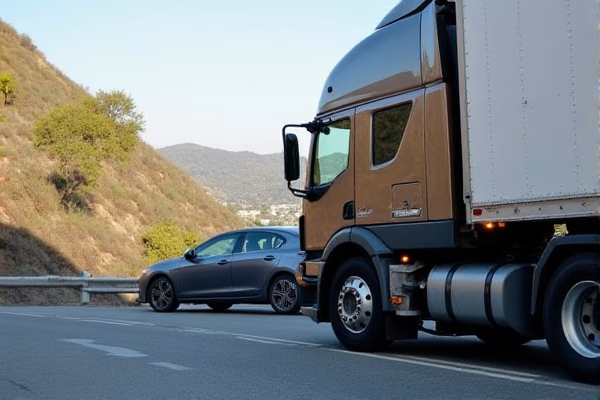
Collecting evidence is paramount. Beyond the basic exchange of information, try to document everything. This includes taking photos of the accident scene, the damage to all vehicles involved, and any visible injuries. If there were any witnesses, obtain their contact information. Crucially, if possible, preserve any dashcam footage, black box data (EDR), or ELD data from the truck. These digital records can be invaluable in establishing fault and proving the driver’s negligence.
Don’t underestimate the importance of your own medical records. Keep detailed notes of your treatment, pain levels, and any limitations you’re experiencing. Any communication with the insurance company should be documented, and it’s best to have an attorney handle these interactions for you.
What is the statute of limitations for filing a truck accident claim in California?
In California, you have a limited time to file a lawsuit after a truck accident. According to CCP § 335.1, you generally have **two years** from the date of the accident to initiate legal proceedings. Because trucking companies often begin evidence destruction (like purging ELD data) as soon as the law allows, immediate filing is critical to preserve the integrity of the claim.
It’s important to note that this timeframe can be complex, especially if government entities are involved or if there are multiple parties at fault. Consulting with an attorney as soon as possible will ensure you don’t miss any critical deadlines.
Can I recover damages for lost wages and future medical expenses?
Absolutely. In a truck accident case, you are entitled to compensation for all of your damages, including medical expenses (past and future), lost wages, pain and suffering, and potentially punitive damages if the truck driver’s conduct was particularly egregious. Calculating the full extent of these damages can be challenging, especially when considering long-term care and diminished earning capacity.
We work with medical experts and economists to accurately assess your losses and build a compelling case for maximum compensation. This includes obtaining expert testimony to demonstrate the severity of your injuries and the long-term impact on your quality of life.
What if the truck driver was working for a trucking company?
This is a common scenario, and it introduces the concept of vicarious liability. Under the doctrine of Civ. Code § 2338, the trucking company can be held legally responsible for the wrongful acts of its drivers committed within the scope of their employment. This means you can pursue a claim against both the driver and the company.
Often, the trucking company has deeper pockets and more comprehensive insurance coverage than the driver alone. Investigating the company’s hiring practices, training procedures, and maintenance records is crucial to establishing their liability.
What role does driver fatigue play in truck accidents?
Driver fatigue is a significant contributing factor in many truck accidents. Federal regulations, outlined in 49 CFR § 395, dictate exactly how long a driver can be behind the wheel. Violations of these Hours of Service (HOS) regulations, often proven through Electronic Logging Device (ELD) data, are used to demonstrate driver fatigue.
We routinely subpoena ELD data to uncover instances of falsified logs or violations of HOS rules. This evidence can be critical in establishing negligence and proving the trucking company’s responsibility.
What should I do if the insurance adjuster asks me to give a recorded statement?
Politely decline. Insurance adjusters are trained to minimize payouts, and a recorded statement can be used against you later. They will likely ask leading questions designed to downplay your injuries or shift blame. It’s best to let your attorney handle all communication with the insurance company.
We will conduct a thorough investigation of the accident and build a strong case on your behalf before engaging in any negotiations with the insurer. Protecting your rights is our top priority.
What if I have medical liens from the hospital or other providers?
Medical liens are common after a truck accident, and they represent a claim against your settlement or judgment to cover your medical expenses. We have extensive experience negotiating with hospitals and other providers to reduce the amount of these liens. It’s important to understand your rights and options regarding medical liens.
We will work to ensure that your medical bills are properly addressed and that you receive the maximum compensation possible, even with outstanding liens. We will also explore options for resolving liens through Medicare or other programs.
What is the process for filing a claim against a government entity if the accident involved a roadway hazard?
If the truck accident involved a government-owned vehicle or a dangerous road condition maintained by a public entity, a formal administrative claim **MUST** be presented within **6 months** (180 days). Failure to meet this strict deadline under the Government Tort Claims Act can result in the permanent loss of your right to recover. This is a very specific process with strict requirements.
We have extensive experience handling claims against government entities and will ensure that your claim is properly filed and documented to maximize your chances of success. It’s crucial to act quickly and consult with an attorney immediately.
What if the insurance company makes a policy limits tender?
A policy limits tender is an offer from the insurance company to settle your claim for the maximum amount of their policy coverage. While it may seem appealing, it’s important to carefully consider whether the offer adequately compensates you for all of your damages. Accepting a policy limits tender may prevent you from pursuing further recovery from other sources.
We will thoroughly evaluate the offer and advise you on whether it’s in your best interest to accept it or pursue litigation to recover additional compensation. We will also explore options for identifying other potential sources of recovery, such as excess insurance policies.
How can dashcam footage and other digital evidence help my case?
Dashcam footage, black box data (EDR), and ELD data can be invaluable in establishing fault and proving the driver’s negligence. These records can provide objective evidence of the accident circumstances, driver behavior, and vehicle speed. However, obtaining this evidence can be challenging, as it’s often controlled by the trucking company.
We have the resources and expertise to subpoena this evidence and analyze it thoroughly to build a stronger case on your behalf. We also understand the importance of preserving this evidence to prevent it from being altered or destroyed.
What is comparative fault and how does it affect my claim?
California’s ‘pure’ comparative fault system applies to trucking claims. Even if a truck driver argues you shared responsibility, you can still recover damages; however, your total compensation will be reduced by your percentage of fault. The insurance company will likely attempt to argue that you were partially at fault for the accident.
We will thoroughly investigate the accident and gather evidence to refute any claims of comparative fault. We will also present evidence to demonstrate the driver’s negligence and establish their primary responsibility for the accident.
What happens if a truck accident results in a wrongful death?
When a truck accident results in a fatality, specific family members have the right to file a wrongful death claim. This allows for the recovery of financial support, funeral expenses, and the loss of the decedent’s love, companionship, and guidance. These cases are particularly sensitive and require compassionate and experienced legal representation.
We will handle all aspects of the wrongful death claim with the utmost care and sensitivity, ensuring that your family receives the justice and compensation they deserve.