Can I Recover Damages If My Motorcycle Slid After Impact?

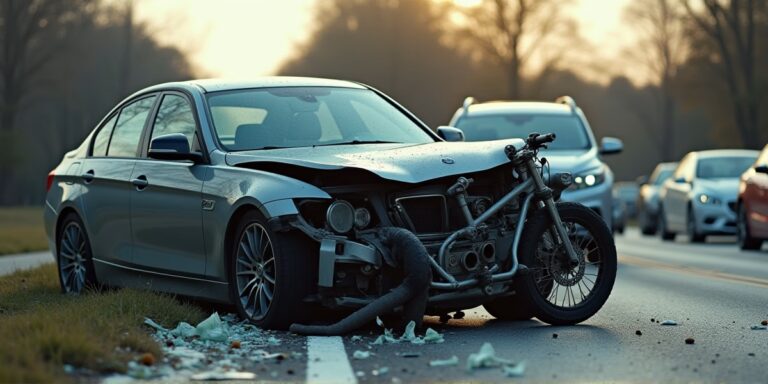
The question of whether you can recover damages after a motorcycle slides following an impact is a common one, and the answer is almost always yes, *but* it’s rarely straightforward. Insurance companies frequently attempt to minimize liability in these cases, arguing that the sliding itself, rather than the initial collision, caused the majority of the injuries. They’ll often focus on the rider’s actions during the slide, looking for any perceived negligence. This is where having an attorney experienced in motorcycle accident claims is critical.
The key to successfully pursuing a claim after a motorcycle slide lies in establishing a clear causal link between the driver’s negligence and *all* of your injuries. This means demonstrating that the initial impact was the primary cause of the accident, and that the subsequent sliding was a foreseeable consequence of that impact. Evidence such as police reports, witness statements, photos of the accident scene, and expert reconstruction analysis can be invaluable in building a strong case. It’s important to remember that even if you were unable to avoid the slide, the at-fault driver is still responsible for the damages they caused.
I’ve been practicing personal injury law in San Diego for over 13 years, and I’ve seen firsthand how insurance companies try to undervalue or deny claims involving motorcycle slides. I was trained by a former insurance defense attorney, giving me intimate knowledge of how these companies evaluate, devalue, and deny claims. I understand their tactics and know how to effectively counter them to ensure my clients receive the compensation they deserve.
Can the insurance company deny my claim if I wasn’t wearing a helmet?

California is a universal helmet law state, meaning all riders and passengers are legally required to wear a DOT-approved helmet. While a helmet violation can be used by defense counsel to argue for a reduction in damages—specifically regarding head or neck injuries—it does not automatically bar a rider from seeking recovery for other injuries. The defense will attempt to show that your injuries would have been less severe had you been wearing a helmet, but this is just one factor a jury will consider. They must prove that the helmet would have prevented or lessened your injuries, which is not always the case.
Furthermore, the fact that you weren’t wearing a helmet does not negate the driver’s negligence that caused the accident in the first place. You can still recover compensation for medical expenses, lost wages, and pain and suffering, even if you were not in full compliance with the law.
What if the accident happened because of a dangerous road condition?
If a motorcycle accident involves a government-owned vehicle or a dangerous road condition like loose gravel, potholes, or poorly marked construction zones, a formal administrative claim **MUST** be presented within **6 months** (180 days). Failure to meet this strict deadline under the Government Tort Claims Act can result in the permanent loss of your right to recover. These claims are often more complex than standard auto accident cases, as you’re dealing directly with a government entity.
It’s crucial to gather evidence of the road hazard, such as photos, videos, and any reports filed with the city or county. Proving that the government entity knew or should have known about the dangerous condition and failed to take reasonable steps to correct it is essential to a successful claim.
How does California’s comparative fault rule affect my motorcycle claim?
California’s ‘pure’ comparative fault system applies to motorcycle claims. Even if a driver argues you shared responsibility due to speed or positioning, you can still recover damages; however, your total compensation will be reduced by your percentage of fault. For example, if you are found to be 30% at fault for the accident, you can still recover 70% of your total damages.
Insurance companies will often try to inflate your percentage of fault to minimize their payout. This is why it’s important to have an attorney who can thoroughly investigate the accident and present evidence to counter their arguments.
What should I do if the insurance company asks me to give a recorded statement?
I strongly advise against giving a recorded statement to the insurance company without first consulting with an attorney. Insurance adjusters are trained to ask leading questions designed to minimize their liability and potentially uncover information that could be used against you. They are not on your side, and anything you say can and will be used to devalue your claim.
Let me handle all communication with the insurance company on your behalf. I will ensure that your rights are protected and that you are not taken advantage of.
What is the deadline to file a lawsuit after a motorcycle accident in California?
California law provides a **two-year** window from the date of the motorcycle accident to file a lawsuit for personal injury. Because evidence at a crash scene—such as skid marks or GoPro footage—can disappear quickly, immediate filing is critical to preserve the integrity of the claim. Don’t delay seeking legal counsel, as waiting too long can jeopardize your ability to recover compensation.
I can immediately begin investigating your accident and gathering the necessary evidence to protect your claim.
What happens if the at-fault driver has minimal insurance coverage?
If the at-fault driver has minimal or no insurance coverage, you may be able to recover damages through your own Uninsured Motorist (UM) coverage. California law requires insurers to offer UM coverage. For motorcyclists hit by a driver with minimum or no insurance, this coverage allows you to recover damages directly from your own policy up to your selected limits.
It’s important to review your own insurance policy to determine the extent of your UM coverage. I can help you navigate the complexities of UM claims and ensure you receive the maximum compensation available.