Can I Seek Punitive Damages After A Dui Motorcycle Crash?

When a motorcycle accident is caused by a driver under the influence of alcohol or drugs, the potential for recovery extends beyond just covering medical expenses and lost wages. California law allows for the possibility of punitive damages, a form of compensation designed to punish the at-fault driver for particularly egregious conduct and deter others from similar behavior. However, securing these damages isn’t automatic; it requires a strong legal strategy and a thorough understanding of the specific requirements.
The key to unlocking punitive damages in a DUI motorcycle crash lies in proving the driver acted with malice, oppression, or fraud. This means demonstrating a conscious disregard for the safety of others, a willful and wanton disregard for human life. A prior DUI conviction, reckless driving history, or even excessively high blood alcohol content can all serve as evidence of this malicious intent. It’s a higher standard than simply proving negligence, but the potential reward—compensation far exceeding the typical limits of medical bills and lost income—makes it a pursuit worth fighting for.
I’ve been practicing personal injury law in San Diego for over 13 years, and I’ve seen firsthand how devastating these types of accidents can be. I was fortunate enough to be trained by a former insurance defense attorney, giving me intimate knowledge of how insurance companies evaluate, devalue, and deny claims. This insight allows me to anticipate their tactics and build a stronger case for my clients, ensuring they receive the full compensation they deserve.
What evidence is needed to prove malice in a DUI motorcycle accident case?
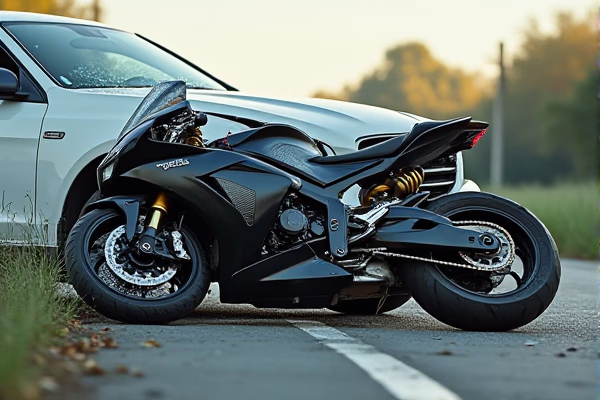
Establishing malice, oppression, or fraud requires more than just a police report showing a driver’s intoxication. We need to build a compelling narrative that demonstrates a conscious disregard for safety. This often includes obtaining the driver’s BAC results, toxicology reports, and any dashcam footage or witness statements detailing their behavior before the crash. Prior DUI convictions are incredibly valuable, as they show a pattern of reckless disregard. We also look for evidence of excessive speed, weaving, or other dangerous driving maneuvers leading up to the accident.
Furthermore, we investigate whether the driver was aware of the risks associated with driving under the influence. Did they attend any alcohol awareness classes after a previous conviction? Were they warned by passengers not to drive? Any evidence suggesting they knowingly disregarded those warnings strengthens the case for punitive damages. It’s a detailed process, but crucial to maximizing the potential recovery.
How does California law define “malice” for punitive damages?
California Civil Code § 3294 defines malice as intentional wrongdoing, with a conscious disregard for the rights and safety of others. In the context of a DUI motorcycle accident, this often translates to the driver knowingly consuming alcohol and then choosing to operate a vehicle despite the obvious risks. It doesn’t necessarily require a pre-planned intent to harm someone, but rather a deliberate indifference to the potential consequences of their actions.
The courts will look at the totality of the circumstances, considering the driver’s conduct before, during, and after the accident. Were they speeding? Did they attempt to flee the scene? Were they uncooperative with law enforcement? All of these factors can contribute to a finding of malice, opening the door for punitive damages.
What is the process for requesting punitive damages in a motorcycle accident lawsuit?
Punitive damages aren’t automatically awarded. They must be specifically requested in the complaint, and the plaintiff (the injured motorcyclist) bears the burden of proving their entitlement. After the initial complaint is filed, we engage in the discovery process, gathering evidence through depositions, interrogatories, and requests for documents. This evidence is then presented to a jury, who ultimately decides whether to award punitive damages and, if so, the amount.
It’s important to note that there are statutory limits on the amount of punitive damages that can be awarded. These limits are tied to the compensatory damages (medical bills, lost wages, pain and suffering) awarded in the case. We carefully analyze these limits and present a compelling argument for the maximum allowable amount, given the egregious nature of the driver’s conduct.
Can I still pursue punitive damages if the driver didn’t have a prior DUI conviction?
While a prior DUI conviction significantly strengthens the case, it’s not absolutely required to pursue punitive damages. We can still establish malice based on other evidence, such as a high BAC level, reckless driving behavior, or a complete disregard for the safety of others. For example, if the driver was driving significantly over the speed limit and weaving between lanes before the crash, that could be enough to demonstrate a conscious disregard for human life.
The key is to build a strong narrative that shows the driver acted with intentional wrongdoing, even if they didn’t have a previous conviction. This requires a thorough investigation, meticulous evidence gathering, and a skilled attorney who understands the nuances of California law. It’s a more challenging path, but still possible to achieve a favorable outcome.
What happens if the insurance company refuses to pay punitive damages?
Insurance companies are often reluctant to pay punitive damages, as they are designed to punish the driver, not simply compensate the victim. If the insurance company denies our request, we can pursue litigation and take the case to trial. The jury will ultimately decide whether to award punitive damages and, if so, the amount.
It’s important to be prepared for a fight. Insurance companies will likely argue that the driver’s conduct wasn’t malicious or that the amount of punitive damages requested is excessive. That’s why it’s crucial to have an experienced attorney who can effectively present your case and counter their arguments. I have successfully litigated numerous DUI motorcycle accident cases in San Diego, and I’m prepared to fight for the full compensation you deserve.
What is the statute of limitations for filing a motorcycle accident lawsuit in California?
California law provides a **two-year** window from the date of the motorcycle accident to file a lawsuit for personal injury. Because evidence at a crash scene—such as skid marks or GoPro footage—can disappear quickly, immediate filing is critical to preserve the integrity of the claim. Don’t delay seeking legal counsel, as missing this deadline could permanently bar your right to recover compensation.
What should I do if the at-fault driver was operating a borrowed vehicle?
If the driver who caused your motorcycle accident was operating a vehicle borrowed from a friend or family member, you may be able to pursue a claim against the vehicle owner under the theory of negligent entrustment. This means the owner is liable if they permitted an unfit or incompetent driver to operate their car, leading to a collision with a motorcyclist. This is a vital tool for recovery when the at-fault driver was operating a vehicle borrowed from a friend or family member.
What if the accident involved a government vehicle or a dangerous road condition?
If a motorcycle accident involves a government-owned vehicle or a dangerous road condition like loose gravel, potholes, or poorly marked construction zones, a formal administrative claim **MUST** be presented within **6 months** (180 days). Failure to meet this strict deadline under the Government Tort Claims Act can result in the permanent loss of your right to recover.
What if the driver was uninsured or underinsured?
California law requires insurers to offer Uninsured Motorist (UM) and Underinsured Motorist (UIM) coverage. For motorcyclists hit by a driver with minimum or no insurance, this coverage allows you to recover damages directly from your own policy up to your selected limits.
What if the accident resulted in the death of a loved one?
When a motorcycle accident results in a fatality, specific family members have the right to file a wrongful death claim. This allows for the recovery of financial support, funeral expenses, and the loss of the decedent’s love, companionship, and guidance.