
Can Interest Accrue On Delayed Settlements?

One of the most frustrating aspects of dealing with an insurance claim after a motorcycle accident is the delay in receiving a fair settlement. While California law doesn’t allow for “interest” in the traditional sense on a personal injury claim *before* a lawsuit is filed, there are mechanisms to address the financial hardship caused by unreasonable delays. Understanding these options is crucial to protecting your rights and maximizing your recovery.
The insurance company’s tactics often involve prolonged investigations, requests for additional medical records, and drawn-out negotiations. This isn’t accidental. They’re banking on you accepting a lower offer simply to resolve the case and avoid the stress and expense of litigation. However, California law provides avenues for recourse, particularly when the insurer acts in bad faith.
I’ve been practicing personal injury law in San Diego for over 13 years, and I’ve seen firsthand how insurance companies operate. Trained by a former insurance defense attorney, I have intimate knowledge of how they evaluate, devalue, and deny claims. This insight allows me to anticipate their strategies and build a stronger case on your behalf. It’s a critical advantage in navigating the complexities of a motorcycle accident claim.
Will I Receive Interest on My Motorcycle Accident Settlement?
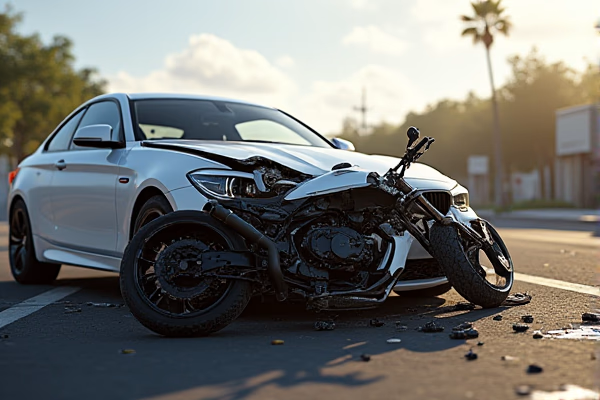
California law generally does not provide for pre-judgment interest on personal injury claims. This means that before a lawsuit is filed, you typically won’t accrue interest on the damages you’re owed. However, there’s a significant exception: if the insurance company unreasonably delays or denies your claim, you may be able to pursue a claim for “bad faith.”
Bad faith claims are governed by California Insurance Code § 790.02, and require demonstrating that the insurer acted without reasonable cause in denying or delaying payment of your claim. This could include ignoring medical evidence, misrepresenting policy terms, or failing to conduct a thorough investigation. If successful, you can recover not only the full amount of your damages but also additional penalties, including the insurer’s profits and attorney’s fees.
It’s important to note that proving bad faith can be challenging. You’ll need to demonstrate a pattern of unreasonable conduct and establish a clear link between the insurer’s actions and your financial hardship. This is where an experienced attorney can be invaluable.
What Happens if the Insurance Company Delays Settlement After a Lawsuit is Filed?
Once a lawsuit is filed, the situation changes. California law *does* allow for post-judgment interest on the amount awarded by the court. This interest accrues from the date of the judgment until the final payment is made. The current statutory rate is 10% per annum, as outlined in CCP § 335.1. Because evidence at a crash scene—such as skid marks or GoPro footage—can disappear quickly, immediate filing is critical to preserve the integrity of the claim.
Furthermore, even before a judgment is rendered, you can seek court intervention to expedite the settlement process. A motion to compel settlement conferences or a request for a trial date can put pressure on the insurer to resolve the case more quickly. A skilled attorney will know how to leverage these tools to your advantage.
The key is to document everything. Keep detailed records of all communications with the insurance company, including dates, times, and the names of the individuals you spoke with. This documentation will be crucial in building a strong case for bad faith or pursuing post-judgment interest.
How Can I Prove the Insurance Company is Unreasonably Delaying My Claim?
Demonstrating unreasonable delay requires gathering evidence of the insurer’s misconduct. This can include:
- Communication Logs: Keep a detailed record of all phone calls, emails, and letters exchanged with the insurance adjuster.
- Denial Letters: Preserve any letters or notices denying your claim or offering a settlement amount that is significantly lower than your damages.
- Medical Records: Document any delays in obtaining or reviewing your medical records.
- Expert Reports: Obtain independent medical evaluations or accident reconstruction reports to support your claim.
- Internal Notes: If possible, obtain internal notes or memos from the insurance company that reveal their rationale for delaying the claim.
An attorney can help you obtain this evidence through formal discovery requests, such as interrogatories and depositions. They can also analyze the insurer’s conduct to identify any patterns of bad faith.
What is “Bad Faith” in the Context of a Motorcycle Accident Claim?
Bad faith isn’t simply a disagreement over the value of your claim. It requires a showing of unreasonable conduct and a lack of honest intent on the part of the insurer. Examples of bad faith include:
- Unreasonable Investigation: Failing to conduct a thorough investigation of the accident.
- Misrepresentation of Policy Terms: Providing inaccurate or misleading information about your policy coverage.
- Failure to Respond to Communications: Ignoring your phone calls, emails, or letters.
- Lowball Offers: Offering a settlement amount that is significantly lower than the value of your damages.
- Unnecessary Delays: Prolonging the settlement process without a legitimate reason.
If you suspect the insurance company is acting in bad faith, it’s crucial to consult with an attorney immediately. They can evaluate your case and advise you on the best course of action.
What Should I Do if the Insurance Company is Not Responding to My Demands?
If the insurance company is unresponsive to your demands, don’t give up. Here are some steps you can take:
- Send a Formal Demand Letter: A demand letter outlines your damages and sets a deadline for the insurer to respond.
- File a Complaint with the California Department of Insurance: The Department of Insurance can investigate your claim and mediate a resolution.
- File a Lawsuit: If all else fails, you may need to file a lawsuit to protect your rights.
Navigating the insurance claim process can be complex and overwhelming, especially after a serious motorcycle accident. An experienced attorney can handle the legal intricacies and fight for the compensation you deserve.
What is the Statute of Limitations for Filing a Motorcycle Accident Lawsuit in California?
California law provides a **two-year** window from the date of the motorcycle accident to file a lawsuit for personal injury. It is imperative to act quickly, as missing this deadline can result in the permanent loss of your right to recover. Even if you are still undergoing medical treatment, it’s crucial to consult with an attorney to protect your claim.
How Does Government Liability Affect the Settlement Timeline?
If a motorcycle accident involves a government-owned vehicle or a dangerous road condition like loose gravel, potholes, or poorly marked construction zones, the settlement timeline is significantly different. You must file a formal administrative claim with the government agency within **6 months** (180 days) of the accident under the Government Tort Claims Act. Failure to meet this strict deadline under Gov. Code § 911.2 can result in the permanent loss of your right to recover.
What Role Does Lane Splitting Play in Determining Fault and Settlement?
California law formally recognizes lane splitting as legal, defined as driving a motorcycle between rows of stopped or moving vehicles in the same lane. In accident litigation, proving that the maneuver was performed ‘in a safe and prudent manner’ is essential to rebutting claims of rider negligence. CVC § 21658.1 is the key statute here. An attorney experienced in motorcycle accidents can help establish this crucial element of your case.
Does Wearing a Helmet Affect My Settlement Amount?
California is a universal helmet law state, requiring all riders and passengers to wear a safety helmet that meets DOT standards. While a violation may be used by defense counsel to argue for a reduction in damages via comparative fault—specifically regarding head or neck injuries—it does not bar a rider from seeking recovery for other injuries caused by a negligent driver. CVC § 27803 outlines these requirements.
What is Comparative Fault and How Does it Impact My Settlement?
California’s ‘pure’ comparative fault system applies to motorcycle claims. Even if a driver argues you shared responsibility due to speed or positioning, you can still recover damages; however, your total compensation will be reduced by your percentage of fault. Civ. Code § 1714 governs this process.