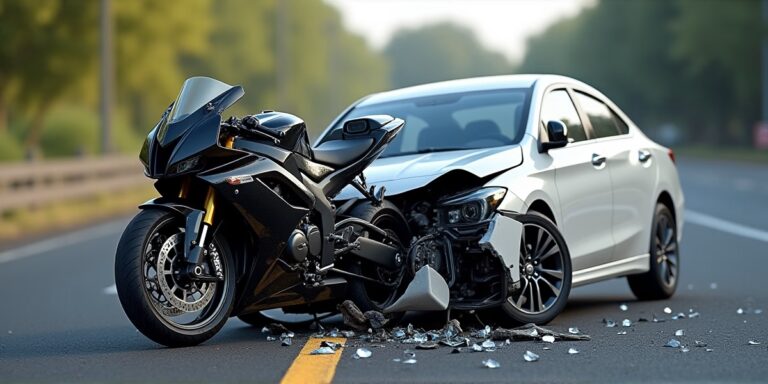

What If The Driver Says The Accident Was My Fault?
It’s a terrifying scenario, and unfortunately, a common one. After a motorcycle accident, the at-fault driver—or their insurance company—will often attempt to shift blame onto the rider. This is a standard tactic to minimize or deny their liability. It’s crucial to understand your rights and how to protect yourself when faced with accusations of fault.
The first thing to remember is that an admission of fault at the scene doesn’t automatically determine the outcome of a claim. Statements made in the heat of the moment are often unreliable and can be challenged. However, it’s still vital to remain calm, avoid admitting any wrongdoing, and focus on gathering information. Document everything you can—photos of the damage, witness contact information, and the police report—and, most importantly, seek legal counsel immediately.
I’ve been practicing personal injury law in San Diego for over 13 years, and I’ve seen firsthand how insurance companies operate. I was trained by a former insurance defense attorney, giving me intimate knowledge of how they evaluate, devalue, and deny claims. They’re experts at finding ways to reduce their payout, and that often starts with questioning the rider’s actions.
What evidence can be used to prove the other driver was at fault?

Establishing fault relies heavily on evidence. Police reports are a good starting point, but they aren’t always definitive. Witness statements are incredibly valuable, especially if they corroborate your account of the events. However, the most compelling evidence often comes from the scene itself. This includes skid marks, vehicle damage patterns, and any available surveillance footage.
Dashcam footage is gold. If you or another vehicle captured the accident, it can provide an unbiased record of what happened. Even data from the vehicles’ Event Data Recorders (EDR), often called “black boxes,” can reveal critical information about speed, braking, and impact forces. We routinely work with accident reconstruction experts to analyze this data and build a strong case.
In some cases, we can also leverage the other driver’s history. Prior accidents, traffic violations, or even social media posts can reveal a pattern of negligent behavior. The key is to be thorough and proactive in gathering all available evidence.
What if the police report says I was at fault?
A police report is not the final word. It’s an officer’s initial assessment of the accident, based on their observations and the information they gather at the scene. It’s often incomplete or inaccurate. The officer may not have all the facts, or they may have misinterpreted the situation.
We frequently encounter police reports that incorrectly assign fault. That’s why it’s so important to conduct your own investigation and present your own evidence. We can review the report, interview witnesses, and gather additional information to challenge the officer’s findings. It’s also important to note that insurance companies often give more weight to their own investigations than to the police report.
What is comparative fault, and how does it affect my claim?
California operates under a “pure” comparative fault system, meaning you can still recover damages even if you were partially at fault for the accident. However, your compensation will be reduced by your percentage of fault. For example, if you are found to be 20% responsible for the accident, you can still recover 80% of your damages. Civ. Code § 1714.
Insurance companies will often try to inflate your percentage of fault to minimize their payout. They may argue that you were speeding, improperly lane splitting, or failed to maintain a safe lookout. That’s why it’s crucial to have an experienced attorney on your side who can effectively challenge their arguments and protect your rights.
What should I do if the insurance company asks me for a recorded statement?
Politely decline. Insurance companies record statements to gather information that can be used against you later. They’re skilled at asking leading questions and twisting your words to make you appear at fault. You are under no obligation to provide a statement, and doing so can significantly harm your claim.
Let me handle all communication with the insurance company. I’ll protect your interests and ensure that you don’t inadvertently say anything that could jeopardize your case. I’ll gather the necessary evidence, build a strong legal argument, and negotiate a fair settlement on your behalf.
What if the other driver was uninsured?
Being hit by an uninsured driver is a particularly challenging situation. However, you may still be able to recover damages through your own Uninsured Motorist (UM) coverage. Ins. Code § 11580.2. UM coverage is designed to protect you in cases where the at-fault driver has no insurance.
The process of filing a UM claim can be complex, and insurance companies often try to undervalue these claims. It’s essential to have an attorney who understands the intricacies of UM coverage and can fight for the full compensation you deserve. We have a proven track record of successfully resolving UM claims for our clients in San Diego.
What if the accident involved a government vehicle or roadway hazard?
If the accident involved a government-owned vehicle or a dangerous road condition, such as potholes or poorly marked construction zones, you must file a formal administrative claim within six months (180 days). Gov. Code § 911.2. This is a strict deadline, and failure to meet it can result in the permanent loss of your right to recover.
Government claims are often more complex than claims against private individuals or companies. It’s crucial to have an attorney who is familiar with the Government Tort Claims Act and can navigate the bureaucratic process effectively. We have extensive experience handling government claims in San Diego and can ensure that your claim is properly filed and prosecuted.