

What If The Insurer Argues I Assumed The Risk?

This “assumption of risk” defense is a common tactic insurance companies use to minimize payouts in motorcycle accident cases. It’s a frustrating experience for riders who are already dealing with significant physical and financial hardship. However, it’s rarely a successful defense, and a skilled attorney can effectively counter it. The core principle behind assumption of risk is that a person knowingly and voluntarily accepts a known danger. This means the insurer must prove you understood the specific risk that caused your injury *and* willingly exposed yourself to it.
Simply riding a motorcycle isn’t enough to establish assumption of risk. It’s not a blanket waiver of all responsibility. The insurer needs to demonstrate that Javier was aware of a *particular* hazard and chose to proceed despite it. For example, were you racing another motorcycle? Were you attempting a dangerous stunt? Were you knowingly riding on a road with known, unaddressed hazards? These are the types of scenarios where assumption of risk might be considered, and even then, it doesn’t automatically absolve the at-fault driver of liability.
As a personal injury attorney with over 13 years of experience in San Diego, I’ve seen this defense employed countless times. I was trained by a former insurance defense attorney, giving me intimate knowledge of how insurance companies evaluate, devalue, and deny claims. They often rely on vague arguments and attempt to shift blame onto the victim. Understanding their tactics is crucial to building a strong case and maximizing your recovery.
Can the Insurer Really Argue I Assumed the Risk Just by Riding a Motorcycle?
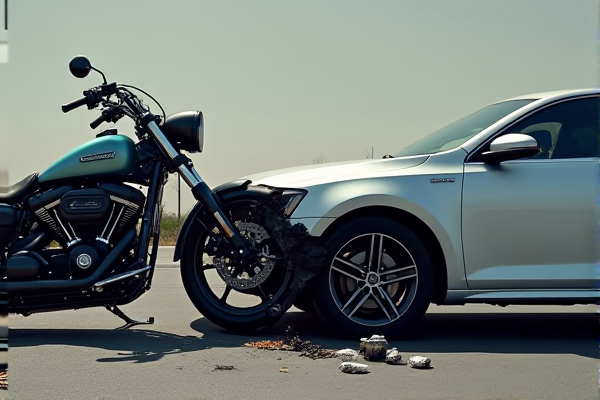
The short answer is no, not successfully in most cases. While motorcycling inherently involves some level of risk, it doesn’t equate to assuming the risk of another driver’s negligence. The law doesn’t require you to be completely risk-free to operate a vehicle. Drivers have a duty to operate their vehicles safely and responsibly, regardless of whether you’re in a car, truck, or on a motorcycle. The insurer must prove you knowingly accepted the *specific* risk that caused your injuries—the negligent actions of the other driver.
For example, if a driver runs a red light and hits you, you didn’t assume the risk of their reckless behavior. You were simply operating your motorcycle legally and safely. The driver’s negligence is the direct cause of the accident, and they are liable for your damages, regardless of the fact that you were riding a motorcycle. The insurance company’s attempt to portray motorcycling as inherently dangerous is a distraction from their client’s wrongdoing.
What Evidence Can Help Counter an Assumption of Risk Defense?
Building a strong case requires gathering compelling evidence to refute the insurer’s claims. This includes police reports, witness statements, photos of the accident scene, and your medical records. Crucially, any evidence demonstrating the other driver’s negligence is vital. Was the driver speeding? Were they distracted? Did they violate any traffic laws? Documentation of your safe riding practices can also be helpful. Do you have a valid motorcycle license? Were you following all traffic regulations?
Dashcam footage, if available, is incredibly powerful evidence. It provides a clear, unbiased record of the accident and can definitively show the other driver’s actions leading up to the collision. Even if you don’t have your own dashcam, we can often subpoena footage from nearby businesses or traffic cameras. Expert testimony from accident reconstruction specialists can also be valuable in demonstrating the other driver’s fault and refuting the assumption of risk defense.
How Does Comparative Fault Affect My Claim if the Insurer Raises Assumption of Risk?
California operates under a “pure” comparative fault system. This means that even if you are partially responsible for the accident, you can still recover damages. However, your compensation will be reduced by your percentage of fault. The insurer might argue that your actions contributed to the accident, such as riding slightly above the speed limit or not wearing the most visible gear. However, they must prove this negligence directly contributed to your injuries.
For example, if you are found to be 20% at fault for the accident, you can still recover 80% of your damages. It’s important to remember that the burden of proof lies with the insurer to establish your comparative fault. A skilled attorney can challenge their evidence and minimize your percentage of responsibility, maximizing your recovery. Civ. Code § 1714 outlines the principles of comparative negligence in California.
What Should I Do If the Insurer Accuses Me of Assuming the Risk?
Do not attempt to handle this situation on your own. Contact an experienced personal injury attorney immediately. Do not provide any recorded statements to the insurance company without legal counsel. They are skilled at manipulating statements and using them against you. An attorney can protect your rights and ensure you don’t inadvertently say something that could harm your case. We will thoroughly investigate the accident, gather evidence, and build a strong defense against the insurer’s claims.
The insurance company’s goal is to minimize their payout, and they will often resort to aggressive tactics to achieve this. Don’t let them intimidate you. A knowledgeable attorney can level the playing field and fight for the compensation you deserve. In San Diego, riders are often unfairly targeted, and it’s crucial to have an advocate who understands the nuances of motorcycle accident law.
What if I Was Lane Splitting When the Accident Occurred?
Lane splitting is legal in California, but it doesn’t come without risk. If you were lane splitting at the time of the accident, the insurer might attempt to argue that you assumed the risk by engaging in this maneuver. However, this defense is often unsuccessful if you were lane splitting safely and prudently. California law defines lane splitting as driving between rows of stopped or moving vehicles in the same lane.
To successfully counter this claim, we need to demonstrate that you were operating your motorcycle responsibly and within the bounds of the law. Were you traveling at a safe speed? Were you maintaining a safe distance from other vehicles? Were you aware of the surrounding traffic conditions? Dashcam footage is particularly helpful in these cases, as it provides a clear record of your lane splitting behavior. CVC § 21658.1 provides the legal framework for lane splitting in California.
How Long Do I Have to File a Lawsuit After a Motorcycle Accident?
In California, you generally have **two years** from the date of the motorcycle accident to file a lawsuit for personal injury. This is known as the statute of limitations. Because evidence at a crash scene—such as skid marks or GoPro footage—can disappear quickly, immediate filing is critical to preserve the integrity of the claim. Waiting too long can jeopardize your ability to recover compensation.
It’s important to note that the statute of limitations can be complex, and there may be exceptions to the two-year rule. For example, if the accident involved a government-owned vehicle or a dangerous road condition, the filing deadline may be shorter. CCP § 335.1 outlines the statute of limitations for personal injury claims in California.
What if the Government Was Responsible for the Road Condition That Caused My Accident?
If a motorcycle accident involves a government-owned vehicle or a dangerous road condition like loose gravel, potholes, or poorly marked construction zones, a formal administrative claim **MUST** be presented within **6 months** (180 days). Failure to meet this strict deadline under the Government Tort Claims Act can result in the permanent loss of your right to recover. This is a significantly shorter timeframe than the two-year statute of limitations for general personal injury claims.
The administrative claim process can be complex and requires specific documentation and procedures. It’s crucial to consult with an attorney immediately to ensure you meet all the necessary requirements. Gov. Code § 911.2 details the requirements for filing a claim against a government entity in California.
What Should I Do If the Insurer Asks Me to Provide a Recorded Statement?
Politely decline to provide a recorded statement. Insurance companies record statements to gather information that they can use against you later. They are skilled at asking leading questions and manipulating your responses to minimize their liability. You are not legally obligated to provide a statement, and doing so can significantly harm your case.
Instead, refer the insurer to your attorney. An attorney can protect your rights and ensure that any communication with the insurance company is conducted in a controlled and strategic manner. They will handle all negotiations and communications on your behalf, preventing you from inadvertently saying something that could jeopardize your claim.
What if the At-Fault Driver Had Minimal Insurance Coverage?
If the at-fault driver has minimal insurance coverage, you may be able to pursue a claim under your own Uninsured Motorist (UM) coverage. California law requires insurers to offer UM coverage. For motorcyclists hit by a driver with minimum or no insurance, this coverage allows you to recover damages directly from your own policy up to your selected limits.
It’s important to review your insurance policy to determine the extent of your UM coverage. An attorney can help you navigate the claims process and maximize your recovery under your policy. Ins. Code § 11580.2 outlines the requirements for Uninsured Motorist coverage in California.