How Do Lawyers Handle Rental Truck Accident Claims?

Rental truck accidents present unique challenges compared to standard car crashes. While it might seem straightforward, determining liability can quickly become complex. Often, multiple parties could be at fault – the driver of the rental truck, the rental company itself, or even the manufacturer of the truck if a defect contributed to the accident. As a personal injury attorney practicing in San Diego for over 13 years, I’ve seen firsthand how insurance companies attempt to minimize payouts in these situations. I was trained by a former insurance defense attorney, giving me intimate knowledge of how insurance companies evaluate, devalue, and deny claims.
The first step is identifying all potential sources of recovery. This includes the at-fault driver’s insurance, the rental company’s insurance, and potentially any other parties who contributed to the accident. A thorough investigation is crucial, including obtaining police reports, witness statements, and the truck’s maintenance records. We also need to examine the rental agreement carefully to understand the terms of coverage and any potential limitations.
What are the common challenges in pursuing a rental truck accident claim?
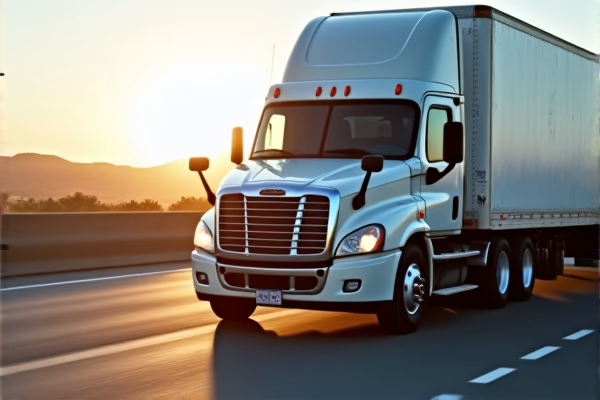
One of the biggest hurdles is establishing the rental company’s responsibility. Simply renting a truck doesn’t automatically make them liable for an accident caused by the renter. However, they can be held responsible if they were negligent in their duties, such as failing to properly maintain the vehicle, failing to adequately inspect it before renting it out, or renting it to an unqualified driver. Proving these types of failures requires detailed documentation and expert testimony.
Another common issue is the limited insurance coverage offered by rental companies. Many policies have low liability limits, which may not be sufficient to cover all of your damages, especially if you’ve suffered serious injuries. In these cases, it’s important to explore other potential sources of recovery, such as your own underinsured motorist coverage or the at-fault driver’s insurance.
Finally, rental truck accidents often involve disputes over who was actually driving the vehicle at the time of the crash. If the renter allowed someone else to drive without authorization, it can complicate the claim process.
How does the rental agreement affect my claim?
The rental agreement is a critical piece of evidence in any rental truck accident claim. It outlines the terms of the rental, including the responsibilities of both the renter and the rental company. Pay close attention to the sections regarding insurance coverage, driver authorization, and vehicle maintenance.
Specifically, look for any clauses that limit the rental company’s liability or require you to provide specific notice of a claim. It’s also important to determine whether the rental agreement allows for any additional drivers. If someone else was driving the truck without authorization, it could jeopardize your claim.
We carefully review the rental agreement to identify any potential loopholes or ambiguities that could benefit your case. We also look for any evidence of negligence on the part of the rental company, such as failing to disclose known defects in the vehicle.
What if the truck had a mechanical defect that caused the accident?
If a mechanical defect contributed to the accident, the rental company and potentially the truck manufacturer could be held liable. This is because they have a duty to ensure that the vehicle is safe for operation. Proving a mechanical defect requires expert testimony from a qualified mechanic or engineer.
We will conduct a thorough inspection of the truck to identify any potential defects. We may also hire an expert to analyze the truck’s maintenance records and determine whether the rental company was aware of any pre-existing problems. If we can establish that a mechanical defect caused the accident, it can significantly strengthen your claim.
It’s crucial to preserve the truck as evidence, as it may be needed for inspection and analysis. We will work with the rental company to ensure that the truck is not repaired or altered in any way.
What damages can I recover in a rental truck accident claim?
You may be entitled to recover a wide range of damages in a rental truck accident claim, including medical expenses, lost wages, pain and suffering, and property damage. The amount of compensation you receive will depend on the severity of your injuries, the extent of your losses, and the degree of fault.
Medical expenses include all costs associated with your treatment, such as doctor’s visits, hospital stays, physical therapy, and medication. Lost wages include any income you’ve lost as a result of your injuries, as well as any future income you may lose if you’re unable to return to work. Pain and suffering is a more subjective type of damage that compensates you for the physical and emotional distress you’ve experienced.
In some cases, you may also be able to recover punitive damages if the at-fault driver or rental company acted with gross negligence or intentional misconduct.
What is the statute of limitations for filing a rental truck accident claim in California?
In California, you have a limited amount of time to file a lawsuit after a rental truck accident. According to CCP § 335.1, California law provides a **two-year** window from the date of the truck accident to file a lawsuit. Because trucking companies often begin evidence destruction (like purging ELD data) as soon as the law allows, immediate filing is critical to preserve the integrity of the claim.
It’s important to note that the statute of limitations can be complex, and there may be exceptions that apply to your case. For example, if you’re filing a claim against a government entity, the deadline may be even shorter. It’s always best to consult with an attorney as soon as possible to ensure that you don’t miss the deadline.
Waiting too long to file a claim can result in the permanent loss of your right to recover compensation. We will handle all of the necessary paperwork and filings to ensure that your claim is filed on time.
What should I do if the insurance company asks me to give a recorded statement?
Insurance companies often request recorded statements from accident victims. While you are not legally obligated to provide a statement, doing so can be risky. Insurance adjusters are trained to ask questions designed to minimize their liability and devalue your claim. They may try to trick you into admitting fault or making statements that could harm your case.
It’s best to politely decline the request for a recorded statement and refer the insurance company to your attorney. We will handle all communications with the insurance company on your behalf and ensure that your rights are protected. We can also conduct our own independent investigation to gather evidence and build a strong case.
Remember, the insurance company is not on your side. Their goal is to pay as little as possible for your claim. It’s important to have an experienced attorney on your side who can advocate for your best interests.
How do medical liens affect my rental truck accident settlement?
If you’ve received medical treatment for your injuries, the healthcare provider may file a medical lien against your settlement. A medical lien is a legal claim against your recovery to ensure that they are paid for their services. The amount of the lien can significantly reduce the amount of money you ultimately receive.
We will negotiate with the healthcare provider to reduce the amount of the lien. In some cases, we may be able to negotiate a lower rate or even eliminate the lien altogether. We will also explore other options for resolving the lien, such as Medicare or Medi-Cal subrogation.
It’s important to understand your rights and options regarding medical liens. We will work with you to ensure that you receive the maximum possible compensation for your injuries while minimizing the impact of any liens.
What if the accident involved a government-owned rental truck or a dangerous road condition?
If the rental truck was owned by a government entity or the accident was caused by a dangerous road condition maintained by a public entity, a formal administrative claim **MUST** be presented within **6 months** (180 days). This is a strict requirement under the Government Tort Claims Act, and failure to meet the deadline can result in the permanent loss of your right to recover. Gov. Code § 911.2 outlines the specific procedures for filing a claim against a government entity.
The claim process can be complex and time-consuming. It’s important to consult with an attorney who is experienced in handling claims against government entities. We will prepare and file the claim on your behalf and ensure that it meets all of the necessary requirements.
We will also investigate the accident to gather evidence and build a strong case against the government entity. This may involve obtaining police reports, witness statements, and maintenance records.
What is a policy limits tender and how does it affect my case?
A policy limits tender is an offer from the insurance company to settle your claim for the maximum amount of their policy coverage. While it may seem like a generous offer, it’s important to carefully consider whether it’s sufficient to cover all of your damages. Accepting a policy limits tender will typically release the insurance company from any further liability.
We will evaluate the offer and determine whether it’s fair and reasonable based on the severity of your injuries, the extent of your losses, and the degree of fault. If the offer is too low, we will negotiate with the insurance company to increase the amount. We may also explore other potential sources of recovery, such as your own underinsured motorist coverage or the at-fault driver’s insurance.
It’s important to understand the implications of accepting a policy limits tender before making a decision. We will explain your options and help you make the best choice for your case.