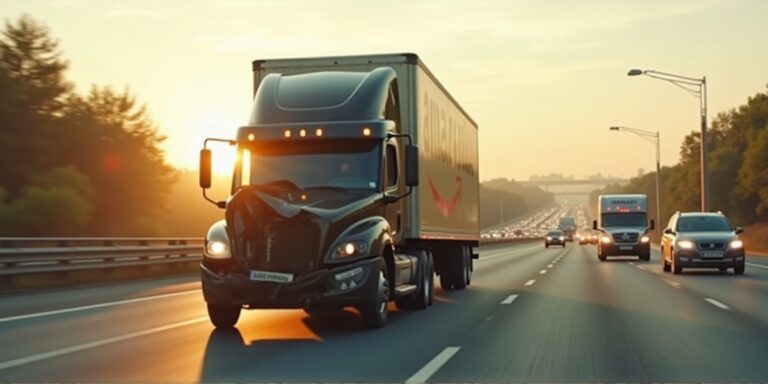
How Do Truck Accidents Cause Paralysis?

The human spinal cord is an incredibly delicate structure, responsible for transmitting signals between the brain and the rest of the body. In the context of truck accidents, the sheer size and weight of these vehicles—often exceeding 40,000 pounds—mean even a relatively low-speed collision can generate forces sufficient to cause devastating spinal injuries. These injuries don’t always manifest immediately; sometimes, swelling and inflammation can compress the spinal cord days or even weeks after the initial impact.
Understanding the mechanisms of spinal cord injury is crucial for pursuing a successful claim against the responsible parties. Truck accidents frequently cause paralysis through several distinct pathways, including direct fracture or dislocation of the vertebrae, compression of the spinal cord by bone fragments or herniated discs, and lacerations or contusions to the spinal cord itself. The severity of the paralysis—whether complete or incomplete—depends on the location and extent of the damage.
I’ve spent over 13 years representing clients in San Diego who have suffered catastrophic injuries in truck accidents. Having been trained by former insurance defense attorneys, I possess intimate knowledge of how insurance companies evaluate, devalue, and deny these claims. They will often attempt to minimize the extent of the injury or argue pre-existing conditions are to blame. That’s why it’s vital to have an advocate who understands their tactics and can build a strong case on your behalf.
What types of spinal cord injuries commonly result from truck accidents?
Truck accidents can cause a wide spectrum of spinal cord injuries. Complete spinal cord injuries result in a total loss of motor function and sensation below the level of the injury. Incomplete spinal cord injuries, on the other hand, involve some remaining function, but the extent of recovery is highly variable. Common diagnoses include cervical spinal cord injuries (affecting the neck), thoracic spinal cord injuries (affecting the chest), and lumbar spinal cord injuries (affecting the lower back and legs).
Beyond the initial trauma, secondary complications are common. These can include chronic pain, muscle spasticity, bowel and bladder dysfunction, and pressure sores. The long-term impact on a victim’s quality of life can be profound, requiring ongoing medical care, rehabilitation, and assistive devices.
How does the force of impact in a truck accident lead to paralysis?
The force generated in a truck accident can cause several types of spinal damage. Axial loading, where the spine is compressed along its length, is a common mechanism. This can occur during a rear-end collision or a rollover. Flexion, extension, or rotation forces can also cause spinal cord injuries, particularly in side-impact collisions. The violent twisting or bending of the spine can stretch or tear the spinal cord.
Furthermore, the intrusion of the vehicle’s structure into the passenger compartment can directly injure the spinal cord. Even if the spine isn’t fractured, the impact can cause swelling and inflammation that compresses the spinal cord, leading to temporary or permanent paralysis. Proving the specific mechanism of injury requires a thorough investigation, including accident reconstruction and medical expert testimony.
What evidence is needed to prove a truck accident caused paralysis?
Establishing a clear link between the truck accident and the resulting paralysis is paramount. Medical records documenting the extent of the spinal cord injury are essential. Accident reports, including police investigations and witness statements, can provide valuable information about the cause of the accident. Photographs and videos of the accident scene and vehicle damage can help illustrate the force of impact.
In many cases, expert testimony from biomechanical engineers and neurologists is necessary to explain the complex relationship between the accident forces and the spinal cord injury. We often work with these experts to reconstruct the accident and demonstrate how the truck driver’s negligence directly caused Javier’s paralysis. Civ. Code § 2338 establishes the legal principle of vicarious liability, holding the trucking company responsible for the actions of its drivers.
Can I still recover compensation if I had a pre-existing condition?
The presence of a pre-existing condition doesn’t automatically bar recovery. However, insurance companies will often attempt to argue that the paralysis was caused by the pre-existing condition, not the truck accident. It’s crucial to demonstrate that the accident aggravated or exacerbated the pre-existing condition, leading to the current level of paralysis. This requires a thorough review of your medical history and expert testimony from medical professionals.
We will work to establish the baseline condition before the accident and then show how the accident significantly worsened your symptoms. California law allows for recovery of damages even with pre-existing conditions, as long as the accident contributed to the injury.
What if the truck driver was violating federal Hours of Service regulations?
Violations of federal Hours of Service (HOS) regulations are a strong indicator of negligence. These regulations are designed to prevent driver fatigue, which is a major cause of truck accidents. Electronic Logging Device (ELD) data can provide irrefutable proof of HOS violations, such as exceeding driving limits or falsifying logbooks.
Proving a driver was fatigued at the time of the accident can significantly strengthen your claim. 49 CFR § 395 outlines the specific requirements for HOS compliance. We routinely subpoena ELD data and analyze driver logs to uncover evidence of negligence.
What is the statute of limitations for filing a truck accident claim in California?
In California, you generally have **two years** from the date of the truck accident to file a lawsuit. CCP § 335.1 outlines the specific deadlines. However, it’s crucial to act quickly, even within the two-year window. Because trucking companies often begin evidence destruction (like purging ELD data) as soon as the law allows, immediate filing is critical to preserve the integrity of the claim.
Waiting too long can jeopardize your ability to recover compensation. We recommend contacting an attorney as soon as possible after a truck accident to discuss your legal options and ensure all necessary steps are taken to protect your rights.
What should I do if the insurance company asks me to give a recorded statement?
Do not give a recorded statement to the insurance company without first consulting with an attorney. Insurance adjusters are trained to ask leading questions designed to minimize their liability. They may attempt to trick you into making statements that can be used against you later. A recorded statement can provide them with valuable information to devalue your claim or deny it altogether.
Let me handle all communications with the insurance company on your behalf. I will protect your rights and ensure you don’t inadvertently say anything that could harm your case.
How do medical liens affect my truck accident settlement?
Medical liens are claims placed on your settlement by healthcare providers who have treated you for injuries sustained in the accident. These liens must be resolved before you can receive your full settlement amount. The amount of the lien can vary depending on the type of treatment you received and your insurance coverage.
We have extensive experience negotiating with healthcare providers to reduce medical liens and ensure you receive the maximum possible compensation. We will carefully review your medical bills and work to protect your financial interests.
What if the accident occurred on a government roadway or construction site?
If a truck accident involves a government-owned vehicle or a dangerous road condition maintained by a public entity, a formal administrative claim **MUST** be presented within **6 months** (180 days). Gov. Code § 911.2 outlines this strict deadline under the Government Tort Claims Act. Failure to meet this deadline can result in the permanent loss of your right to recover.
These claims are often complex and require specific documentation and procedures. We have a proven track record of successfully handling government claims and will ensure all necessary steps are taken to protect your rights.
What is a policy limits tender and how does it impact my case?
A policy limits tender is an offer from the insurance company to settle your claim for the maximum amount of their policy. While it may seem like a generous offer, it’s important to carefully consider whether it adequately compensates you for all of your damages. Accepting a policy limits tender releases the insurance company from any further liability.
We will thoroughly evaluate your case and advise you on whether the policy limits tender is fair and reasonable. If it’s not, we will aggressively negotiate with the insurance company to obtain a higher settlement amount. We will also explore other potential sources of recovery, such as excess insurance policies.
How can dashcam footage or digital evidence help my truck accident claim?
Dashcam footage, ECM/EDR data, ELD logs, and GPS information can provide crucial evidence in a truck accident claim. Dashcam footage can show the events leading up to the accident, including the truck driver’s actions and any contributing factors. ECM/EDR data (Engine Control Module/Event Data Recorder) can reveal information about the truck’s speed, braking, and other critical parameters.
We will work to obtain all available digital evidence and analyze it to support your claim. Preserving this evidence is critical, as it can be easily lost or altered. We will send spoliation letters to the responsible parties demanding they preserve all relevant data.