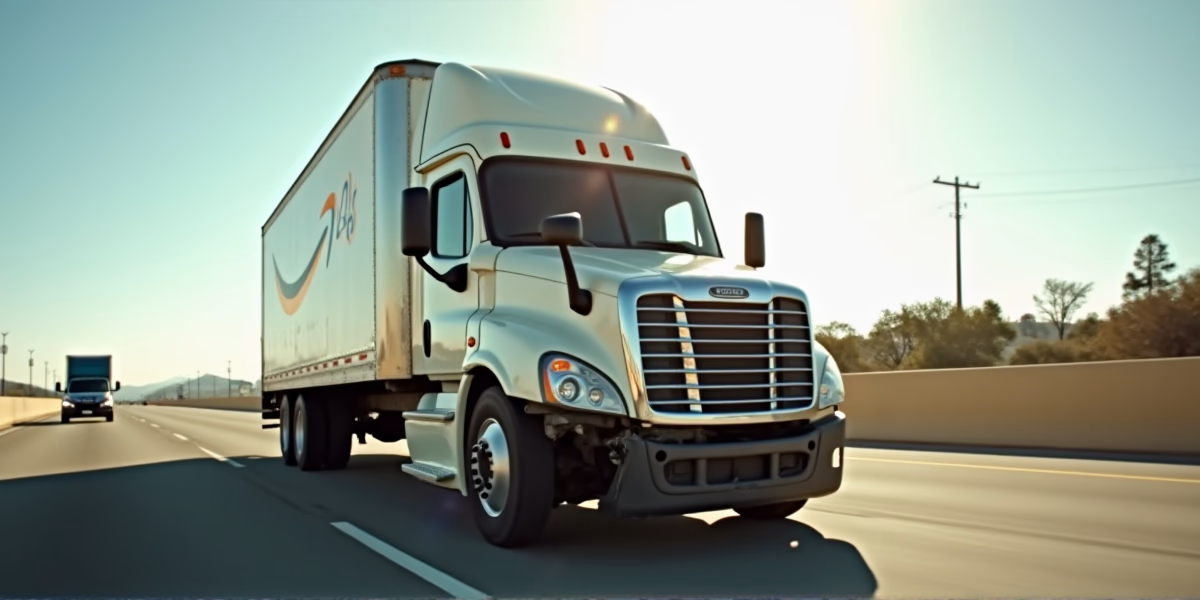
What Compensation Is Available After Blind Spot Accidents?

Blind spot accidents involving commercial trucks are often more severe than those with passenger vehicles. This is due to the sheer size and weight difference, as well as the limited visibility truck drivers often have. While many drivers assume the truck driver is automatically at fault, liability isn’t always clear-cut. Determining fault requires a thorough investigation into the circumstances of the accident, including driver negligence, vehicle maintenance records, and adherence to federal and state trucking regulations.
One of the first things we do in these cases is to obtain the truck’s Event Data Recorder (EDR) data, often referred to as the “black box.” This data can reveal critical information about the truck’s speed, braking patterns, and whether the driver was distracted or fatigued. We also examine the driver’s logbooks to ensure they were complying with Hours of Service regulations. It’s crucial to act quickly, as trucking companies often attempt to destroy or alter this evidence.
I’ve been practicing personal injury law in San Diego for over 13 years, and I was trained by a former insurance defense attorney. This experience gives me a unique insight into how insurance companies evaluate claims, and more importantly, how they attempt to devalue and deny them. I understand their tactics and know how to build a strong case to maximize your recovery.
What types of damages can I recover in a blind spot accident case?
Compensation in a blind spot accident case can include a wide range of damages, designed to fully reimburse you for your losses. These typically fall into two categories: economic and non-economic. Economic damages cover quantifiable financial losses, such as medical expenses, lost wages, and property damage. Non-economic damages, on the other hand, address more subjective losses like pain and suffering, emotional distress, and loss of enjoyment of life.
Medical expenses can include all past and future costs related to your injuries, including hospital bills, doctor visits, physical therapy, medication, and assistive devices. Lost wages cover the income you’ve lost due to your inability to work, as well as any future earning capacity you may have lost as a result of your injuries. Property damage includes the cost of repairing or replacing your vehicle.
Beyond these basic categories, you may also be entitled to compensation for other losses, such as rental car expenses, home modifications, and even the cost of hiring help with household chores. In some cases, punitive damages may also be available if the truck driver’s conduct was particularly reckless or egregious.
How does California’s comparative fault rule affect my claim?
California operates under a “pure” comparative fault system, meaning that you can recover damages even if you were partially at fault for the accident. However, your recovery will be reduced by your percentage of fault. For example, if you are found to be 20% at fault for the accident, you will only be able to recover 80% of your total damages. Civ. Code § 1714 governs this process.
Insurance companies will often attempt to argue that you were partially at fault for the accident in order to reduce their liability. They may claim that you were speeding, distracted, or failed to yield the right-of-way. It’s important to have an experienced attorney who can investigate the accident thoroughly and present evidence to counter these claims.
Establishing your percentage of fault requires a detailed analysis of the accident circumstances, including witness statements, police reports, and any available video footage. We work with accident reconstruction experts to build a strong case that minimizes your fault and maximizes your recovery.
What is the statute of limitations for filing a blind spot accident lawsuit in California?
In California, you have a limited amount of time to file a lawsuit after a truck accident. The statute of limitations for personal injury claims is generally **two years** from the date of the accident. CCP § 335.1 outlines these deadlines. Because trucking companies often begin evidence destruction (like purging ELD data) as soon as the law allows, immediate filing is critical to preserve the integrity of the claim.
Failing to file a lawsuit within the statute of limitations will result in the permanent loss of your right to recover damages. It’s important to consult with an attorney as soon as possible after an accident to ensure that your claim is filed on time. Even if you are still undergoing medical treatment, you can still file a lawsuit to preserve your rights.
We understand that dealing with the aftermath of a truck accident can be overwhelming, and it’s easy to lose track of important deadlines. We will handle all aspects of the legal process, including filing the lawsuit and meeting all applicable deadlines, so you can focus on your recovery.
What if the truck driver was working for a delivery company like Amazon or FedEx?
Determining liability in cases involving delivery drivers can be complex. These drivers are often classified as independent contractors, but that doesn’t necessarily mean the company is not responsible for their actions. California’s ‘ABC test’ determines if a delivery driver (Amazon/FedEx) is an employee or contractor. Even if labeled a ‘contractor,’ a company may be liable if they exercise control over the driver’s work, a key factor in San Diego delivery truck litigation. Labor Code § 2775 provides the framework for this analysis.
If the delivery company exercised control over the driver’s schedule, routes, or training, they may be considered an employer for liability purposes. This means you may be able to pursue a claim against both the driver and the delivery company. We will thoroughly investigate the driver’s relationship with the company to determine the best course of action.
These cases often involve complex legal issues, and it’s important to have an attorney who understands the intricacies of independent contractor law. We have experience handling these types of cases and can help you navigate the legal process.
What should I do if the trucking company offers a quick settlement?
Trucking companies often attempt to offer quick settlements shortly after an accident. While this may seem appealing, it’s important to be cautious and avoid accepting any settlement offer without first consulting with an attorney. These initial offers are typically far below the value of your claim and are designed to quickly resolve the case before you fully understand the extent of your injuries and damages.
Before accepting any settlement offer, we will thoroughly investigate the accident, gather all relevant evidence, and assess your damages. We will then negotiate with the insurance company on your behalf to ensure that you receive a fair and just settlement. Don’t let the insurance company pressure you into accepting a lowball offer.
Remember, you are not obligated to accept any settlement offer. If you are not satisfied with the offer, you have the right to file a lawsuit. We will advise you on the best course of action based on the specific circumstances of your case.
What if the truck accident involved a government vehicle or road hazard?
If a truck accident involves a government-owned vehicle or a dangerous road condition maintained by a public entity, a formal administrative claim **MUST** be presented within **6 months** (180 days). Failure to meet this strict deadline under the Government Tort Claims Act can result in the permanent loss of your right to recover. Gov. Code § 911.2 details these requirements.
These claims are often complex and require specific documentation and procedures. We have experience handling government claims and can ensure that your claim is properly filed and documented. It’s crucial to act quickly, as the deadline is relatively short.
We will investigate the accident thoroughly to determine if the government entity was negligent in maintaining the road or operating the vehicle. If so, we will pursue a claim to recover damages for your injuries and losses.