What If A Moving Truck Was Overloaded?

Overloading a moving truck is a serious safety violation with potentially devastating consequences. While it might seem like a simple matter of exceeding a weight limit, the reality is far more complex. The Federal Motor Carrier Safety Administration (FMCSA) has strict regulations regarding weight distribution, axle loads, and overall gross vehicle weight. Violations of these rules can lead to instability, increased braking distances, and a higher risk of accidents. When an overloaded truck causes a collision, the trucking company can be held liable for the resulting damages, even if the driver wasn’t directly at fault.
Determining whether a truck was overloaded requires a thorough investigation. This often involves reviewing the truck’s bill of lading, weight manifests, and maintenance records. Accident reconstruction experts can also analyze the scene and the truck’s damage to estimate the weight at the time of the crash. Crucially, proving overload isn’t always straightforward. Insurance companies will often dispute the findings, arguing the weight was within legal limits or that other factors caused the accident. That’s why having an attorney experienced in trucking litigation is essential.
I’ve been practicing personal injury law in San Diego for over 13 years, and I’ve seen firsthand how insurance companies attempt to minimize their payouts in truck accident cases. Trained by a former insurance defense attorney, I have intimate knowledge of how they evaluate, devalue, and deny claims. I understand the tactics they use and how to build a strong case to protect your rights.
What evidence is needed to prove a moving truck was overloaded?
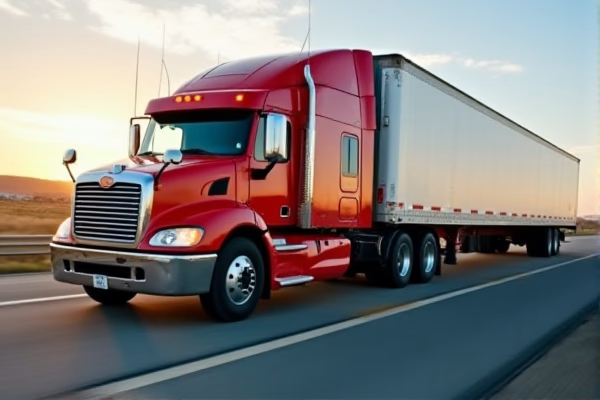
Establishing overload requires more than just a visual assessment. We need concrete documentation. The truck’s bill of lading is a critical starting point, as it details the cargo being transported. However, this document can be inaccurate or incomplete. Weight manifests, if available, provide a record of the truck’s weight at various points during the journey. Maintenance records can also reveal if the truck was properly equipped to handle the load.
Accident reconstruction experts play a vital role in these cases. They can use sophisticated techniques to estimate the truck’s weight based on the damage sustained in the collision and the skid marks left at the scene. Furthermore, we often subpoena the truck’s Electronic Logging Device (ELD) data to verify the weight information and the driver’s hours of service. The ELD data can also reveal if the driver was attempting to compensate for the overload by speeding or making unsafe maneuvers.
Can I recover damages if the driver, not the company, was responsible for the overload?
Yes, potentially. Under the doctrine of **vicarious liability** (respondeat superior), a principal is responsible to third persons for the negligence of their agent in the transaction of business. This holds the trucking company legally liable for the wrongful acts of its drivers committed within the scope of their employment. Even if the driver made the decision to overload the truck without the company’s explicit knowledge, the company can still be held accountable if they failed to adequately train or supervise the driver.
However, it’s important to remember that the driver may also be personally liable for their negligence. In some cases, pursuing claims against both the driver and the company is the most effective way to maximize your recovery. We will thoroughly investigate all potential avenues of liability to ensure you receive the full compensation you deserve.
What if the insurance company claims the weight was within legal limits?
Insurance companies are notorious for disputing weight claims. They may argue that the weight was properly distributed, that the scale used to weigh the truck was inaccurate, or that the accident was caused by other factors. It’s crucial to have an experienced attorney who can challenge their arguments and present compelling evidence to support your claim. We will work with accident reconstruction experts to independently verify the weight and demonstrate how the overload contributed to the collision.
Furthermore, we will scrutinize the truck’s maintenance records to determine if the vehicle was properly equipped to handle the load. If the truck’s brakes, tires, or suspension were inadequate, it could be evidence of negligent maintenance, even if the weight was technically within legal limits. We will leave no stone unturned in our pursuit of justice.
What role do federal regulations play in proving an overload?
Federal **Hours of Service (HOS)** regulations dictate exactly how long a driver can be behind the wheel. Violations of these federal safety standards, often proven through Electronic Logging Device (ELD) data, are used to demonstrate driver fatigue. While not directly related to weight, HOS violations can indicate a pattern of unsafe behavior and a disregard for safety regulations, which can strengthen your claim. Additionally, the FMCSA has specific regulations regarding weight distribution and axle loads, outlined in 49 CFR § 395.
These regulations are designed to prevent accidents caused by overloaded trucks. If the truck was in violation of these regulations at the time of the crash, it can be strong evidence of negligence. We will thoroughly review all relevant federal regulations to identify any violations and build a compelling case against the trucking company.
What if the accident involved a government-owned moving truck?
If a truck accident involves a government-owned vehicle or a dangerous road condition maintained by a public entity, a formal administrative claim **MUST** be presented within **6 months** (180 days). Failure to meet this strict deadline under the Government Tort Claims Act can result in the permanent loss of your right to recover. These claims are often complex and require a thorough understanding of government liability laws.
We have extensive experience handling claims against government entities in San Diego. We will ensure that your claim is properly filed and documented, and we will aggressively pursue your rights to obtain the compensation you deserve. It’s crucial to act quickly if your accident involved a government-owned vehicle, as the deadlines for filing a claim are very strict.