
What If I Cant Return To My Previous Career?

This scenario, unfortunately, is far too common. Truck accidents often result in life-altering injuries that prevent victims from returning to their previous careers. The insurance company’s strategy is often to minimize the long-term consequences, focusing on a quick settlement that doesn’t fully account for the devastating impact on your future earning potential. They want to categorize you as “employable” in *some* capacity, regardless of whether that capacity aligns with your skills, experience, or desires.
The legal complexities surrounding lost future earnings are significant. It’s not simply about the wages you’ve lost since the accident; it’s about the income you *would have earned* had the accident not occurred. This requires a thorough assessment of your career trajectory, your earning history, and the impact of your injuries on your ability to pursue your chosen profession. This is where an experienced attorney can make a critical difference.
I’ve been practicing personal injury law in San Diego for over 13 years, and I’ve seen firsthand how insurance companies attempt to undervalue these claims. I was trained by a former insurance defense attorney, giving me intimate knowledge of how they evaluate, devalue, and deny claims. I understand their tactics, and I know how to build a compelling case that accurately reflects the full extent of your losses. I’ve spent my career fighting for the rights of injured people in San Diego, and I’m committed to securing the compensation you deserve.
What types of damages can I recover for lost future earnings?
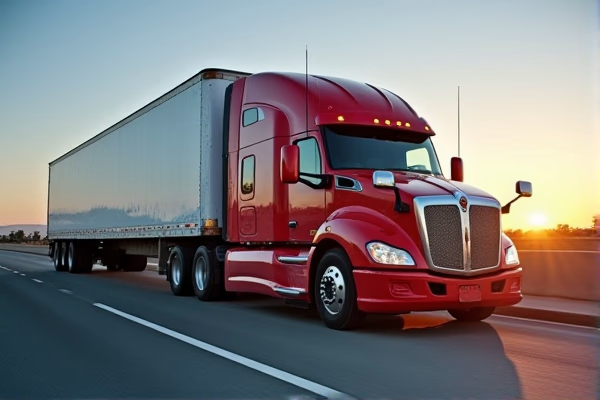
When you can no longer return to your previous career, you are entitled to seek compensation for a range of damages beyond just lost wages. These damages are designed to make you “whole” – to restore you, as much as possible, to the position you would have been in had the accident not occurred. This includes economic and non-economic losses.
Economic damages typically include lost earnings, both past and future. Future lost earnings require expert testimony from vocational rehabilitation specialists and economists to project your potential income over your remaining working life. You can also recover the costs of retraining or education if you pursue a different career path, although the insurance company will likely scrutinize these expenses closely. Additionally, you may be able to claim the loss of benefits such as health insurance, retirement contributions, and other employer-provided perks.
Non-economic damages address the intangible losses you’ve suffered. This includes pain and suffering, emotional distress, loss of enjoyment of life, and loss of consortium (impact on your relationships). These damages are more subjective, but they are a crucial component of a comprehensive settlement, particularly when your injuries have significantly altered your quality of life.
How do insurance companies determine my lost future earnings?
Insurance companies employ various methods to calculate lost future earnings, and they almost always aim to minimize the amount. They’ll often rely on vocational assessments conducted by their own experts, who may downplay your skills and experience or suggest lower-paying career alternatives. They may also use statistical data to project your earnings, which can be inaccurate or biased.
They will likely request your employment records, tax returns, and educational history. They’ll also want to know about any pre-existing conditions or limitations that could have affected your earning potential. Be prepared for them to scrutinize every aspect of your career and your injuries. It’s crucial to have an attorney who can challenge their assumptions and present a strong counter-argument based on your individual circumstances.
A key tactic is to discount your earnings based on factors like inflation or the potential for job market fluctuations. They may also argue that you have a duty to mitigate your damages by actively seeking new employment, even if it’s not in your preferred field. This is why it’s essential to document all your efforts to find alternative work and to consult with an attorney before making any statements to the insurance company.
What if I haven’t been able to find a new job yet?
The fact that you haven’t secured new employment doesn’t necessarily diminish your claim. Insurance companies often use this as leverage to reduce your settlement, arguing that you haven’t taken sufficient steps to mitigate your damages. However, California law recognizes that finding a comparable job can be challenging, especially after a serious injury.
You can demonstrate your efforts to find work by keeping a detailed log of your job applications, interviews, and networking activities. It’s also helpful to obtain documentation from career counselors or vocational rehabilitation specialists who can attest to your skills and the difficulty of finding suitable employment. Your attorney can help you present this evidence in a way that strengthens your claim and counters the insurance company’s arguments.
Furthermore, the concept of “lost earning capacity” applies even if you are currently unemployed. This means you can recover damages based on the income you *could have earned* had you not been injured, regardless of whether you’ve found a new job yet. This requires expert testimony to project your potential earnings over your remaining working life.
Can I pursue a claim against the trucking company directly, even if I was not at fault?
Yes, in many cases, you can pursue a claim directly against the trucking company based on the doctrine of **vicarious liability** (respondeat superior). Under Civ. Code § 2338, a principal is responsible to third persons for the negligence of their agent in the transaction of business. This means the trucking company can be held legally liable for the wrongful acts of its drivers committed within the scope of their employment.
This is particularly important in cases where the driver was negligent, such as speeding, distracted driving, or violating federal Hours of Service regulations. The trucking company also has a duty to properly hire, train, and supervise its drivers. If they were negligent in these areas, they can be held directly liable for your injuries.
Furthermore, the trucking company may be liable for negligent maintenance of its vehicles. Commercial vehicles are subject to rigorous safety and inspection regulations, and failure to comply with these regulations can be used to establish direct liability. An experienced attorney can investigate the trucking company’s safety records and identify any potential violations that contributed to the accident.
What should I do if the insurance company asks for a recorded statement?
The insurance company will almost certainly request a recorded statement early in the claims process. While you are not legally obligated to provide one, they will likely pressure you to do so. It’s almost always best to **refuse** to give a recorded statement without first consulting with an attorney.
Insurance adjusters are trained to ask leading questions designed to minimize your claim. They may try to trick you into making statements that contradict your initial report or downplay the severity of your injuries. They may also attempt to obtain information about your pre-existing conditions or your personal life that is irrelevant to the accident.
If you do agree to give a recorded statement, your attorney can prepare you beforehand and be present during the interview to ensure your rights are protected. However, it’s generally safer to let your attorney handle all communications with the insurance company on your behalf. They can present your case in a clear and concise manner, without the risk of you inadvertently saying something that could harm your claim.