What If The Trucking Company Refuses To Settle?

When a trucking company refuses to settle a legitimate claim, it’s a frustrating and often intimidating experience. Insurance companies are skilled negotiators, and they often employ tactics to minimize payouts. They may dispute the extent of your injuries, question the cause of the accident, or attempt to blame you for the collision. However, a refusal to settle doesn’t mean the case is hopeless. It simply means we need to prepare for a more aggressive approach, potentially involving litigation.
The first step is to thoroughly investigate the accident and gather all available evidence. This includes police reports, witness statements, medical records, employment history, and any available video footage. We also need to analyze the truck driver’s logs and maintenance records to determine if any federal regulations were violated. A strong evidentiary foundation is crucial for building a compelling case and demonstrating the trucking company’s negligence.
I’ve been practicing personal injury law in San Diego for over 13 years, and I’ve seen firsthand how insurance companies operate. I was trained by a former insurance defense attorney, giving me intimate knowledge of how they evaluate, devalue, and deny claims. This insight allows me to anticipate their strategies and effectively counter their arguments.
What evidence is most important when a trucking company won’t negotiate?
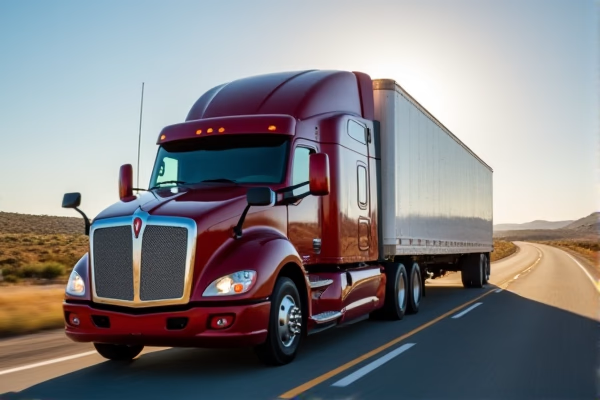
Several types of evidence are critical when a trucking company refuses to settle. Police reports provide an initial account of the accident, but they are not always conclusive. Medical records are essential for documenting the extent of your injuries and the associated costs of treatment. Witness statements can corroborate your version of events and provide valuable insights into the accident. Black box data (EDR/ECM) from the truck can reveal crucial information about the driver’s speed, braking habits, and other factors leading up to the collision.
Furthermore, driver logs are vital for verifying compliance with federal Hours of Service regulations. Maintenance records can reveal any pre-existing mechanical issues with the truck. Photos and videos of the accident scene can provide a visual representation of the damage and the surrounding conditions. Finally, expert testimony from accident reconstruction specialists can help establish the cause of the accident and the trucking company’s liability.
What are common reasons a trucking company might refuse to settle?
Trucking companies may refuse to settle for a variety of reasons. They may believe the claim is not valid, or they may be attempting to minimize their financial exposure. Disputing liability is a common tactic, often based on questioning the driver’s actions or alleging your own negligence. Challenging the extent of your injuries is another frequent strategy, where they may argue your medical bills are excessive or unrelated to the accident. Attempting to shift blame is also common, where they may claim another driver or external factor caused the collision.
In some cases, the trucking company may be hoping you will give up and accept a lower settlement offer. They may also be waiting for the statute of limitations to expire, which would prevent you from filing a lawsuit. It’s important to remember that a refusal to settle doesn’t necessarily mean their position is justified. It simply means we need to gather more evidence and prepare for a potential legal battle.
What is the statute of limitations for a truck accident claim in California?
In California, you generally have **two years** from the date of the truck accident to file a lawsuit. Because trucking companies often begin evidence destruction (like purging ELD data) as soon as the law allows, immediate filing is critical to preserve the integrity of the claim. CCP § 335.1 outlines these time constraints. Failing to file within this timeframe can result in the permanent loss of your right to recover damages.
It’s crucial to consult with an attorney as soon as possible after a truck accident to ensure you understand your rights and meet all applicable deadlines. We can initiate an investigation, gather evidence, and file a lawsuit before the statute of limitations expires. This proactive approach will protect your claim and maximize your chances of a successful outcome.
What happens if we file a lawsuit and the trucking company still refuses to settle?
If a lawsuit is filed and the trucking company remains unwilling to settle, the case will proceed to discovery. This involves exchanging information with the opposing party through interrogatories, depositions, and document requests. We will gather additional evidence, interview witnesses, and prepare for trial. Trial is the final stage of the litigation process, where a judge or jury will determine the outcome of the case.
While trial can be time-consuming and expensive, it’s often necessary to achieve a fair resolution. We will thoroughly prepare your case, present compelling evidence, and advocate for your rights in court. Even the threat of trial can sometimes motivate the trucking company to reconsider their position and engage in more meaningful settlement negotiations.
What if the accident involved a government-owned truck or roadway?
If a truck accident involves a government-owned vehicle or a dangerous road condition maintained by a public entity, a formal administrative claim **MUST** be presented within **6 months** (180 days). Failure to meet this strict deadline under the Government Tort Claims Act can result in the permanent loss of your right to recover. Gov. Code § 911.2 details these requirements.
These claims are often complex and require specific documentation and procedures. It’s essential to consult with an attorney experienced in government liability claims to ensure your claim is properly filed and processed. We can navigate the bureaucratic process and advocate for your rights throughout the administrative process.
What if the driver was classified as an independent contractor?
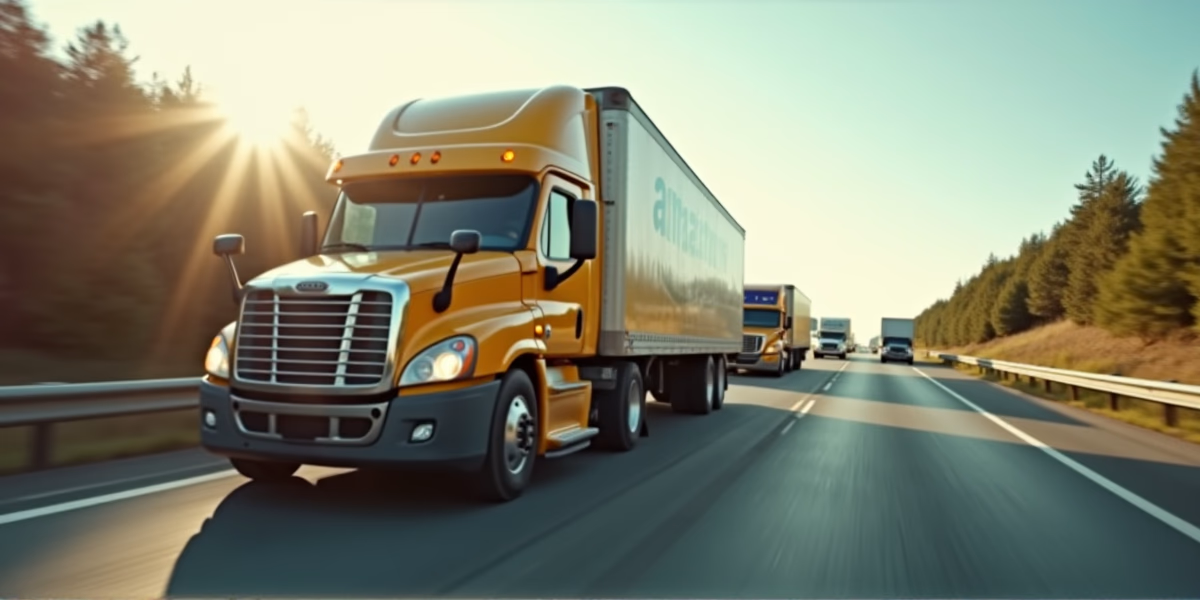
California’s ‘ABC test’ determines if a delivery driver (Amazon/FedEx) is an employee or contractor. Even if labeled a ‘contractor,’ a company may be liable if they exercise control over the driver’s work, a key factor in San Diego delivery truck litigation. Labor Code § 2775 provides the framework for this determination.
Determining the driver’s employment status can be complex, requiring a thorough analysis of the working relationship. We can investigate the driver’s level of control, the company’s oversight, and other relevant factors to establish liability.
What if the trucking company claims the driver wasn’t acting within the scope of their employment?
Under the doctrine of **vicarious liability** (respondeat superior), a principal is responsible to third persons for the negligence of their agent in the transaction of business. This holds the trucking company legally liable for the wrongful acts of its drivers committed within the scope of their employment. Civ. Code § 2338 outlines this legal principle.
Establishing the scope of employment can be challenging, requiring a careful examination of the driver’s duties, responsibilities, and actions at the time of the accident. We can gather evidence to demonstrate the driver was acting on behalf of the trucking company when the collision occurred.
What if the truck was speeding at the time of the accident?
In California, commercial trucks (including semi-tractors with three or more axles) are strictly prohibited from exceeding **55 miles per hour** on any highway. In San Diego freeway crashes, proving a violation of this speed limit is a primary tool for establishing statutory negligence. CVC § 22406 defines these speed restrictions.
We can obtain the truck’s black box data (EDR) to verify its speed at the time of the accident. If the driver was exceeding the speed limit, it can be strong evidence of negligence and contribute to a successful claim.