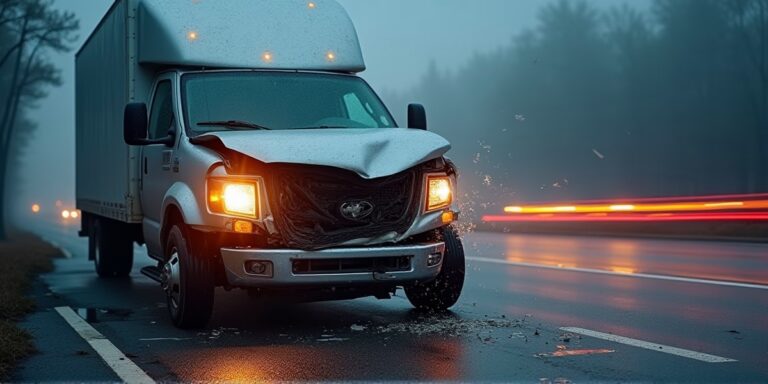
What Should I Do After A Truck Accident Near The Harbor?

The first thing to understand is that truck accident cases are significantly more complex than typical car crashes. Trucking companies have extensive resources and legal teams dedicated to minimizing their liability. They’ll likely launch their own investigation immediately, and their insurance adjusters are skilled at undervaluing claims. Don’t speak to anyone from the trucking company or their insurance provider without first consulting with an attorney. Anything you say can and will be used against you.
Immediately following the accident, focus on your health. Seek medical attention, even if you don’t feel seriously injured. Some injuries, like traumatic brain injuries, may not be immediately apparent. Document everything – every doctor’s visit, every therapy session, every pain level. This documentation will be vital when building your case. Also, if possible, gather information at the scene: the truck’s license plate number, the driver’s information, and the names and contact details of any witnesses. Photographs of the damage to all vehicles involved, the accident location, and any visible injuries are also incredibly valuable.
I’ve been practicing personal injury law in San Diego for over 13 years, and I’ve seen firsthand how insurance companies attempt to exploit accident victims. I was trained by a former insurance defense attorney, giving me intimate knowledge of how they evaluate, devalue, and deny claims. This insight allows me to anticipate their tactics and build a stronger case on your behalf. I understand the complexities of federal trucking regulations, hours of service rules, and the unique challenges involved in proving liability in these types of accidents.
What types of evidence are most important in a truck accident claim?
Evidence is the cornerstone of any successful truck accident claim. While police reports are important, they often don’t tell the whole story. The most compelling evidence includes the truck’s Electronic Logging Device (ELD) data, which records the driver’s hours of service, proving or disproving fatigue. Maintenance records can reveal if the truck was properly inspected and maintained, and dashcam footage, if available, can provide a clear picture of the accident. CVC § 34500 outlines the rigorous safety and inspection regulations commercial vehicles must adhere to, and violations can be powerful evidence of negligence. Don’t rely on the trucking company to voluntarily provide this information; an attorney can help you obtain it through legal discovery.
Furthermore, witness statements are crucial. Independent accounts of the accident can corroborate your version of events and strengthen your claim. If there were any surveillance cameras in the area, securing that footage is also a priority. Finally, your own medical records and bills are essential for documenting your injuries and damages. Preserving this evidence, and ensuring it’s properly handled, is a critical first step in protecting your rights.
What if the truck driver was working for a delivery company like Amazon or FedEx?
Determining the employment status of a delivery driver is often a complex legal issue. Companies like Amazon and FedEx frequently classify drivers as “independent contractors” to avoid liability for their actions. However, California’s ‘ABC test’ under Labor Code § 2775 determines if a driver is truly an independent contractor or an employee. If the company exercises significant control over the driver’s work – dictating routes, schedules, or requiring specific uniforms – they may be legally considered an employee, making the company liable for the driver’s negligence. This is a common point of contention in San Diego delivery truck litigation, and an experienced attorney can help you navigate this complex legal landscape.
We often need to investigate the level of control the delivery company has over the driver. This includes reviewing contracts, dispatch logs, and communication records. Even if the driver is labeled a ‘contractor,’ a company may be liable if they exercise control over the driver’s work. This requires a thorough investigation and a deep understanding of California employment law.
How long do I have to file a lawsuit after a truck accident in California?
Time is of the essence after a truck accident. California law provides a **two-year** window from the date of the truck accident to file a lawsuit, as outlined in CCP § 335.1. However, because trucking companies often begin evidence destruction (like purging ELD data) as soon as the law allows, immediate filing is critical to preserve the integrity of the claim. Waiting too long can jeopardize your ability to recover compensation.
It’s important to remember that the two-year statute of limitations begins to run from the date of the accident, not the date you discover your injuries. Even if you don’t realize the full extent of your injuries immediately, the clock is still ticking. Don’t delay seeking legal counsel; an attorney can ensure your claim is filed within the statutory deadline.
What if the accident involved a government vehicle or a dangerous road condition?
If a truck accident involves a government-owned vehicle or a dangerous road condition maintained by a public entity, a formal administrative claim **MUST** be presented within **6 months** (180 days) under the Government Tort Claims Act, as detailed in Gov. Code § 911.2. This is a significantly shorter deadline than the two-year statute of limitations for typical truck accidents. Failure to meet this strict deadline can result in the permanent loss of your right to recover.
These claims require specific formatting and detailed information about the accident, the government entity involved, and your damages. An attorney experienced in government liability claims can help you prepare and file the claim correctly and within the required timeframe. Ignoring this deadline can be a costly mistake.
What if the trucking company offers me a settlement quickly?
Trucking companies often attempt to settle claims quickly, before you fully understand the extent of your injuries and damages. While a quick settlement may seem appealing, it’s rarely in your best interest to accept it without first consulting with an attorney. Insurance companies are skilled at minimizing payouts, and a quick offer is often far below the true value of your claim. They may try to pressure you into signing a release that prevents you from seeking further compensation, even if your injuries worsen over time.
Before accepting any settlement offer, it’s crucial to have an attorney thoroughly evaluate your case, assess your damages, and negotiate on your behalf. We can investigate the accident, gather evidence, and ensure you receive fair compensation for your medical bills, lost wages, pain and suffering, and other damages. Don’t let the trucking company dictate the terms of your recovery.