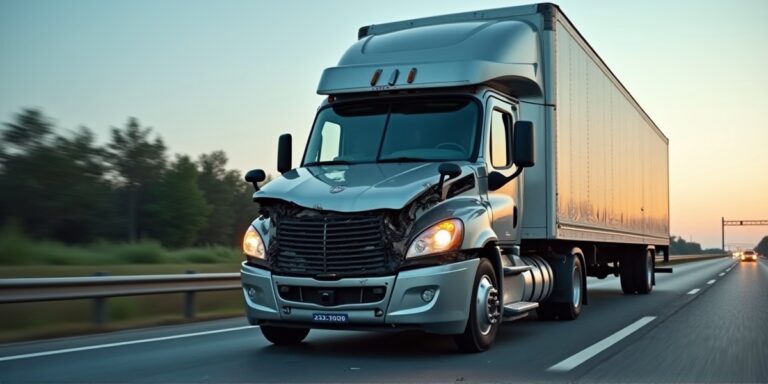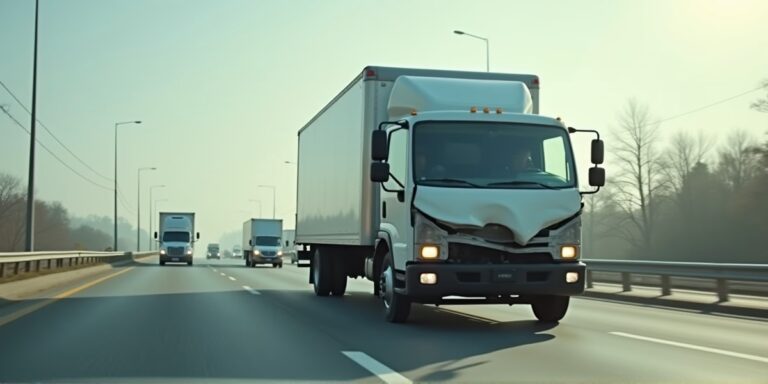
Who Can File A Wrongful Death Lawsuit After A Truck Crash?

Losing a loved one is a trauma unlike any other. When that loss is caused by the negligence of another, the pain is compounded by the need to navigate a complex legal system. In California, wrongful death lawsuits are specifically designed to provide financial relief to those left behind after a preventable tragedy. But who exactly *can* file such a claim after a truck crash? It’s a question I encounter frequently in my practice here in San Diego, and the answer isn’t always straightforward.
The right to bring a wrongful death action in California isn’t automatic. It’s governed by a strict set of rules outlined in the Code of Civil Procedure. Generally, the individuals who are legally authorized to file a claim are the immediate family members of the deceased. This includes the surviving spouse, children, and parents. However, it can extend to other relatives under specific circumstances, and the process can be complicated, especially when there are blended families or other nuanced relationships involved.
I’ve been practicing personal injury law in San Diego for over 13 years, and I’ve seen firsthand how insurance companies attempt to exploit these complexities to minimize payouts or deny claims altogether. I was trained by a former insurance defense attorney, giving me intimate knowledge of how insurance companies evaluate, devalue, and deny claims. They often target grieving families who are unfamiliar with their rights, making it crucial to seek experienced legal counsel as soon as possible.
What types of damages can be recovered in a wrongful death lawsuit?
Wrongful death lawsuits aren’t about punishing the responsible party, though that may be a consequence. They are about compensating the surviving family members for the financial losses they’ve suffered as a result of the death. These damages can include both economic and non-economic losses. Economic damages are quantifiable, such as lost income, medical expenses, and funeral costs. Non-economic damages are more subjective, including loss of companionship, emotional distress, and loss of consortium (the benefits of a marital relationship).
Calculating these damages can be challenging. For example, determining the lost future earnings of a young professional like Damon requires careful analysis of his earning potential and career trajectory. We often work with forensic economists to project these losses accurately. It’s also important to consider the emotional toll the loss has taken on the family, which can be significant and long-lasting.
How long do I have to file a wrongful death claim in California?
Time is of the essence in any legal matter, but especially in wrongful death cases. California law provides a **two-year** window from the date of the truck accident to file a lawsuit. Because trucking companies often begin evidence destruction (like purging ELD data) as soon as the law allows, immediate filing is critical to preserve the integrity of the claim. Failing to meet this deadline can result in the permanent loss of your right to recover compensation. CCP § 335.1 outlines these specific time constraints.
What if the truck driver was an employee of a trucking company?
In many truck crash cases, the driver is an employee of a larger trucking company. This is significant because the trucking company can be held liable for the driver’s negligence under the doctrine of **vicarious liability** (respondeat superior). This means that the company is legally responsible for the wrongful acts of its drivers committed within the scope of their employment. Civ. Code § 2338 details this legal principle. We investigate the driver’s employment status thoroughly to determine if the company can be held accountable.
What if the accident involved a government-owned truck or a dangerous road condition?
If a truck accident involves a government-owned vehicle or a dangerous road condition maintained by a public entity, a formal administrative claim **MUST** be presented within **6 months** (180 days). Failure to meet this strict deadline under the Government Tort Claims Act can result in the permanent loss of your right to recover. Gov. Code § 911.2 governs these claims. These claims are often more complex than standard personal injury cases and require specialized knowledge of government liability laws.
What should I do if the insurance company contacts me?
Insurance companies are skilled negotiators, and their primary goal is to minimize their payout. They may try to get you to provide a recorded statement, which they can use against you later. It’s best to politely decline any requests for a recorded statement and refer them to your attorney. They may also attempt to downplay the severity of the accident or question the value of your claim. Do not sign any documents or accept any settlement offers without first consulting with an experienced attorney.
What if the truck driver was considered an independent contractor?
Determining whether a truck driver is an employee or an independent contractor is often a complex legal issue. California’s ‘ABC test’ determines if a delivery driver (Amazon/FedEx) is an employee or contractor. Even if labeled a ‘contractor,’ a company may be liable if they exercise control over the driver’s work, a key factor in San Diego delivery truck litigation. Labor Code § 2775 provides the framework for this analysis.
What if the truck driver was speeding?
In California, commercial trucks (including semi-tractors with three or more axles) are strictly prohibited from exceeding **55 miles per hour** on any highway. In San Diego freeway crashes, proving a violation of this speed limit is a primary tool for establishing statutory negligence. CVC § 22406 outlines these speed restrictions. We often obtain the truck’s ECM/EDR data to verify the driver’s speed leading up to the collision.
What if the trucking company failed to properly maintain the truck?
Commercial vehicles are subject to rigorous safety and inspection regulations. Failure to maintain brakes, tires, or lighting systems according to California’s commercial vehicle safety framework can be used to establish direct liability against the carrier for ‘negligent maintenance’. CVC § 34500 details these maintenance requirements. We often hire independent mechanics to inspect the truck and identify any safety violations.
What if the driver violated federal Hours of Service regulations?
Federal **Hours of Service (HOS)** regulations dictate exactly how long a driver can be behind the wheel. Violations of these federal safety standards, often proven through Electronic Logging Device (ELD) data, are used to demonstrate driver fatigue. 49 CFR § 395 outlines these regulations. We routinely subpoena ELD data to uncover any HOS violations.