Can Family Members Sue After A Fatal Motorcycle Crash In San Diego?

Losing a loved one is a pain unlike any other, and the added stress of navigating the legal system after a fatal motorcycle accident can feel overwhelming. In California, the legal process for families seeking justice after a motorcycle crash is complex, and understanding your rights is the first step towards finding some measure of peace. As a personal injury attorney practicing in San Diego for over 13 years, I’ve guided countless families through these difficult times. I was trained by a former insurance defense attorney, giving me intimate knowledge of how insurance companies evaluate, devalue, and deny claims.
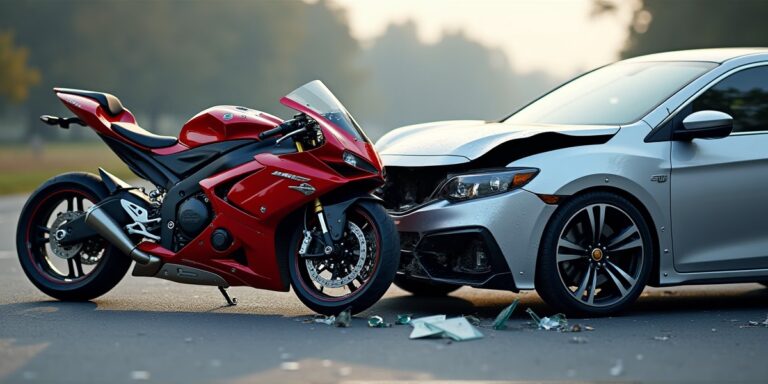
The ability to sue after a fatal motorcycle crash hinges on establishing negligence on the part of another party. This could be the driver of another vehicle, a motorcycle manufacturer due to a defective part, or even a government entity responsible for maintaining the roadway. Proving negligence requires demonstrating that the at-fault party had a duty of care, breached that duty, and that this breach directly caused Leo’s death. This often involves a thorough investigation, including police reports, witness statements, and accident reconstruction analysis.
What types of damages can a family recover in a wrongful death lawsuit?
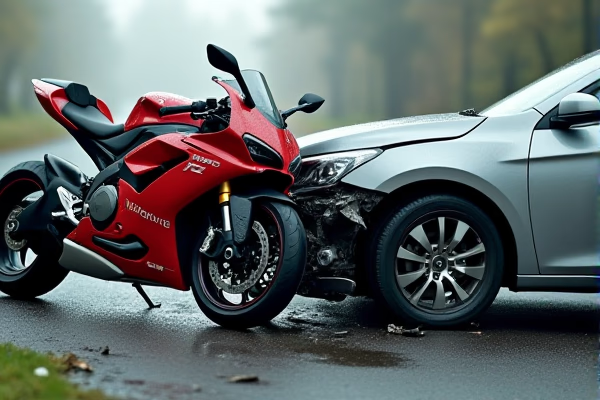
California law allows families to recover a range of damages in a wrongful death lawsuit. These damages are designed to compensate for the losses suffered as a result of the death. This includes economic damages, such as medical expenses incurred before death, funeral and burial costs, and the loss of future income the deceased would have earned. It also includes non-economic damages, which compensate for the emotional distress, loss of companionship, and loss of the benefits of the relationship with the deceased.
Calculating the full extent of these damages can be complex. For example, determining the loss of future income requires considering Leo’s earning potential, age, health, and career trajectory. Non-economic damages are even more subjective, requiring a careful consideration of the family’s grief and the impact of Leo’s death on their lives. An experienced attorney can help you accurately assess these damages and build a strong case to maximize your recovery.
How long do I have to file a wrongful death claim in California?
Time is of the essence when it comes to filing a wrongful death claim in California. California law provides a **two-year** window from the date of the motorcycle accident to file a lawsuit for personal injury. Because evidence at a crash scene—such as skid marks or GoPro footage—can disappear quickly, immediate filing is critical to preserve the integrity of the claim. Failing to file within this timeframe can result in the permanent loss of your right to recover compensation.
It’s important to note that this two-year statute of limitations begins to run from the date of Leo’s death, not necessarily the date of the accident. Furthermore, there may be additional deadlines for notifying government entities if the accident involved a public roadway or vehicle. Consulting with an attorney as soon as possible after the accident is crucial to ensure all deadlines are met.
What if the at-fault driver was uninsured or underinsured?
Unfortunately, many drivers on the road are uninsured or underinsured, which can complicate the process of recovering compensation after a fatal motorcycle accident. In these situations, your own insurance policy may provide coverage through Uninsured Motorist (UM) and Underinsured Motorist (UIM) coverage. For motorcyclists hit by a driver with minimum or no insurance, this coverage allows you to recover damages directly from your own policy up to your selected limits.
Navigating these insurance policies can be challenging, and it’s important to understand the terms and conditions of your coverage. An attorney can help you determine the extent of your UM/UIM coverage and file a claim on your behalf. Even if the at-fault driver has some insurance, their policy limits may not be sufficient to cover all of your damages, making UM/UIM coverage a vital source of recovery.
Can a family sue the motorcycle manufacturer if a defect contributed to the crash?
In some cases, a fatal motorcycle accident may be caused by a defect in the motorcycle itself. This could be a faulty brake system, a tire failure, or a design flaw that made the motorcycle unstable. If a product defect contributed to Leo’s death, you may have a claim against the motorcycle manufacturer, distributor, or retailer. This is a product liability claim, and it’s often more complex than a typical negligence claim.
Proving a product defect requires expert testimony and a thorough investigation of the motorcycle’s design and manufacturing process. Manufacturers and distributors are strictly liable for injuries caused by a product that has a manufacturing, design, or warning defect. This applies to failed motorcycle brakes, defective tires, or helmets that did not perform as advertised during a crash. An attorney experienced in product liability litigation can help you gather the necessary evidence and build a strong case against the responsible parties.
What role does evidence preservation play in a wrongful death claim?
Evidence preservation is critical in any motorcycle accident case, but it’s especially important in a fatal crash. Evidence can disappear quickly, and it’s essential to act promptly to secure any potential evidence that could support your claim. This includes police reports, witness statements, photographs of the accident scene, and medical records. Additionally, any data from the motorcycle’s ECM/EDR (Event Data Recorder) or dashcam footage should be preserved.
An attorney can help you obtain this evidence and ensure it’s properly preserved. We often send spoliation letters to the at-fault party and any potential witnesses, requesting that they preserve any relevant evidence in their possession. Failure to preserve evidence can lead to sanctions and weaken your case, so it’s important to act quickly and decisively.
What if the at-fault driver was intoxicated?
If the at-fault driver was under the influence of alcohol or drugs at the time of the accident, it can significantly strengthen your wrongful death claim. It is unlawful for any person who is under the influence of alcohol to drive a vehicle. Proving intoxication or ‘malice’ allows for the pursuit of exemplary (punitive) damages, designed to punish the defendant and increase the total recovery beyond standard medical and wage losses. Punitive damages are awarded in cases of gross negligence or intentional misconduct, and they can be a substantial source of recovery.
In cases involving DUI, the police report will typically contain information about the driver’s blood alcohol content (BAC) and any field sobriety tests they underwent. An attorney can help you obtain this report and use it to build a strong case against the driver. Additionally, if the driver was served alcohol by a bar or restaurant that knowingly overserved them, you may have a claim against the establishment under the doctrine of negligent entrustment.
What is the role of comparative fault in a motorcycle accident case?
California’s ‘pure’ comparative fault system applies to motorcycle claims. Even if a driver argues you shared responsibility due to speed or positioning, you can still recover damages; however, your total compensation will be reduced by your percentage of fault. This means that if you are found to be 20% at fault for the accident, your recovery will be reduced by 20%.
Insurance companies often attempt to argue comparative fault to reduce the amount of compensation they have to pay. They may claim that Leo was speeding, lane splitting improperly, or failed to wear a helmet. While a violation may be used by defense counsel to argue for a reduction in damages via comparative fault—specifically regarding head or neck injuries—it does not bar a rider from seeking recovery for other injuries caused by a negligent driver. An experienced attorney can help you rebut these claims and minimize your percentage of fault.
What if Leo was a professional delivery driver?
If Leo was a motorcycle delivery driver or bike courier at the time of the accident, the situation becomes more complex. He may be entitled to workers’ compensation benefits, which provide coverage for medical expenses and lost wages. However, workers’ compensation is generally the **exclusive remedy** against the employer, though separate claims may exist against negligent third-party drivers.
This means that you can pursue a workers’ compensation claim against Leo’s employer and a separate civil claim against the at-fault driver. California law preserves the right for a rider to pursue a separate civil claim against a **negligent third party** (such as a delivery driver or rideshare operator) whose actions contributed to the motorcycle accident, even if the rider is currently receiving workers’ compensation benefits. An attorney can help you navigate both of these claims and maximize your recovery.