Can I Pursue Both A Personal Injury Claim And A Workers Compensation Claim?

This is a common scenario, and the question of whether you can pursue both a personal injury claim and a workers’ compensation claim after a motorcycle accident is one I address frequently with my clients here in San Diego. The short answer is: often, yes, but it’s a complex interplay of laws and requires careful navigation. The key is understanding how these two systems operate and how they can potentially overlap – or conflict.
Workers’ compensation is a no-fault system designed to provide benefits to employees injured on the job, regardless of who was at fault. This means that even if the accident wasn’t your fault, you’re entitled to medical treatment, temporary disability benefits, and potentially permanent disability benefits. However, workers’ compensation benefits are typically limited to medical expenses and lost wages. They don’t cover pain and suffering, emotional distress, or other non-economic damages. That’s where a personal injury claim comes in.
I’ve been practicing personal injury law in San Diego for over 13 years, and I was fortunate enough to begin my career training with a former insurance defense attorney. This experience gave me intimate knowledge of how insurance companies evaluate, devalue, and deny claims. I understand their tactics, and I’m adept at building strong cases that maximize my clients’ recovery.
Can I Sue the At-Fault Driver If I’m Receiving Workers’ Compensation?
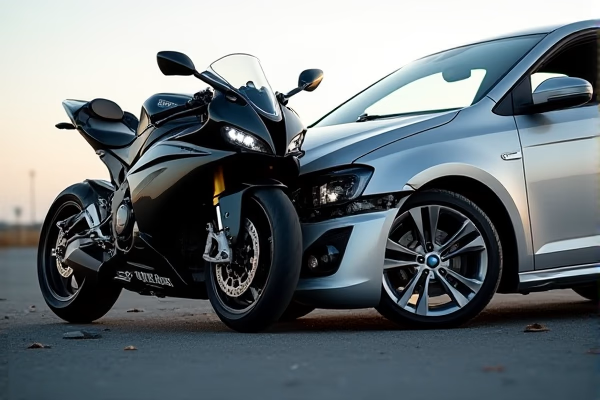
Generally, yes. California law allows you to pursue a third-party claim against the at-fault driver, even while receiving workers’ compensation benefits. This is because the at-fault driver is not your employer, and the workers’ compensation system only covers injuries sustained in the course of employment. The third-party claim seeks to recover damages from the responsible party for your injuries, pain, and suffering, property damage, and other losses.
However, there’s a crucial caveat: your workers’ compensation benefits will likely be offset by any recovery you receive from the third-party claim. This means the insurance company will seek reimbursement for the benefits they’ve already paid. It’s essential to have an attorney experienced in both workers’ compensation and personal injury law to navigate this process and ensure you receive the maximum possible compensation.
What Types of Damages Can I Recover in a Personal Injury Claim?
A personal injury claim allows you to seek a broader range of damages than workers’ compensation. These can include:
- Medical Expenses: All past and future medical bills related to your injuries.
- Lost Wages: Compensation for income lost due to your injuries, including future earning capacity.
- Pain and Suffering: Compensation for the physical and emotional distress caused by your injuries.
- Property Damage: The cost to repair or replace your motorcycle and other damaged property.
- Loss of Enjoyment of Life: Compensation for the inability to participate in activities you previously enjoyed.
What if the Accident Happened While I Was on a Delivery or Rideshare Gig?
If you were working as a delivery driver or rideshare operator at the time of the accident, the situation becomes more complex. You may be eligible for workers’ compensation benefits through the delivery or rideshare company, but you may also have a claim against the at-fault driver. California law preserves your right to pursue a separate civil claim against a negligent third party, even if you are receiving workers’ compensation.
How Does the Statute of Limitations Affect My Claims?
Time is of the essence. In California, there’s a strict deadline for filing a personal injury lawsuit: two years from the date of the accident. Because evidence at a crash scene—such as skid marks or GoPro footage—can disappear quickly, immediate filing is critical to preserve the integrity of the claim. CCP § 335.1. Failing to file within this timeframe will likely result in the loss of your right to recover damages.
What if the At-Fault Driver Was Uninsured or Underinsured?
If the at-fault driver doesn’t have insurance or their insurance coverage is insufficient to cover your damages, you may be able to recover compensation through your own Uninsured Motorist (UM) or Underinsured Motorist (UIM) coverage. Ins. Code § 11580.2. This coverage is designed to protect you in situations where the at-fault driver is unable to pay for your damages.
What Should I Do If I’m Asked to Give a Recorded Statement to the Insurance Company?
Do not give a recorded statement without first consulting with an attorney. Insurance companies are skilled at using recorded statements to minimize their liability. They may ask leading questions or try to trick you into making statements that could harm your claim. An attorney can advise you on whether to give a statement and, if so, how to answer questions in a way that protects your rights.
How Do Medical Liens Affect My Settlement?
If you’ve received medical treatment for your injuries, the medical providers may place a lien on your settlement to recover their costs. California law limits the amount a health insurance company or medical provider can claim from your settlement via a lien. Civ. Code § 3040. An attorney can negotiate with the medical providers to reduce the lien amount and ensure you receive a fair settlement.
What is the Process for Pursuing a UM/UIM Arbitration?
If you’re pursuing a claim under your own Uninsured Motorist (UM) or Underinsured Motorist (UIM) coverage, you’ll likely need to go through an arbitration process. This is a more formal process than negotiating directly with the insurance company. An attorney can represent you in the arbitration and advocate for your rights.
How Important is Evidence Preservation After a Motorcycle Accident?
Extremely important. Evidence can disappear quickly after a motorcycle accident. It’s crucial to preserve any evidence that could support your claim, such as photos of the accident scene, witness contact information, and the police report. An attorney can help you gather and preserve evidence, including sending a spoliation letter to the at-fault driver requesting that they preserve any relevant evidence in their possession.
What is Comparative Fault and How Does it Apply to Motorcycle Accidents?
California’s ‘pure’ comparative fault system applies to motorcycle claims. Civ. Code § 1714. Even if a driver argues you shared responsibility due to speed or positioning, you can still recover damages; however, your total compensation will be reduced by your percentage of fault.