Are Companies Responsible For Maintaining Fleets?

Trucking companies have a legal duty to ensure their vehicles are safe for operation. This isn’t just about routine oil changes; it’s a comprehensive responsibility encompassing pre-trip inspections, ongoing maintenance, and adherence to strict federal and state regulations. When a company fails to uphold these standards, and that failure leads to an accident, they can be held liable for the resulting damages.
Negligent maintenance is a common cause of truck accidents in San Diego. A poorly maintained brake system, worn tires, or faulty lighting can all contribute to a catastrophic collision. Proving this negligence requires a thorough investigation, often involving expert analysis of the truck’s maintenance records, inspection reports, and the physical evidence from the crash site.
I’ve been practicing personal injury law in San Diego for over 13 years, and I’ve seen firsthand how insurance companies attempt to minimize their exposure in truck accident cases. Trained by a former insurance defense attorney, I have intimate knowledge of how these companies evaluate, devalue, and deny claims. They’ll often focus on driver error, overlooking critical maintenance issues that were the true cause of the accident.
What types of maintenance are trucking companies legally required to perform?
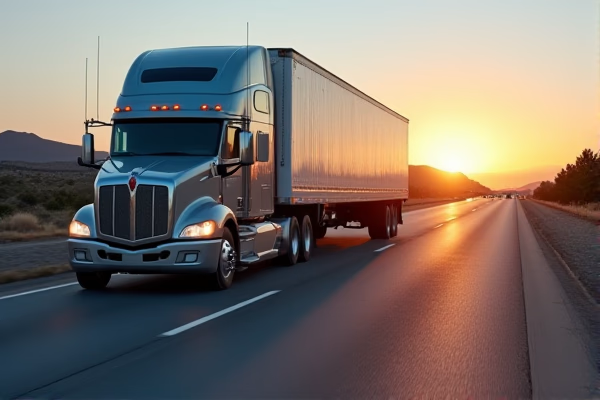
Commercial vehicles are subject to a rigorous regulatory framework designed to ensure safety. This includes regular inspections, preventative maintenance schedules, and detailed record-keeping. Federal Motor Carrier Safety Regulations (FMCSRs) outline specific requirements for various components, such as brakes, tires, steering, and lighting. These regulations are enforced by both federal and state agencies.
Specifically, companies must conduct pre-trip inspections to identify and address any potential safety hazards before a truck hits the road. They’re also required to perform periodic maintenance checks based on mileage or time intervals, whichever comes first. Detailed records of all inspections and maintenance activities must be maintained and readily available for review.
How can I prove a trucking company was negligent in maintaining their fleet?
Establishing negligent maintenance requires gathering compelling evidence. This can include the truck’s maintenance logs, inspection reports, repair invoices, and any documentation related to driver training or safety protocols. Expert testimony from a qualified mechanic or accident reconstruction specialist is often crucial in demonstrating the extent of the negligence.
We also look for patterns of safety violations or previous complaints filed against the company. If a truck has a history of maintenance issues, it can be a strong indicator of systemic negligence. Dashcam footage, ECM data, and ELD logs can also provide valuable insights into the truck’s operating condition and the company’s safety practices.
What if the company claims the driver was solely responsible for the accident?
Insurance companies often attempt to shift blame to the driver, even when maintenance issues were a contributing factor. However, a trucking company has a non-delegable duty to ensure its vehicles are safe, regardless of the driver’s actions. This means they can be held liable even if the driver was negligent, as long as the company failed to properly maintain the truck.
Under the doctrine of **vicarious liability** (respondeat superior), a principal is responsible to third persons for the negligence of their agent in the transaction of business. This holds the trucking company legally liable for the wrongful acts of its drivers committed within the scope of their employment. We’ll conduct a thorough investigation to uncover any evidence of maintenance deficiencies and build a strong case against the company.
What damages can I recover in a truck accident case involving negligent maintenance?
If you’ve been injured in a truck accident caused by negligent maintenance, you may be entitled to recover a wide range of damages, including medical expenses, lost wages, pain and suffering, and property damage. In some cases, you may also be able to recover punitive damages if the company’s negligence was particularly egregious.
Calculating the full extent of your damages requires a detailed assessment of your medical bills, lost income, and the impact of the injury on your quality of life. We’ll work with medical experts and financial analysts to ensure you receive fair compensation for all your losses.
What should I do if I suspect a trucking company was negligent in maintaining their fleet?
If you believe a trucking company’s negligence contributed to your accident, it’s crucial to act quickly. Contact an experienced attorney as soon as possible to discuss your legal options. We can help you gather evidence, investigate the accident, and build a strong case against the responsible parties. Don’t wait – the statute of limitations limits the time you have to file a lawsuit.
How long do I have to file a lawsuit after a truck accident in California?
In California, you generally have **two years** from the date of the truck accident to file a lawsuit. Because trucking companies often begin evidence destruction (like purging ELD data) as soon as the law allows, immediate filing is critical to preserve the integrity of the claim. Delaying can significantly jeopardize your ability to recover compensation.
What if the accident involved a government vehicle or a dangerous road condition?
If a truck accident involves a government-owned vehicle or a dangerous road condition maintained by a public entity, a formal administrative claim **MUST** be presented within **6 months** (180 days). Failure to meet this strict deadline under the Government Tort Claims Act can result in the permanent loss of your right to recover. We have extensive experience handling these complex claims.
What is the “ABC test” and how does it relate to delivery truck accidents?
California’s ‘ABC test’ determines if a delivery driver (Amazon/FedEx) is an employee or contractor. Even if labeled a ‘contractor,’ a company may be liable if they exercise control over the driver’s work, a key factor in San Diego delivery truck litigation. This is especially relevant in cases involving gig economy delivery services.
What is the role of policy limits in a truck accident settlement?
Insurance companies often have policy limits that cap the amount of compensation they’re willing to pay. Understanding these limits is crucial in negotiating a fair settlement. We’ll thoroughly investigate the trucking company’s insurance coverage and explore all available avenues for maximizing your recovery, including potential claims against excess insurance policies.
How can dashcam footage help my truck accident claim?
Dashcam footage can provide invaluable evidence in truck accident cases. It can clearly demonstrate the events leading up to the collision, identify the at-fault party, and corroborate your account of the accident. We’ll work to obtain any available dashcam footage and use it to strengthen your claim.