Can A Passenger On My Motorcycle File A Claim?

The first question Leo asked, understandably, was about Maya’s rights. Could she pursue a claim for her injuries? The answer, as with most legal matters, is complex. While Leo’s claim against the at-fault driver is primary, Maya has independent avenues for recovery, and understanding those options is crucial to maximizing compensation for both of them.
Navigating these claims can be particularly challenging, as liability, insurance coverage, and potential subrogation issues often intertwine. It’s vital to have a clear understanding of how California law applies to motorcycle passengers and their ability to seek damages. As a personal injury attorney practicing in San Diego for over 13 years, and having been trained by former insurance defense attorneys, I’ve seen firsthand how insurance companies attempt to minimize payouts to passengers. They’ll scrutinize every detail, looking for ways to devalue the claim or deny it altogether.
Can a motorcycle passenger sue the at-fault driver directly?
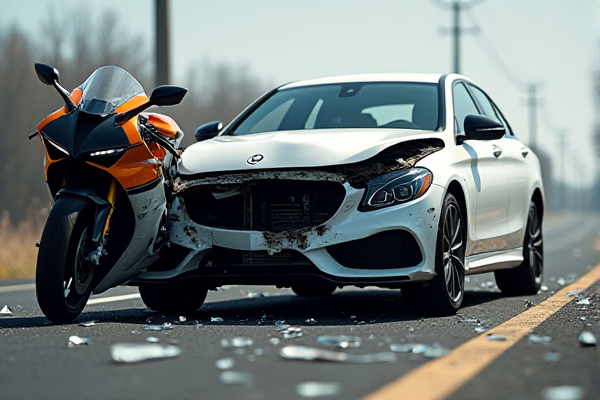
Yes, Maya, as a passenger injured due to the negligence of another driver, has the right to file her own personal injury lawsuit against the at-fault driver. This is because she was an innocent bystander who suffered harm through no fault of her own. The legal basis for this claim is the same as any other negligence case: the driver owed a duty of care, breached that duty, and that breach directly caused Maya’s injuries.
However, it’s important to note that any recovery Maya receives from the at-fault driver may be subject to subrogation claims from Leo’s insurance company if they paid out benefits on his behalf. This means Leo’s insurer may have a right to be reimbursed from any settlement or judgment Maya obtains. We’ll discuss subrogation in more detail later.
What types of damages can a motorcycle passenger recover?
Maya is entitled to compensation for all damages proximately caused by her injuries. This includes economic damages, such as medical expenses (past and future), lost wages (if applicable), and property damage. More significantly, she can also recover non-economic damages for pain and suffering, emotional distress, loss of enjoyment of life, and disfigurement.
In severe cases, like Maya’s with a traumatic brain injury, the non-economic damages can be substantial. It’s crucial to document all aspects of her suffering, including medical treatment, therapy sessions, and the impact of her injuries on her daily life. California law allows for the recovery of these damages, as outlined in CACI No. 3905A.
What if Leo, the motorcycle driver, was partially at fault for the accident?
Even if Leo contributed to the accident, Maya may still be able to recover damages. California operates under a ‘pure’ comparative fault system, meaning that her recovery will be reduced by her percentage of fault. For example, if Maya’s total damages are $100,000, but the jury finds Leo 20% at fault, her recovery would be reduced to $80,000.
The insurance company will likely attempt to argue that Leo was negligent in some way, such as speeding or improper lane positioning. It’s essential to thoroughly investigate the accident and gather evidence to rebut any claims of rider negligence. This is where having an experienced attorney is invaluable. As per Civ. Code § 1714, even shared fault does not automatically bar recovery.
Does Maya need to worry about Leo’s motorcycle insurance policy limits?
Maya’s recovery is not limited by Leo’s insurance policy limits. She can pursue the full amount of damages from the at-fault driver, regardless of Leo’s coverage. However, if the at-fault driver has insufficient insurance to cover her damages, she may need to explore other avenues for recovery, such as her own health insurance or an Uninsured Motorist (UM) claim if the at-fault driver was uninsured.
Understanding the interplay between Leo’s policy, the at-fault driver’s policy, and Maya’s own potential coverage is critical to maximizing her compensation. In San Diego, we frequently encounter situations where the at-fault driver is underinsured, making UM coverage a vital safety net.
What if Leo and Maya have different insurance companies?
Having separate insurance policies doesn’t necessarily complicate matters, but it does require careful coordination. Each insurance company will have its own interests, and it’s important to ensure that Maya’s rights are protected. Her insurer may attempt to subrogate against the at-fault driver, and Leo’s insurer may also have a claim against the at-fault driver.
It’s crucial to have an attorney who can navigate these complexities and ensure that Maya receives the full compensation she deserves. We will work to protect her interests and prevent her recovery from being unfairly reduced by subrogation claims.
What is subrogation and how does it affect a motorcycle passenger’s claim?
Subrogation is the right of an insurance company to pursue recovery from a third party who caused the loss they paid for. In the context of a motorcycle accident, if Leo’s insurance company paid medical bills or other expenses on his behalf, they may have a right to be reimbursed from any settlement or judgment Maya obtains from the at-fault driver. This is because they essentially “stepped into Leo’s shoes” to pay those bills.
The amount of subrogation can significantly reduce Maya’s net recovery. It’s important to negotiate with Leo’s insurance company to minimize their claim and ensure that Maya receives a fair share of the settlement. We have extensive experience in handling subrogation claims and protecting our clients’ rights.
What if Maya was wearing a helmet, but still suffered a head injury?
California is a universal helmet law state, requiring all riders and passengers to wear a DOT-approved helmet. While a violation of the helmet law may be used by defense counsel to argue for a reduction in damages via comparative fault, it does not automatically bar a rider from seeking recovery for other injuries caused by a negligent driver.
The defense will likely argue that Maya’s injuries would have been less severe if she had been wearing a helmet, and they may attempt to reduce her compensation accordingly. However, we can rebut this argument by presenting evidence that the accident was so severe that a helmet would not have prevented the injuries, or that the helmet was properly worn and met all safety standards. As per CVC § 27803, the fact that a helmet was worn is a key factor in mitigating fault.
How long does a motorcycle passenger have to file a claim?
California law provides a **two-year** window from the date of the motorcycle accident to file a lawsuit for personal injury. Because evidence at a crash scene—such as skid marks or GoPro footage—can disappear quickly, immediate filing is critical to preserve the integrity of the claim.
It’s important to act quickly to gather evidence, identify witnesses, and consult with an attorney. Delaying the filing of a claim can jeopardize your ability to recover damages.
What should a motorcycle passenger do immediately after an accident?
Immediately after an accident, Maya should prioritize her health and safety. This includes seeking medical attention, even if she doesn’t feel immediately injured. She should also exchange information with the other driver, including their insurance information. It’s crucial to document the accident scene, including taking photos of the damage, the vehicles involved, and any visible injuries.
Finally, she should consult with an experienced attorney as soon as possible to discuss her legal options. We can guide her through the claims process and ensure that her rights are protected.
What if the other driver was uninsured?
If the at-fault driver was uninsured, Maya may be able to pursue a claim under her own Uninsured Motorist (UM) coverage. UM coverage is designed to protect individuals who are injured by uninsured drivers. She will need to notify her insurance company of the accident and provide them with the necessary information to investigate the claim.
UM claims can be complex, and it’s important to have an attorney who is familiar with the intricacies of California insurance law. We can help her navigate the claims process and maximize her recovery.