Can Construction Trucks Be Held Liable For Crashes?

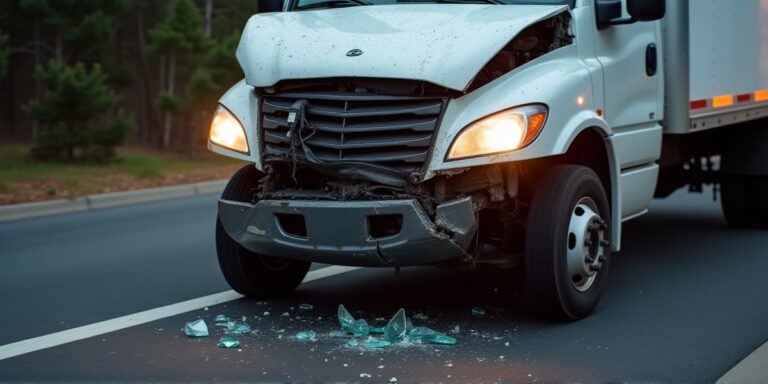
Construction trucks present unique challenges in accident cases. They often operate under different regulations than passenger vehicles, and the potential for negligence extends beyond the driver to the construction company itself. Understanding the various avenues for recovery is crucial when dealing with these types of incidents. A seemingly straightforward truck accident can quickly become complex, involving issues of maintenance, driver qualifications, and even the company’s safety protocols.
One of the first things we investigate is whether the construction company was negligent in its hiring practices. California law requires employers to exercise reasonable care in the selection and retention of employees. This means conducting thorough background checks, verifying proper licensing, and ensuring drivers are qualified to operate the heavy machinery. If the company knew, or should have known, about a driver’s history of reckless driving or safety violations, they could be held liable for the resulting damages.
I’ve been practicing personal injury law in San Diego for over 13 years, and I’ve seen firsthand how insurance companies attempt to minimize their exposure in construction truck accidents. Trained by a former insurance defense attorney, I have intimate knowledge of how these companies evaluate, devalue, and deny claims. They often focus on driver error, downplaying the company’s responsibility for inadequate training or faulty equipment. That’s why it’s essential to have an attorney who understands these tactics and can build a strong case on your behalf.
What types of negligence can lead to liability in construction truck crashes?
Negligence in construction truck crashes can manifest in several ways. Beyond negligent hiring, we often see cases involving improper truck maintenance. Commercial vehicles are subject to strict safety regulations, and companies are legally obligated to ensure their trucks are in good working order. This includes regular inspections, brake repairs, and tire replacements. A failure to properly maintain a truck can lead to catastrophic mechanical failures, resulting in serious accidents.
Another common area of negligence is inadequate driver training. Operating a large construction truck requires specialized skills and knowledge. Companies must provide drivers with comprehensive training on safe operating procedures, load securement, and defensive driving techniques. Insufficient training can contribute to driver error and increase the risk of accidents.
Finally, we often investigate whether the company violated any federal or state safety regulations. These regulations cover everything from hours of service limits to cargo securement requirements. A violation of these regulations can be strong evidence of negligence, especially if it directly contributed to the accident.
How does the doctrine of respondeat superior apply to construction companies?
The legal principle of *respondeat superior* (vicarious liability) is often central to construction truck accident claims. Under the doctrine of **vicarious liability** (respondeat superior), a principal is responsible to third persons for the negligence of their agent in the transaction of business. This means that the construction company can be held liable for the negligent actions of its drivers, even if the company itself wasn’t directly at fault. The key is whether the driver was acting within the scope of their employment at the time of the accident.
Determining whether a driver was acting within the scope of their employment can be complex. Factors we consider include the driver’s job duties, the location of the accident, and whether the driver was performing work-related tasks. Even if the driver was technically off-duty, the company could still be liable if they were engaged in activities that benefit the company.
For example, if a driver was transporting materials to a construction site when the accident occurred, the company would likely be held liable. However, if the driver was on a personal errand, the company’s liability would be less clear. It’s important to have an attorney who can thoroughly investigate these factors and build a strong case based on the specific facts of your situation.
What if the truck accident involved a government-owned vehicle or roadway?
If a truck accident involves a government-owned vehicle or a dangerous road condition maintained by a public entity, a formal administrative claim **MUST** be presented within **6 months** (180 days). Failure to meet this strict deadline under the Government Tort Claims Act can result in the permanent loss of your right to recover. These claims are often more complex than standard auto accident claims, requiring specific documentation and procedures.
We have extensive experience handling claims against government entities in San Diego, and we understand the unique challenges involved. It’s crucial to file your claim correctly and within the required timeframe to preserve your legal rights. We can help you gather the necessary evidence, prepare the claim documents, and navigate the complex administrative process.
The claim process often involves a thorough investigation by the government agency, and they may attempt to deny your claim or offer a low settlement. We can advocate on your behalf, negotiate with the agency, and, if necessary, file a lawsuit to protect your interests.
What should I do if the insurance company asks me to give a recorded statement?
Insurance companies routinely request recorded statements from accident victims. While you may feel obligated to cooperate, it’s generally **not advisable** to give a recorded statement without first consulting with an attorney. Insurance adjusters are trained to ask leading questions designed to minimize their liability and devalue your claim.
They may try to elicit statements that contradict your version of events or downplay the severity of your injuries. They may also attempt to get you to admit fault, even if you weren’t responsible for the accident.
Instead of giving a recorded statement, refer the insurance adjuster to your attorney. We can handle all communication with the insurance company on your behalf and ensure your rights are protected. We will only provide information that is beneficial to your claim and will avoid any statements that could potentially harm your case.
How do medical liens affect my truck accident settlement?
If you received medical treatment for your injuries, the medical providers may file a lien against your settlement proceeds. A medical lien is a legal claim against your recovery to ensure they are compensated for their services. These liens can significantly reduce the amount of money you ultimately receive from your settlement.
We have extensive experience negotiating with medical providers to reduce the amount of their liens. We can often negotiate a lower payment amount based on factors such as the severity of your injuries, the quality of the treatment, and the availability of other insurance coverage.
In some cases, we may be able to resolve the lien through a structured settlement or other creative financing arrangement. We will work tirelessly to protect your financial interests and ensure you receive the maximum possible compensation for your injuries.