
Can I File A Claim If The Other Driver Doesnt Have Insurance?

This is a frighteningly common scenario for motorcyclists in California. Unlike car drivers, who are often protected by their own insurance policies even in accidents caused by uninsured motorists, motorcyclists rely heavily on the at-fault driver’s coverage. When that coverage is nonexistent, it can feel like your claim has nowhere to go. However, you may still have options, and it’s crucial to understand them.
The good news is that California law requires all drivers to carry minimum liability insurance. While this doesn’t help directly when someone is driving illegally without it, it does open the door to potential recovery through your own Uninsured Motorist (UM) coverage. This is a provision within your auto insurance policy that steps in when you’re injured by an uninsured driver. It’s often overlooked, but it can be a lifesaver.
I’ve been practicing personal injury law in San Diego for over 13 years, and I’ve seen firsthand how insurance companies attempt to devalue and deny claims from motorcyclists. I was trained by a former insurance defense attorney, giving me intimate knowledge of how they evaluate these cases. They’ll often scrutinize every detail, looking for any reason to minimize their payout. That’s why having an experienced attorney on your side is so important.
What steps should I take if I’ve been hit by an uninsured driver?
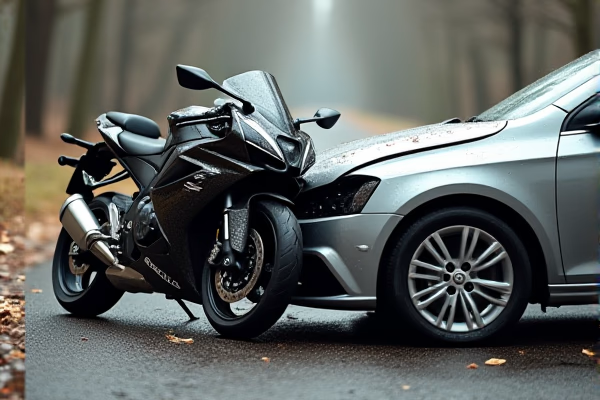
The first thing you need to do is report the accident to the police. A police report is crucial documentation for your claim. Even if the other driver isn’t insured, the police report will establish fault and provide valuable evidence. Next, gather as much information as possible about the other driver, including their name, address, and vehicle information. If possible, obtain witness contact information. Finally, immediately notify your own insurance company of the accident, even if you weren’t at fault.
Don’t attempt to negotiate with the other driver directly. They have no incentive to cooperate, and any statements you make could be used against you later. Let your attorney handle all communication with the insurance companies and the other driver’s legal representation.
It’s also vital to seek medical attention immediately, even if you don’t feel seriously injured. Some injuries, like internal bleeding or traumatic brain injuries, may not be immediately apparent. A thorough medical evaluation will document your injuries and provide evidence to support your claim.
What is Uninsured Motorist (UM) coverage and how does it work?
Uninsured Motorist (UM) coverage is a provision in your auto insurance policy that protects you when you’re injured by a driver who doesn’t have insurance. It typically covers your medical bills, lost wages, and pain and suffering. The amount of coverage you have will depend on the limits you selected when you purchased your policy.
Filing a UM claim involves notifying your insurance company and providing them with documentation of the accident, your injuries, and your damages. Your insurance company will then investigate the claim and determine whether you’re eligible for coverage. This process can be complex, and it’s often best to have an attorney handle it for you.
Can I sue the uninsured driver personally?
Yes, you can sue the uninsured driver personally for your damages. However, this isn’t always the most practical option. If the driver has limited assets, it may be difficult to collect any meaningful compensation, even if you win a judgment. In these cases, it may be more cost-effective to pursue a UM claim through your own insurance policy.
What if the uninsured driver has some assets?
If the uninsured driver has significant assets, such as a home or savings account, it may be worthwhile to pursue a lawsuit against them. An attorney can help you assess the driver’s assets and determine whether it’s feasible to collect a judgment. However, keep in mind that even with assets, collecting a judgment can be a lengthy and challenging process.
What is Underinsured Motorist (UIM) coverage and how does it differ from UM?
Underinsured Motorist (UIM) coverage comes into play when the at-fault driver has insurance, but their policy limits are insufficient to cover your damages. For example, if the driver has the minimum liability coverage of $15,000, but your medical bills and lost wages total $100,000, UIM coverage can step in to cover the difference. Like UM coverage, UIM coverage is a provision in your own auto insurance policy.
What should I do if the insurance company is delaying or denying my UM/UIM claim?
Insurance companies often employ delay and stalling tactics to minimize their payouts. They may request additional documentation, question your injuries, or dispute the extent of your damages. If your claim is being delayed or denied, it’s crucial to consult with an attorney. I can help you navigate the claims process, gather evidence to support your claim, and negotiate with the insurance company on your behalf. We can also explore the possibility of filing a lawsuit if necessary.
How does California’s comparative fault system affect my claim against an uninsured driver?
California operates under a ‘pure’ comparative fault system, meaning you can recover damages even if you were partially at fault for the accident. However, your total compensation will be reduced by your percentage of fault. For example, if you’re found to be 20% at fault, you’ll only recover 80% of your damages. Civ. Code § 1714
What is the importance of preserving evidence after a motorcycle accident with an uninsured driver?
Evidence preservation is critical in any motorcycle accident claim, but it’s especially important when dealing with an uninsured driver. This includes photos of the accident scene, witness contact information, medical records, and any other documentation that supports your claim. It’s also important to document any damage to your motorcycle. Evidence at a crash scene—such as skid marks or GoPro footage—can disappear quickly, immediate filing is critical to preserve the integrity of the claim.
What are the potential benefits of obtaining a police report after an accident with an uninsured driver?
A police report is invaluable documentation for your claim. It establishes fault, provides witness statements, and details the circumstances of the accident. The report can also help to corroborate your version of events and strengthen your case against the uninsured driver. A police report will establish fault and provide valuable evidence.
What is the role of a spoliation letter in protecting my claim?
A spoliation letter is a formal request to the other party to preserve any evidence related to the accident. This includes photos, videos, and any other documentation that could be relevant to your claim. Sending a spoliation letter can help to prevent the other party from destroying or altering evidence that could be used against you. Immediate filing is critical to preserve the integrity of the claim.
What is the statute of limitations for filing a lawsuit after a motorcycle accident in California?
California law provides a **two-year** window from the date of the motorcycle accident to file a lawsuit for personal injury. CCP § 335.1