
Can My Trucking Company Fire Me For Having An Accident?

The short answer is: it’s complicated. While most employment in California is “at-will,” meaning an employer can terminate an employee for almost any reason, there are significant legal protections for truck drivers, especially when an accident isn’t their fault. Trucking companies have a vested interest in maintaining a clean safety record, and unfortunately, that can sometimes lead to unfair or even illegal terminations. It’s crucial to understand your rights if you find yourself in this position.
A trucking company’s ability to fire you after an accident depends heavily on the specific circumstances. Was the accident your fault? Was it a minor incident, or did it result in serious injuries or property damage? What does your employment contract say about accidents and safety violations? All of these factors play a role. Moreover, the Federal Motor Carrier Safety Administration (FMCSA) regulations impose strict requirements on trucking companies regarding driver safety and training. A company that fails to comply with these regulations may be liable for accidents, and retaliating against a driver who reports safety concerns is often illegal.
I’ve spent over 13 years representing clients in San Diego, and I’ve seen firsthand how insurance companies and trucking firms attempt to minimize their liability. Trained by a former insurance defense attorney, I have intimate knowledge of how these companies evaluate, devalue, and deny claims. I understand the tactics they use, and I’m dedicated to fighting for the rights of injured drivers.
Can an Employer Terminate Me for a Not-At-Fault Accident?
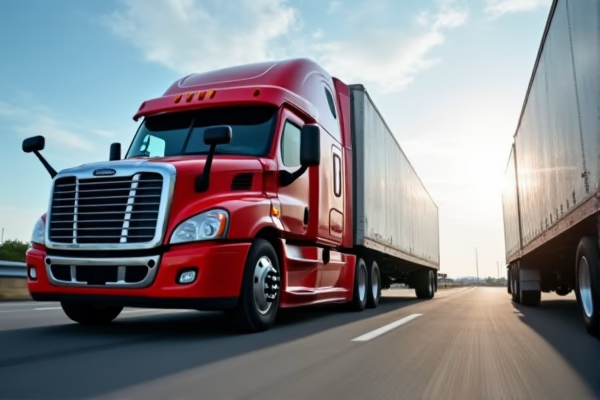
Generally, a trucking company cannot legally fire you solely for being involved in an accident that wasn’t your fault. However, they may attempt to justify the termination by citing other reasons, such as a perceived safety risk or a violation of company policy. It’s important to carefully review your employment contract and any company policies related to accidents. If the company is using a pretext to cover up an illegal termination, you may have grounds for a wrongful termination lawsuit.
Documentation is key. Keep detailed records of the accident, including police reports, witness statements, and any communication with your employer. If you believe you were wrongfully terminated, consult with an attorney as soon as possible to discuss your options.
What if the Accident Was My Fault?
Even if the accident was your fault, your employer may not have grounds for immediate termination. Many companies have progressive disciplinary policies that require a series of warnings and opportunities for improvement before resorting to termination. If the accident was a minor incident and you have a good driving record, the company may be required to provide you with training or counseling before firing you. However, a serious accident resulting in injuries or significant property damage could be grounds for immediate termination, even with a progressive disciplinary policy.
Does My Employment Contract Matter?
Absolutely. Your employment contract is a legally binding document that outlines your rights and responsibilities as an employee. Carefully review the contract to see if it contains any clauses related to accidents, safety violations, or termination procedures. If the contract is unclear or ambiguous, consult with an attorney to get a clear understanding of your rights. Some contracts may contain provisions that allow the company to terminate you for any reason, even without cause, but even in those cases, there may be legal limitations on their ability to do so.
What if I Reported a Safety Violation Before the Accident?
If you reported a safety violation to your employer before the accident, and you were subsequently terminated, you may have a strong case for retaliation. The FMCSA regulations prohibit trucking companies from retaliating against drivers who report safety concerns. This includes termination, demotion, or any other adverse employment action. If you believe you were retaliated against for reporting a safety violation, consult with an attorney immediately to discuss your options. You may be entitled to significant damages, including lost wages, benefits, and emotional distress.
What Should I Do If I’m Fired After a Truck Accident?
First, remain calm and do not sign any documents without consulting with an attorney. Second, gather all relevant documentation, including your employment contract, company policies, accident reports, and any communication with your employer. Third, consult with an experienced attorney who specializes in trucking accidents and employment law. An attorney can help you understand your rights, evaluate your options, and fight for the compensation you deserve.
What is the Statute of Limitations for a Wrongful Termination Claim?
In California, you generally have **two years** from the date of the termination to file a lawsuit for wrongful termination. Because trucking companies often begin evidence destruction (like purging ELD data) as soon as the law allows, immediate filing is critical to preserve the integrity of the claim. Don’t delay seeking legal advice, as the statute of limitations can expire quickly.
What if the Accident Involved a Government Vehicle or Road Hazard?
If a truck accident involves a government-owned vehicle or a dangerous road condition maintained by a public entity, a formal administrative claim **MUST** be presented within **6 months** (180 days). Failure to meet this strict deadline under the Government Tort Claims Act can result in the permanent loss of your right to recover. It’s essential to understand these deadlines and act promptly.
How Does California’s ‘ABC Test’ Affect My Employment Status?
California’s ‘ABC test’ determines if a delivery driver (Amazon/FedEx) is an employee or contractor. Even if labeled a ‘contractor,’ a company may be liable if they exercise control over the driver’s work, a key factor in San Diego delivery truck litigation. This distinction impacts your rights and potential recovery options.
What is Vicarious Liability (Respondeat Superior)?
Under the doctrine of **vicarious liability** (respondeat superior), a principal is responsible to third persons for the negligence of their agent in the transaction of business. This holds the trucking company legally liable for the wrongful acts of its drivers committed within the scope of their employment. Understanding this principle is crucial in pursuing a claim against the carrier.
What are the Truck Speed Limits in California?
In California, commercial trucks (including semi-tractors with three or more axles) are strictly prohibited from exceeding **55 miles per hour** on any highway. In San Diego freeway crashes, proving a violation of this speed limit is a primary tool for establishing statutory negligence.