Next Biggest Gap Driver Negligence Crash Types?

Truck accidents involving driver negligence are often complex, particularly when serious injuries are involved. Insurance companies are skilled at identifying weaknesses in a claim and reducing payouts. They’ll scrutinize every detail, from the police report to your medical history, looking for any reason to deny or undervalue your compensation. That’s why having experienced legal counsel is crucial.
One of the first things we do in these cases is secure the evidence. This includes obtaining the police report, witness statements, and, most importantly, the truck’s Event Data Recorder (EDR) data, often referred to as the “black box.” This data can reveal critical information about the driver’s speed, braking habits, and whether they were fatigued or distracted leading up to the crash. It’s essential to act quickly, as trucking companies are legally permitted to destroy this data after a certain period.
I’ve been practicing personal injury law in San Diego for over 13 years, and I was previously trained by a former insurance defense attorney. This unique background gives me intimate knowledge of how insurance companies evaluate, devalue, and deny claims. I understand their tactics and know how to build a strong case to protect your rights.
What Types of Driver Negligence Cause Truck Accidents?
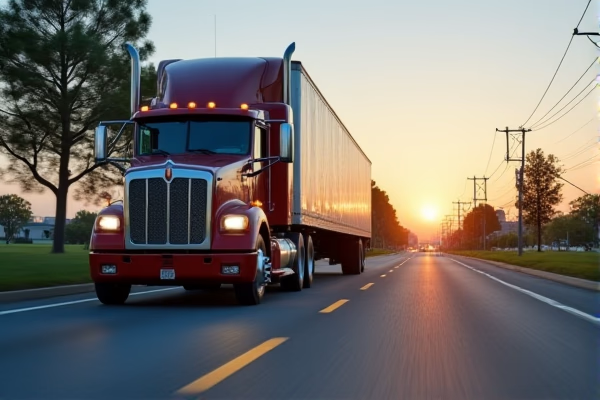
Driver negligence takes many forms, but some of the most common causes of truck accidents include distracted driving, speeding, fatigued driving, and improper lane changes. Distracted driving, whether it’s texting, eating, or adjusting the radio, is a major problem, especially with the increasing reliance on mobile devices. Speeding reduces the driver’s reaction time and increases the severity of the impact. Fatigued driving impairs judgment and coordination, making it difficult for the driver to control the vehicle. Improper lane changes can lead to collisions with other vehicles, particularly larger trucks.
Another significant factor is improper cargo securement. If cargo isn’t properly loaded and secured, it can shift during transit, causing the truck to become unstable and potentially overturn. This can result in serious injuries to other drivers on the road. We often find violations of federal and state regulations regarding cargo securement in these cases.
Furthermore, inadequate driver training and experience can contribute to accidents. Truck drivers are required to undergo extensive training and maintain a valid Commercial Driver’s License (CDL), but some companies cut corners to save money, resulting in unqualified drivers behind the wheel.
How Does the Insurance Company Determine Fault in a Truck Accident?
Insurance companies will conduct a thorough investigation to determine fault, often relying on their own experts to analyze the evidence. They’ll examine the police report, witness statements, and the truck’s EDR data. They’ll also interview the driver and potentially other parties involved in the accident. Their goal is to minimize their liability and reduce the amount of compensation they have to pay.
They’ll often look for any contributing factors that could shift blame to you, such as speeding, distracted driving, or a failure to yield. They may also argue that the accident was unavoidable due to unforeseen circumstances, such as weather conditions or road hazards. It’s important to remember that insurance companies are not on your side; they are looking out for their own interests.
That’s why it’s crucial to have an attorney who can independently investigate the accident and gather evidence to support your claim. We’ll work with accident reconstruction experts, medical professionals, and other specialists to build a strong case and counter the insurance company’s arguments.
What Evidence is Needed to Prove Driver Negligence?
Proving driver negligence requires gathering substantial evidence. This includes the police report, witness statements, the truck’s EDR data, and any available video footage from dashcams or surveillance cameras. Medical records documenting your injuries and treatment are also essential. We’ll also look for any evidence of the driver’s prior violations, such as speeding tickets or accidents.
In some cases, we may need to subpoena the driver’s logbooks to determine if they were in compliance with federal Hours of Service (HOS) regulations. These regulations limit the amount of time a driver can be behind the wheel without taking a break. Violations of these regulations can be strong evidence of negligence.
We also often obtain the driver’s cell phone records to determine if they were using their phone at the time of the accident. Texting while driving is illegal in California and can be a significant factor in causing a crash. The more evidence we can gather, the stronger our case will be.
What if the Truck Driver Was an Independent Contractor?
Determining the employment status of a truck driver can be complex. Some drivers are employed directly by the trucking company, while others are classified as independent contractors. If the driver was an independent contractor, it may be more difficult to hold the trucking company liable for their negligence. However, it’s not impossible.
California’s ‘ABC test’ determines if a delivery driver (Amazon/FedEx) is an employee or contractor. Even if labeled a ‘contractor,’ a company may be liable if they exercise control over the driver’s work, a key factor in San Diego delivery truck litigation. We’ll investigate the driver’s relationship with the trucking company to determine if they were truly an independent contractor or if they were misclassified as such. If we can prove that the driver was an employee, we can hold the trucking company directly liable for their negligence.
This often involves examining the level of control the company exerted over the driver’s work schedule, routes, and equipment. We’ll also look for any evidence of the company providing training or benefits to the driver.
What is Respondeat Superior and How Does it Apply to Trucking Accidents?
The legal doctrine of *respondeat superior* holds a trucking company liable for the negligent acts of its drivers committed within the scope of their employment. This means that if a driver is at fault in an accident, the trucking company can also be held liable, even if they weren’t directly involved in the crash. This is because the driver was acting as an agent of the company at the time of the accident.
Under the doctrine of **vicarious liability** (respondeat superior), a principal is responsible to third persons for the negligence of their agent in the transaction of business. This holds the trucking company legally liable for the wrongful acts of its drivers committed within the scope of their employment. To establish *respondeat superior*, we need to prove that the driver was acting within the scope of their employment at the time of the accident. This typically means that they were driving their truck as part of their job duties.
This can be a complex legal issue, and it’s important to have an attorney who understands the nuances of this doctrine. We’ll work to gather evidence to prove that the driver was acting within the scope of their employment and that the trucking company is liable for their negligence.
What Should I Do If I Receive a Recorded Statement Request from the Insurance Company?
Insurance companies often request recorded statements from accident victims shortly after a crash. While you may feel obligated to cooperate, it’s generally best to decline the request and consult with an attorney first. Insurance adjusters are trained to ask leading questions designed to minimize their liability and gather information that can be used against you later.
They may try to trick you into admitting fault or downplaying your injuries. They may also ask questions about your medical history or prior accidents. It’s important to remember that anything you say in a recorded statement can be used against you in court. We advise our clients to let us handle all communications with the insurance company, including any requests for recorded statements.
We will conduct our own investigation and gather the necessary information to build a strong case on your behalf. You are not required to provide a statement to the insurance company without legal representation.
What is a Medical Lien and How Does it Affect My Truck Accident Settlement?
A medical lien is a legal claim against your settlement proceeds to cover the costs of medical treatment you received as a result of the truck accident. Healthcare providers often place liens on your settlement to ensure they are compensated for their services. These liens can significantly reduce the amount of money you ultimately receive in your settlement.
ER billing vs. medical liens can be complex. Often, the initial ER bill is significantly higher than the actual cost of treatment. We work with medical billing experts to negotiate these liens and reduce the amount you owe. We’ll also review your medical records to ensure that all treatment was necessary and reasonable.
We understand that dealing with medical liens can be stressful, and we’ll handle all negotiations with the healthcare providers on your behalf. Our goal is to maximize your settlement and minimize the amount you have to pay in medical expenses.
What is the Deadline for Filing a Government Claim in a Truck Accident Case?
If a truck accident involves a government-owned vehicle or a dangerous road condition maintained by a public entity, a formal administrative claim **MUST** be presented within **6 months** (180 days). Failure to meet this strict deadline under the Government Tort Claims Act can result in the permanent loss of your right to recover. This is a critical deadline that must be strictly adhered to.
We have extensive experience handling claims against government entities and will ensure that your claim is filed properly and on time. We’ll also investigate the accident to determine if the government entity was negligent in maintaining the roadway or operating its vehicle.
It’s important to contact us as soon as possible if you believe your accident involved a government entity. We’ll review the facts of your case and advise you on the best course of action.
What is a Policy Limits Tender and Should I Accept It?
A policy limits tender is an offer from the insurance company to settle your claim for the maximum amount of their insurance policy. While it may seem tempting to accept this offer, it’s important to carefully consider your options before doing so. Accepting a policy limits tender releases the insurance company from any further liability, even if your damages exceed the policy amount.
Primary and excess layers of insurance can be complex. Often, the initial insurance policy is not enough to cover all of your damages. We’ll investigate the trucking company’s insurance coverage to determine if there are any additional layers of insurance available.
We’ll also evaluate your damages to determine if the policy limits are sufficient to compensate you for your medical expenses, lost wages, pain and suffering, and other losses. If the policy limits are not enough, we may pursue a claim against the trucking company’s assets to recover additional compensation.
How Can Dashcam Footage Help My Truck Accident Claim?
Dashcam footage can be invaluable evidence in a truck accident claim. It provides a visual record of the accident, which can help to establish fault and demonstrate the driver’s negligence. Even if the truck didn’t have a dashcam, other vehicles or businesses in the area may have captured footage of the accident.
Dashcam / digital evidence (telematics, ECM/EDR, ELD, GPS) can be crucial. We’ll work to obtain any available footage and analyze it to support your claim. We’ll also investigate whether the truck was equipped with any telematics systems that recorded the driver’s speed, braking habits, and other data.
We have experience working with accident reconstruction experts to analyze dashcam footage and other digital evidence. This can help to strengthen your case and increase your chances of a successful settlement.
As a personal injury attorney in San Diego with over 13 years of experience, I understand the complexities of truck accident claims. I’m committed to protecting your rights and fighting for the compensation you deserve.