What Evidence Strengthens A Motorcycle Injury Case?

Motorcycle accident cases present unique challenges. Riders are inherently more vulnerable, and often face biased perceptions from insurance adjusters who wrongly assume fault. Building a strong case requires a proactive approach, focusing on irrefutable evidence that demonstrates the other driver’s negligence. Simply stating what happened isn’t enough; you need proof. This proof can take many forms, and the more you have, the better your chances of securing a fair settlement.
The initial police report is a crucial starting point, but it’s rarely the complete picture. Officers are often stretched thin and may not have the specialized knowledge to accurately assess a motorcycle accident. They may rely heavily on witness statements, which can be subjective and unreliable. Therefore, it’s essential to conduct your own independent investigation, gathering evidence that supports your claim and challenges any potential defenses the insurance company might raise.
I’ve been practicing personal injury law in San Diego for over 13 years, and I’ve seen firsthand how insurance companies operate. I was trained by a former insurance defense attorney, giving me intimate knowledge of how they evaluate, devalue, and deny claims. This insight allows me to anticipate their tactics and build cases that are difficult to dismiss. Knowing their playbook is half the battle.
How important is the police report in a motorcycle accident claim?
While the police report is a foundational document, it’s not definitive. It’s a summary of the officer’s observations and interviews, and it’s subject to interpretation. Errors or omissions are common, and the officer’s conclusions may not reflect the full scope of the accident. Don’t rely solely on the report; treat it as a starting point for your own investigation.
Critically, the police report often lacks detailed information about the other driver’s actions leading up to the crash. It may not include evidence of distracted driving, speeding, or impairment. It’s your responsibility to gather this information independently, through witness statements, surveillance footage, and potentially, the vehicle’s event data recorder (EDR).
What types of witnesses can strengthen my case?
Independent witnesses are invaluable. Anyone who saw the accident unfold can provide crucial testimony. Look for bystanders, passengers in other vehicles, or even employees of nearby businesses who may have witnessed the collision. Obtaining their contact information and statements as soon as possible is vital, as memories fade quickly.
Even if a witness only saw a portion of the accident, their testimony can be helpful. For example, a witness who observed the other driver speeding or weaving erratically can corroborate your claim of negligence. Don’t dismiss potential witnesses based on their limited perspective; every piece of information can contribute to a stronger case.
Can dashcam footage or surveillance videos help my claim?
Absolutely. Dashcam footage is arguably the most compelling evidence in a motorcycle accident case. It provides a clear, unbiased record of the events leading up to the crash. If you have a dashcam, preserve the footage immediately. Even if you don’t, check with nearby businesses or residences to see if they have surveillance cameras that may have captured the accident.
Surveillance videos can be particularly helpful in establishing liability. They can show the other driver’s actions, such as running a red light or failing to yield the right-of-way. Obtaining this footage can require a subpoena, so it’s important to consult with an attorney as soon as possible.
What role does the motorcycle itself play in gathering evidence?
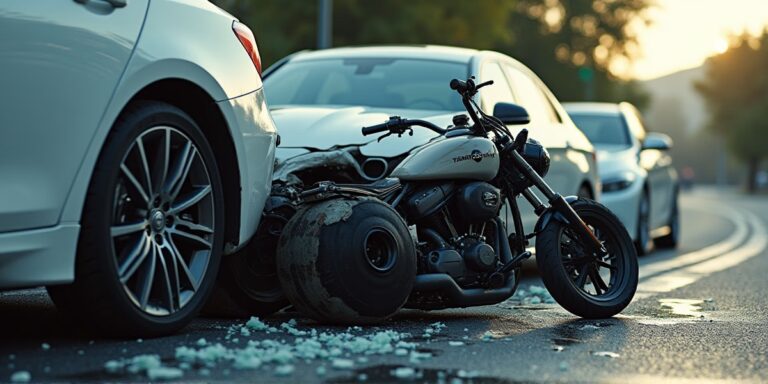
The motorcycle itself is a treasure trove of potential evidence. The damage to the bike can indicate the force of the impact and the point of collision. Photographs of the motorcycle, taken from multiple angles, are essential. It’s also important to preserve any damaged parts, such as the handlebars, fairings, or tires.
In some cases, the motorcycle’s event data recorder (EDR) can provide valuable information about speed, braking, and acceleration. However, accessing the EDR requires specialized equipment and expertise. An attorney can help you obtain and analyze this data.
How do medical records impact my motorcycle accident claim?
Comprehensive medical records are the cornerstone of any personal injury claim. They document the extent of your injuries, the treatment you’ve received, and the prognosis for your recovery. It’s essential to keep detailed records of all medical appointments, therapies, and medications.
Obtain copies of all medical bills, imaging reports, and doctor’s notes. If you’ve undergone surgery or other invasive procedures, ensure that the records are complete and accurate. An attorney can help you organize your medical records and ensure that they are presented in a way that maximizes your claim.
What if the other driver disputes my version of events?
Disputes are common in motorcycle accident cases. Insurance companies often try to minimize their liability by challenging the rider’s account of the accident. This is where strong evidence becomes even more critical. The more proof you have to support your claim, the less room the insurance company has to maneuver.
An attorney can help you anticipate the insurance company’s defenses and develop a strategy to counter them. This may involve obtaining additional witness statements, hiring an accident reconstruction expert, or conducting a thorough investigation of the other driver’s background.
How long do I have to file a motorcycle accident claim in California?
In California, you have a **two-year** window from the date of the motorcycle accident to file a lawsuit for personal injury. Because evidence at a crash scene—such as skid marks or GoPro footage—can disappear quickly, immediate filing is critical to preserve the integrity of the claim. CCP § 335.1
Don’t wait until the last minute to file your claim. The sooner you take action, the better your chances of securing a fair settlement. An attorney can help you navigate the complex legal process and ensure that your claim is filed on time.
What should I do if the accident involved a government vehicle or roadway hazard?
If a motorcycle accident involves a government-owned vehicle or a dangerous road condition like loose gravel, potholes, or poorly marked construction zones, a formal administrative claim **MUST** be presented within **6 months** (180 days). Failure to meet this strict deadline under the Government Tort Claims Act can result in the permanent loss of your right to recover. Gov. Code § 911.2
These claims have specific requirements and procedures, so it’s essential to consult with an attorney who is familiar with government liability cases. Don’t attempt to handle the claim on your own; you could jeopardize your chances of recovery.
What if I was lane splitting when the accident occurred?
California law formally recognizes lane splitting as legal, defined as driving a motorcycle between rows of stopped or moving vehicles in the same lane. In accident litigation, proving that the maneuver was performed ‘in a safe and prudent manner’ is essential to rebutting claims of rider negligence. CVC § 21658.1
Insurance companies often try to blame the rider for the accident, arguing that lane splitting was inherently dangerous. An attorney can help you demonstrate that you were operating your motorcycle safely and responsibly, and that the other driver was negligent.
Does wearing a helmet affect my motorcycle accident claim?
California is a universal helmet law state, requiring all riders and passengers to wear a safety helmet that meets DOT standards. While a violation may be used by defense counsel to argue for a reduction in damages via comparative fault—specifically regarding head or neck injuries—it does not bar a rider from seeking recovery for other injuries caused by a negligent driver. CVC § 27803
Even if you weren’t wearing a helmet, you may still be able to recover damages for your injuries. An attorney can help you navigate the complexities of comparative fault and ensure that you receive the compensation you deserve.
How does California’s comparative fault rule apply to motorcycle accidents?
California’s ‘pure’ comparative fault system applies to motorcycle claims. Even if a driver argues you shared responsibility due to speed or positioning, you can still recover damages; however, your total compensation will be reduced by your percentage of fault. Civ. Code § 1714
Determining fault can be complex, so it’s essential to consult with an attorney who can thoroughly investigate the accident and present a compelling case on your behalf.