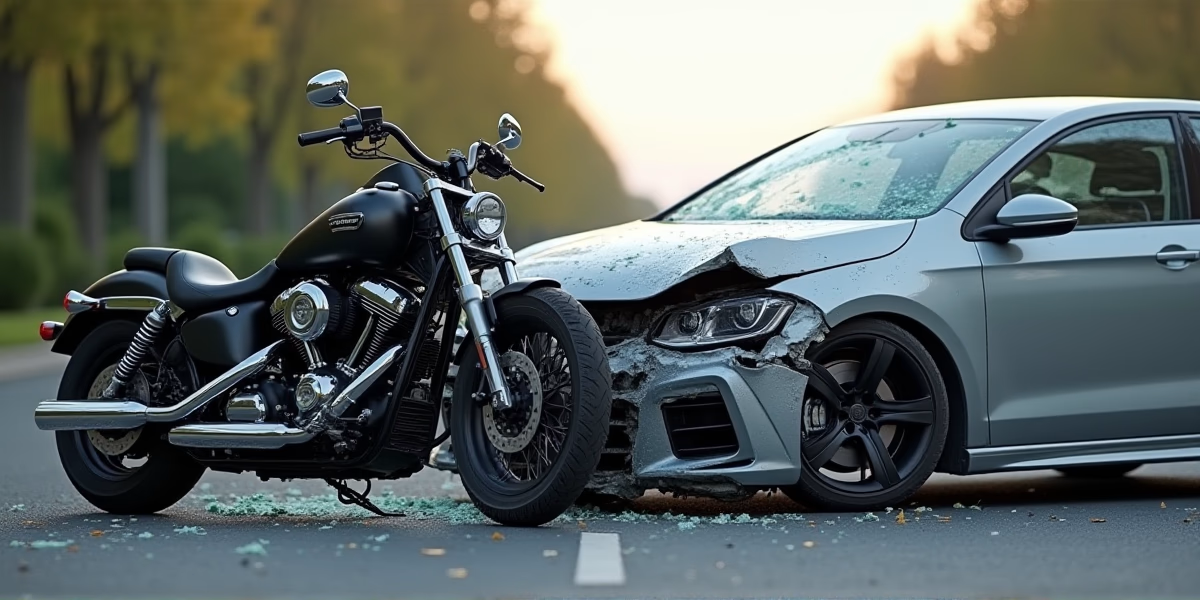
What Happens If My Helmet Failed During The Accident?

When a motorcycle helmet fails during an accident, it immediately complicates the claim process. Insurance companies will often seize on this as a potential point of defense, arguing that the rider’s injuries were exacerbated by faulty equipment. They may claim the helmet didn’t meet safety standards, wasn’t properly fastened, or was damaged prior to the collision. This is where having experienced legal counsel is crucial. We’ve seen countless cases where a seemingly straightforward accident is derailed by these types of arguments, and it’s our job to protect your rights and ensure you receive the full compensation you deserve.
The initial investigation will focus on several key areas. First, we’ll need to obtain the helmet itself and have it inspected by an independent expert. This expert will assess whether the helmet met Department of Transportation (DOT) standards at the time of manufacture and whether any defects contributed to its failure. We’ll also examine the circumstances of the accident – the speed of impact, the angle of the collision, and the type of surface involved – to determine if the failure was reasonable under the circumstances. A thorough understanding of these factors is essential to building a strong case.
As a personal injury attorney practicing in San Diego for over 13 years, I’ve handled numerous motorcycle accident claims. I was trained by former insurance defense attorneys, giving me intimate knowledge of how insurance companies evaluate, devalue, and deny claims. This insight allows me to anticipate their strategies and build a robust defense against them. I understand that dealing with an insurance company after a serious accident can be overwhelming, and I am committed to guiding my clients through every step of the legal process.
Can I still recover damages if my helmet failed?
Absolutely. The fact that your helmet failed does not automatically bar you from recovering compensation. California operates under a ‘pure’ comparative fault system, meaning you can still pursue a claim even if you were partially at fault for the accident. The insurance company may argue that your injuries would have been less severe had your helmet not failed, and a jury will ultimately decide what percentage of fault, if any, you bear. However, the primary responsibility still lies with the negligent driver who caused the collision. We will focus on establishing their liability and maximizing your recovery, regardless of the helmet issue.
It’s important to remember that helmets are designed to withstand a certain level of impact. If the force of the collision exceeded the helmet’s capabilities, a failure may be unavoidable. Furthermore, even if the helmet was defective, the manufacturer may also be liable under product liability laws. We will explore all potential avenues of recovery to ensure you are fully compensated for your injuries, medical expenses, lost wages, and pain and suffering.
What evidence do I need to gather if my helmet failed?
Preserving evidence is critical in these cases. Immediately after the accident, if possible, retain the helmet itself. Do not attempt to clean or repair it, as this could destroy valuable evidence. Document the helmet’s condition with photographs and videos, noting any visible damage or defects. Obtain the helmet’s purchase date and any warranty information. If you have a GoPro or other dashcam footage, preserve that as well. Any witness statements regarding the helmet’s condition or the circumstances of the accident are also valuable.
What if the insurance company claims I didn’t properly fasten my helmet?
Insurance companies often attempt to shift blame onto the rider by alleging improper helmet use. They may argue that the helmet wasn’t securely fastened, rendering it ineffective. However, proving this can be difficult for them. We will thoroughly investigate the circumstances of the accident and challenge their claims. If you consistently wore your helmet properly and followed all safety guidelines, we will present evidence to demonstrate this. Witness testimony, police reports, and even expert analysis of the helmet’s fastening mechanism can be used to rebut their arguments.
How does California’s universal helmet law affect my claim?
California is a universal helmet law state, requiring all riders and passengers to wear a safety helmet that meets DOT standards. While a violation of this law may be used by defense counsel to argue for a reduction in damages via comparative fault—specifically regarding head or neck injuries—it does not bar a rider from seeking recovery for other injuries caused by a negligent driver. CVC § 27803 outlines these requirements. We will carefully analyze the extent to which a helmet violation contributed to your injuries and minimize its impact on your recovery.
What is the statute of limitations for filing a motorcycle accident claim in California?
In California, you generally have **two years** from the date of the motorcycle accident to file a lawsuit for personal injury. Because evidence at a crash scene—such as skid marks or GoPro footage—can disappear quickly, immediate filing is critical to preserve the integrity of the claim. CCP § 335.1 governs this timeframe. Don’t delay seeking legal counsel, as missing this deadline can result in the permanent loss of your right to recover.