What Happens To My Cdl After A Truck Accident In San Diego?

The aftermath of a truck accident is rarely straightforward, and the fate of your CDL is a legitimate concern. While being involved in an accident doesn’t automatically mean license revocation, several factors come into play. The Federal Motor Carrier Safety Administration (FMCSA) sets the standards, but state agencies, like the California Department of Motor Vehicles (DMV), ultimately enforce them. Understanding these regulations and your rights is crucial to protecting your career.
One of the first things that happens after a serious accident is an investigation. This typically involves law enforcement, and potentially the FMCSA, especially if there are injuries or significant property damage. The investigation will focus on determining the cause of the accident and identifying any contributing factors. Your CDL could be placed on a “medical review” if you sustained injuries requiring you to take yourself off the road. This isn’t a suspension, but it does require you to provide documentation from a medical professional certifying your fitness to drive before you can reinstate your driving privileges.
I’ve spent over 13 years representing truck drivers and victims of truck accidents here in San Diego. Having been trained by a former insurance defense attorney, I intimately understand how insurance companies evaluate, devalue, and deny claims. They’ll often seize on any potential CDL issue to minimize their payout, so it’s vital to have experienced counsel on your side.
Will a Not-At-Fault Accident Affect My CDL?
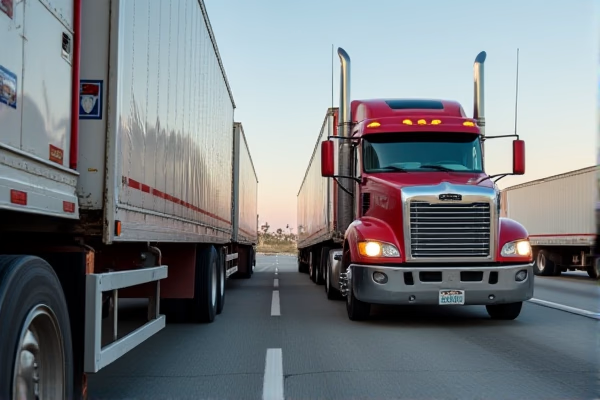
Generally, a not-at-fault accident shouldn’t directly impact your CDL. However, insurance companies and FMCSA investigators will still scrutinize the accident report. They’ll look for any indication of driver error, even if you were technically not at fault. For example, if you were found to be speeding or violating other traffic regulations at the time of the collision, it could lead to points on your driving record and potential license suspension.
It’s essential to cooperate fully with the investigation but also to protect your rights. Do not make any statements to the insurance company without first consulting with an attorney. They are looking for ways to limit their liability, and anything you say can be used against you. Document everything related to the accident, including the police report, witness statements, and any medical records.
What if I Receive a Traffic Ticket After the Accident?
Receiving a traffic ticket after a truck accident can definitely jeopardize your CDL. Even a minor violation can result in points on your record, and accumulating too many points can lead to suspension or revocation. California’s Commercial Driver Handbook outlines a complex point system, and the consequences can be severe. You have the right to contest the ticket in court, and it’s often advisable to do so, especially if it could affect your livelihood.
Fighting a traffic ticket requires a thorough understanding of California traffic law and court procedures. An attorney can help you gather evidence, negotiate with the prosecutor, and present a strong defense. Remember, a conviction on your record can also impact your insurance rates and your ability to find future employment.
Can the Insurance Company Directly Report Issues to the FMCSA?
Yes, the insurance company can directly report information about the accident to the FMCSA. They are legally obligated to report certain types of accidents, such as those involving fatalities, serious injuries, or significant property damage. The FMCSA will then conduct its own investigation and may take action against your CDL if they find any violations of federal safety regulations.
This is why it’s so important to have an attorney review all communications from the insurance company before you respond. They may be attempting to gather information that could be used to justify reporting you to the FMCSA. We can help you anticipate their tactics and protect your license.
What About Accidents Involving Drug or Alcohol Use?
Accidents involving drug or alcohol use are the most serious and can result in immediate and permanent CDL revocation. California law has strict penalties for commercial drivers who operate a vehicle under the influence, and the consequences can be devastating. Even a single positive drug test or a DUI conviction can end your career. The legal BAC limit for commercial drivers in California is **0.04 percent** (CVC § 23152(d)).
If you are involved in an accident and are suspected of drug or alcohol use, it’s crucial to remain silent and immediately contact an attorney. Do not consent to any drug or alcohol testing without legal representation. We can help you navigate the complex legal process and protect your rights.
What if I Was Dispatched While Fatigued or Over Hours?
Federal **Hours of Service (HOS)** regulations dictate exactly how long a driver can be behind the wheel. Violations of these federal safety standards, often proven through Electronic Logging Device (ELD) data, are used to demonstrate driver fatigue. If you were dispatched while fatigued or exceeding your allowable driving hours, the trucking company may be liable for the accident, and your CDL could be at risk.
It’s important to document any pressure you felt from the company to violate HOS regulations. Keep records of your dispatch orders, logbook entries, and any communications with dispatchers. An attorney can help you gather evidence and build a strong case against the trucking company.
How Long Do I Have to File a Claim After an Accident?
California law provides a **two-year** window from the date of the truck accident to file a lawsuit (CCP § 335.1). Because trucking companies often begin evidence destruction (like purging ELD data) as soon as the law allows, immediate filing is critical to preserve the integrity of the claim.
What if the Accident Involved a Government Vehicle or Road Hazard?
If a truck accident involves a government-owned vehicle or a dangerous road condition maintained by a public entity, a formal administrative claim **MUST** be presented within **6 months** (180 days). Failure to meet this strict deadline under the Government Tort Claims Act can result in the permanent loss of your right to recover (Gov. Code § 911.2).
What if I Was Labeled as an Independent Contractor, Not an Employee?
California’s ‘ABC test’ determines if a delivery driver (Amazon/FedEx) is an employee or contractor. Even if labeled a ‘contractor,’ a company may be liable if they exercise control over the driver’s work, a key factor in San Diego delivery truck litigation (Labor Code § 2775).
Can the Trucking Company Be Held Liable for the Driver’s Negligence?
Under the doctrine of **vicarious liability** (respondeat superior), a principal is responsible to third persons for the negligence of their agent in the transaction of business. This holds the trucking company legally liable for the wrongful acts of its drivers committed within the scope of their employment (Civ. Code § 2338).
What if the Truck Was Speeding?
In California, commercial trucks (including semi-tractors with three or more axles) are strictly prohibited from exceeding **55 miles per hour** on any highway. In San Diego freeway crashes, proving a violation of this speed limit is a primary tool for establishing statutory negligence (CVC § 22406).