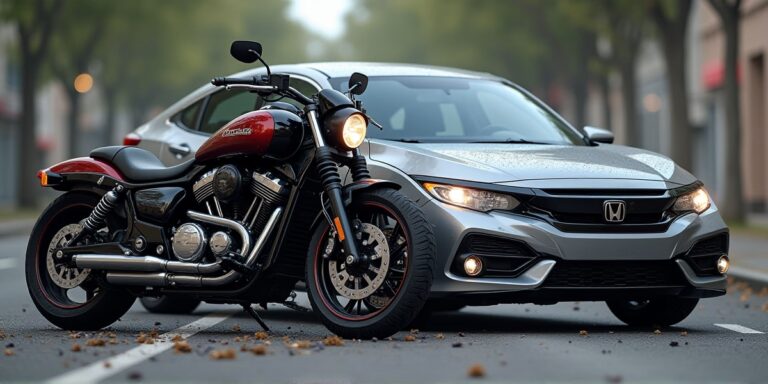
What If Defense Argues Assumption Of Risk?

One of the most frustrating defenses insurance companies raise in motorcycle accident cases is “assumption of risk.” Essentially, they argue that Bryce knowingly and voluntarily accepted the inherent dangers of riding a motorcycle, and therefore shouldn’t be able to recover full compensation for his injuries. This tactic is often used to devalue claims, particularly when riders engage in activities perceived as riskier, like lane splitting or track days. However, assumption of risk is a complex legal doctrine with specific requirements, and it’s rarely a complete bar to recovery.
The core principle is that you must have had actual knowledge of the specific risk involved and voluntarily chose to encounter it. Simply knowing motorcycles are generally dangerous isn’t enough. The defense must prove you understood the particular hazard that caused your accident and freely accepted it. For example, if a driver ran a red light, Bryce didn’t assume the risk of *that driver’s negligence*. He assumed the risks inherent in operating a motorcycle—potential falls, mechanical failures, and the actions of other drivers operating lawfully. This distinction is critical.
I’ve spent over 13 years representing motorcyclists in San Diego, and I’ve seen this defense deployed countless times. Having been trained by a former insurance defense attorney, I intimately understand how insurance companies evaluate, devalue, and deny claims. They’ll often focus on the rider’s experience level, modifications to the bike, or participation in events like track days to build a narrative of assumed risk. But these factors don’t automatically absolve the negligent driver of responsibility.
What evidence can I use to counter an assumption of risk claim?

The best way to combat this defense is to gather evidence demonstrating the driver’s negligence was the primary cause of the accident. This includes police reports, witness statements, photos of the scene, and any available video footage. If the driver was speeding, distracted, or impaired, it significantly weakens their argument. Documentation of your safety training, helmet use, and adherence to traffic laws also strengthens your position.
Furthermore, evidence showing you were riding reasonably and prudently can be invaluable. This might include testimony from other riders who witnessed the accident, or expert reconstruction analysis demonstrating you were operating within safe parameters. Remember, assumption of risk doesn’t apply if you were acting responsibly and the accident was caused by someone else’s wrongdoing.
How does lane splitting affect an assumption of risk defense?
California law formally recognizes lane splitting as legal, defined as driving a motorcycle between rows of stopped or moving vehicles in the same lane. In accident litigation, proving that the maneuver was performed ‘in a safe and prudent manner’ is essential to rebutting claims of rider negligence. Insurance companies often attempt to portray lane splitting as inherently risky, but it’s a legally permitted activity when done correctly. Evidence of your experience with lane splitting, adherence to recommended safety guidelines, and the other driver’s actions leading up to the collision are crucial.
What if I was wearing a helmet? Does that matter?
California is a universal helmet law state, requiring all riders and passengers to wear a safety helmet that meets DOT standards. While a violation may be used by defense counsel to argue for a reduction in damages via comparative fault—specifically regarding head or neck injuries—it does not bar a rider from seeking recovery for other injuries caused by a negligent driver. In fact, wearing a helmet demonstrates a commitment to safety, which can undermine the assumption of risk argument. It shows you were taking reasonable precautions to protect yourself.
Can I still recover damages if I was partially at fault?
California’s ‘pure’ comparative fault system applies to motorcycle claims. Even if a driver argues you shared responsibility due to speed or positioning, you can still recover damages; however, your total compensation will be reduced by your percentage of fault. For example, if you’re found to be 20% at fault, you can still recover 80% of your damages. The key is to establish the other driver’s negligence outweighed your own, even if you weren’t entirely blameless.
What should I do if the insurance company asks me for a recorded statement?
Never provide a recorded statement to an insurance company without first consulting with an attorney. They are skilled at asking leading questions designed to elicit information that can be used against you. They may attempt to get you to admit fault or downplay the driver’s negligence. A recorded statement can be a powerful tool for the defense, and it’s best to avoid it altogether until you’ve had a chance to discuss your case with legal counsel.
What if I have medical liens that need to be resolved?
Medical liens arise when healthcare providers seek reimbursement for treatment you received after the accident. California law limits the amount a health insurance company or medical provider can claim from your settlement via a lien. These ‘anti-subrogation’ protections ensure that the injured rider retains a fair portion of their recovery after medical bills are addressed. Negotiating these liens effectively is crucial to maximizing your net recovery.
What is the deadline for filing a motorcycle accident claim in California?
California law provides a **two-year** window from the date of the motorcycle accident to file a lawsuit for personal injury. Because evidence at a crash scene—such as skid marks or GoPro footage—can disappear quickly, immediate filing is critical to preserve the integrity of the claim. Don’t delay seeking legal advice, as missing this deadline can result in the permanent loss of your right to recover.
What if the accident involved a government vehicle or roadway hazard?
If a motorcycle accident involves a government-owned vehicle or a dangerous road condition like loose gravel, potholes, or poorly marked construction zones, a formal administrative claim **MUST** be presented within **6 months** (180 days). Failure to meet this strict deadline under the Government Tort Claims Act can result in the permanent loss of your right to recover. These claims have specific requirements and procedures, making legal assistance essential.
What if the at-fault driver had minimal insurance coverage?
California law requires insurers to offer Uninsured Motorist (UM) and Underinsured Motorist (UIM) coverage. For motorcyclists hit by a driver with minimum or no insurance, this coverage allows you to recover damages directly from your own policy up to your selected limits. Understanding your policy limits and the process for pursuing a UM/UIM claim is vital when facing an underinsured driver.
What if the driver was operating a vehicle while intoxicated?
It is unlawful for any person who is under the influence of alcohol to drive a vehicle. Proving intoxication or ‘malice’ allows for the pursuit of exemplary (punitive) damages, designed to punish the defendant and increase the total recovery beyond standard medical and wage losses. Evidence of the driver’s BAC, witness testimony regarding their behavior, and police reports are critical in these cases.
What if the at-fault driver was a delivery driver or rideshare operator?
California law preserves the right for a rider to pursue a separate civil claim against a **negligent third party** (such as a delivery driver or rideshare operator) whose actions contributed to the motorcycle accident, even if the rider is currently receiving workers’ compensation benefits. These cases often involve complex insurance coverage issues and require experienced legal counsel.